The short version
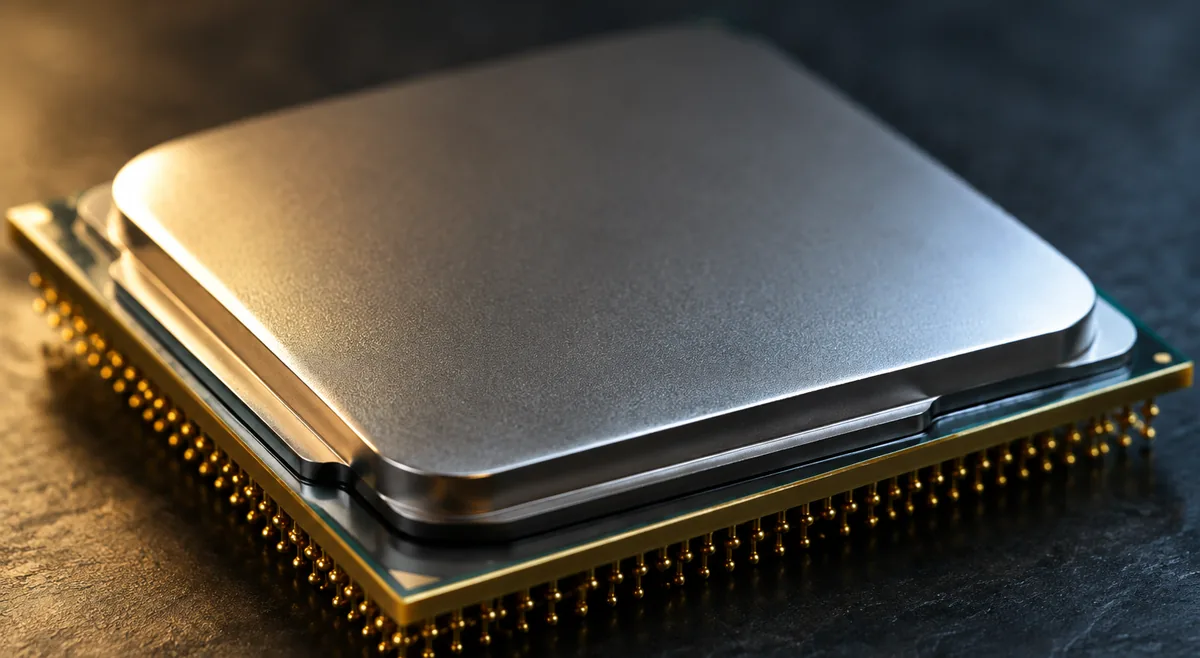
The CPU market just entered a new repricing cycle, and the cause is upstream. According to Taiwan's Commercial Times (October 12, as relayed by TrendForce, citing supply-chain sources), Intel raised prices on multiple PC processor lines effective September 1 — its third increase since the end of 2025 — with high-end Panther Lake configurations up 15–20% and Meteor Lake/Arrow Lake up 5–10%. Qualcomm raised Snapdragon X and X2 Elite platform pricing about 10% in October. AMD is reportedly preparing its own increases (supply-chain reporting via TrendForce and TechPowerUp); product scope and timing are unconfirmed and AMD has said nothing — treat that as rumor, not policy. The reported common variable behind all three is TSMC wafer costs — and the market is already talking about TSMC raising wafer prices again in January 2027. For buyers, the takeaway is not about any single CPU model. It is that foundry-cost pass-through has become a rolling, multi-quarter event, and 2027 procurement needs to be priced against it now.
What was actually reported — read the tiers
**Tier 1 — supply-chain reporting (Commercial Times, October 12, via TrendForce).** Intel's latest round took effect September 1. It is the company's third processor price increase since late 2025, per the report. This round is differentiated by product line: high-end Panther Lake up 15–20%, Meteor Lake and Arrow Lake up 5–10%. Qualcomm's ~10% increase on Snapdragon X/X2 Elite took effect in October. **Tier 2 — unconfirmed (supply-chain rumor).** AMD is rumored to be preparing increases reported around 10% in one channel report (ChannelGate, carried by TechPowerUp, covering GPUs, chipsets, and possibly CPUs) — but per TrendForce, AMD's magnitude, product scope, and timing are unconfirmed, and AMD has not commented. Do not plan procurement around the AMD numbers until the company speaks. **Tier 3 — market talk.** TSMC is rumored to raise wafer prices again in January 2027 — TrendForce's October 5 market reporting put rumored Q1 figures at 3–10% on mature nodes and possibly another 6–8% on 2nm (market reporting, not vendor confirmation; Nikkei, as relayed by Tom's Hardware and TrendForce, separately reported 2027 baseline increases of 5–10% on advanced nodes and up to 10% on mature nodes, with an extra 10–15% premium only on HPC orders above originally estimated volumes). None of this is confirmed by TSMC. Treat January 2027 as a planning date, not a scheduled event.
Why the hikes land where they do: follow the tile
The most useful detail in the reporting is *which* Intel chips got the steepest hikes. The reported differentiation is by product line: high-end Panther Lake configurations up 15–20%, Meteor Lake and Arrow Lake up 5–10%. The report does not publish Intel's rationale, and we have not verified a per-model breakdown of which tiles are built where — so treat what follows as our reading of the reported pattern, not a disclosed mechanism. The pattern — steepest on the newest, most advanced products, mildest on older lines — is consistent with foundry-cost pass-through concentrating where a chipmaker buys in leading-edge silicon rather than building it in its own fabs. Our working rule from this pattern: a chipmaker's repricing exposure in 2026–2027 rises with the share of its silicon it buys at the leading edge — which is a question buyers can put to any supplier, for any category. Qualcomm's reported move is consistent with the same exposure logic — its PC platforms integrate CPU, GPU and NPU on advanced nodes. AMD builds essentially its entire Ryzen/EPYC/Radeon stack on TSMC advanced nodes, which would give it the most exposure of the three — one reason the market takes the AMD rumor seriously even without confirmation.
The January 2027 question
Three separate threads point at the same date. The rumored TSMC January 2027 wafer increases. Intel's own history of year-end pricing actions. And the typical enterprise procurement cycle, where 2027 volume agreements get negotiated in Q4 2026. Whether or not TSMC actually moves in January, suppliers may already price the *possibility* into negotiations — which means buyers waiting for certainty could be negotiating against a market that has already moved. The practical read: assume your 2027 silicon costs 5–15% more than 2026 in planning models, with the widest range on anything touching TSMC advanced nodes. If January comes without a TSMC increase, you have upside. If it comes with one, you are covered.
What this means for component buyers
You probably do not buy Intel CPUs from a distributor like us. Here is why this still matters for your BOM: **1. Foundry economics are not CPU-specific.** The same TSMC wafer-cost pressure behind the CPU hikes applies to the power-management ICs, MCUs, and interface chips on your board. Suppliers across categories are having the same conversation with their foundry partners right now. When CPUs move 10–20%, expect power, driver and MCU suppliers to test increases in the same direction — TrendForce's October 5 reporting says IC designers are eyeing increases of roughly 5% to double digits for late 2026 into early 2027. **2. Allocation follows margin.** When a supplier faces rising wafer costs and tight leading-edge capacity, high-margin products get the wafers. Mid-range and mature products face longer lead times first, price increases second. If your BOM is heavy on mainstream-tier parts, you feel the allocation squeeze before the price signal. **3. The "wait for the announcement" trap.** None of the three CPU moves came with advance public notice — they arrived via supply-chain reporting, effective almost immediately. Component price adjustments work the same way: by the time a PCN or price letter reaches you, the distributors who moved early already have the better-priced inventory.

A buyer's price-hike diligence checklist
- **Map your TSMC exposure.** For each line item, ask: which foundry, which node? Parts on advanced nodes carry the most 2027 repricing risk. Your suppliers know; make them tell you. - **Pull 2027 pricing into Q4 negotiations.** Do not sign 2027 volume agreements on 2026 price assumptions. Get explicit 2027 pricing — or explicit escalation caps — in writing now. - **Forward-buy the steep-curve items.** For parts where you have credible reporting of 10%+ increases (not rumors), covering 2–3 quarters of demand at current pricing can be the right call where your own demand is firm. For rumor-tier items, cover one quarter and keep flexibility. - **Qualify alternates before you need them.** Cross-vendor qualification takes weeks to months. Starting it when a price letter lands is starting too late — especially for power and MCU parts where pin-compatible options exist. - **Watch the distributors, not the press releases.** Distributor inventory pricing moves before official announcements. If your regular sources start repricing the same part upward within weeks of each other, the increase is real regardless of what the supplier has said publicly. - **Separate the three tiers in your planning.** Build your base case on Tier 1 (reported), your upside case on Tier 2 remaining rumor, and your stress case on Tier 3 (January 2027 TSMC move) materializing. Do not let a rumor drive the base case.
Frequently asked questions
**Are these CPU price hikes confirmed?** Intel's and Qualcomm's moves are reported by Taiwan's Commercial Times via supply-chain sources — solid trade-press reporting, but neither company has issued a public price list. AMD's move is rumor only. Treat the first two as highly likely, the third as unconfirmed. **Will this affect the MCUs and power ICs I buy?** Indirectly, on the reporting. The mechanism — foundry wafer costs rising, passed through to chip prices — is the same across categories. CPUs are where the reported increases are largest so far; whether analog, power, and MCU parts follow, and by how much, is not established. As a working assumption (not a forecast), plan against the range TrendForce reported on October 5: IC designers eyeing increases of roughly 5% to double digits for late 2026 into early 2027. **Should I panic-buy CPUs or components now?** No. Panic-buying at elevated prices locks in the worst outcome. The disciplined move: quantify which of your parts have credible reported increases versus rumors, forward-cover the former for 2–3 quarters, keep flexibility on the latter, and get 2027 pricing in writing during Q4 negotiations. **Is January 2027 certain for TSMC increases?** No. It is market chatter plus a Nikkei report, not a TSMC announcement. Use it as a planning date: model 2027 costs 5–15% higher on TSMC-advanced-node parts, and treat a no-increase January as upside. **Do price hikes come with longer lead times?** In this cycle's reporting, the lead-time stretch has typically landed first. When wafer costs rise and leading-edge capacity stays tight, suppliers allocate wafers to high-margin products first — mainstream and mature parts feel the allocation squeeze (longer lead times) before the price letter arrives. If your lead times are stretching on mid-range parts while prices still look flat, treat it as an early warning, not a reprieve. ---
Sources
Use the latest guidance for the exact part and manufacturer when deciding acceptance criteria.
- TrendForce: CPU Price Hike Wave: Intel Reportedly Up to 20%, Qualcomm 10%, AMD May Join as TSMC Costs Climb (12 Oct 2026)
- TechPowerUp: Intel 'Panther Lake' Reportedly Gets Up to 20% Price Hike, Older Generations Also Impacted (12 Oct 2026)
- Tom's Hardware: TSMC eyes price hikes of up to 25% on chip production services in 2027, report claims (21 Jul 2026)
- TrendForce News: TSMC Reportedly Plans Up to 10% Price Hikes in 2027, with Extra HPC Premiums (22 Jul 2026)
- TrendForce News: IC Designers Reportedly Eye 5% to Double-Digit Price Hikes in Late 2026-Early 2027 as Foundry Costs Rise (5 Oct 2026)
- TechPowerUp: AMD Plans 10% Price Hike Across GPUs, Chipsets, and Possibly CPUs (17 Sep 2026)