The short version
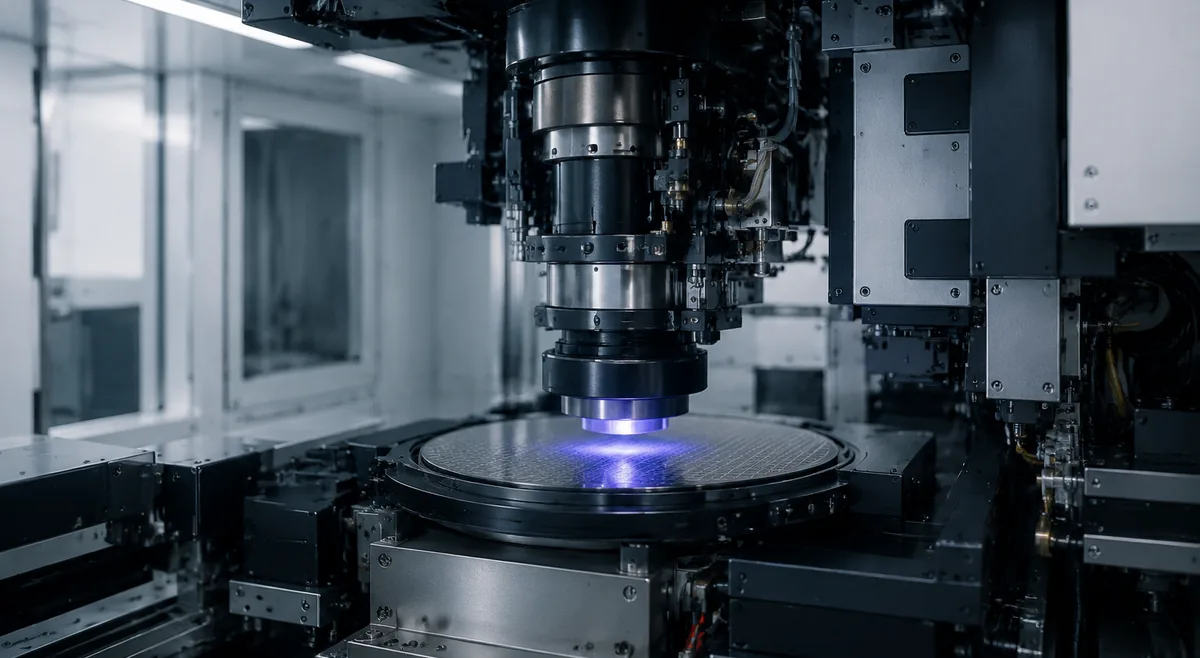
Our October 7 guide traced how TSMC's foundry price increases flow downstream into PMICs and MCUs. This is the prequel to that story — the reason the foundry's cost base is rising in the first place. In the second week of October 2026, Korean media reported that ASML had done something it almost never does: apply a single, across-the-board 10% price increase to every replacement part for the EUV and DUV lithography machines it has installed at Samsung Electronics and SK Hynix, effective for deliveries from January 2027. Both customers have reportedly accepted. Fabs can postpone buying a new scanner. They cannot skip maintenance on the machines already running — and ASML knows it.
What was actually reported
Tier the evidence before drawing conclusions. **Media report (TrendForce News, October 12, 2026, relaying Korean coverage):** ASML headquarters, acting through its Korean subsidiary, issued a plan raising prices 10% on all parts supplied to the Korean market for EUV and DUV lithography systems — the increase reportedly covers everything from regularly purchased consumables to major components replaced due to failures or declining performance. ASML reportedly notified Samsung and SK hynix of the plan through its Korean subsidiary in early September; both have reportedly accepted. Deliveries from January 2027 carry the new prices. **Media report (TrendForce News, July 16, 2026):** ASML has separately sought higher prices on new equipment orders, and TSMC is reportedly pushing back — the July report said mature DUV tools could see increases of about 10%. That pushback matters: it is the one reported instance of a major customer resisting, and it concerns tool prices, not the Korean parts plan. **Analyst/industry interpretation:** The blanket nature is the story. ASML has historically adjusted part prices case by case, typically when raw materials spiked or specific materials became hard to source. Industry voices cited in the coverage point to two drivers: broad upstream material cost inflation, and a deliberate move to expand ASML's own margin while customers are profitable. ASML's installed-base business — services, parts, and upgrades — accounts for roughly a quarter of total revenue, and the company expects that stream to grow more than 30% this year. What is *not* in the reporting: any official ASML announcement of the hike, any confirmed figure for new-equipment price increases, and any quantified link between the 10% parts increase and wafer or chip prices. Keep those gaps in mind — the analysis below is built on the reporting, not on confirmed company statements.
Why "blanket" is the real signal
The 10% number is less important than the word "blanket." In a buyer's market, a dominant supplier negotiates part by part, justifying each line item with a cost driver. A uniform increase across every SKU is what a supplier does when it no longer needs to justify line items — when the customer's alternative is worse than the increase. And for a fab running EUV tools, the alternative is genuinely worse: there is no second source for EUV lithography (ASML is the only supplier of EUV systems — Communications of the ACM, September 2026), and a scanner down for want of a part costs more per hour than any parts bill. That is the bargaining-power reversal in one paragraph. For two decades, foundries held the leverage over equipment vendors through volume commitments and multi-tool orders. The AI datacenter buildout has flipped the dynamic: with fabs expanding capacity as fast as they can and utilization high, the installed base becomes an annuity — and the annuity holder sets the terms. Samsung and SK Hynix accepting the hike, as reported, may in our reading give other equipment vendors cover to follow — one acceptance becomes the industry's permission slip. That dynamic is our inference, not a reported fact.
The transmission chain: from parts bill to your BOM
This is where the story connects to component buyers who will never purchase a lithography part. Follow the cost as it moves: **Stage 1 — Fab operating cost (now to January 2027).** Replacement parts are operating expenditure, not capital expenditure. A 10% increase lands directly in the fab's cost per wafer start. Unlike a new-tool price — which can be deferred, negotiated, or (as TSMC is reportedly doing) resisted — the parts bill on installed tools is largely non-discretionary. **Stage 2 — Foundry cost base (2027).** Fabs recover operating costs through wafer pricing. The industry's 2027 wafer-quote negotiations — the same ones behind the foundry price increases our October 7 guide covered — now have a harder cost floor under them. TSMC is reportedly pushing back on equipment hikes while reportedly planning wafer-price increases of its own (TrendForce News, October 27). Read together — and this is our inference, not a reported link — the foundry sits in the middle of the chain and passes the pressure downstream. **Stage 3 — Component pricing (2027 and beyond).** Foundry cost increases do not land evenly. In our assessment, they are likely to land first and hardest on the categories with the thinnest margins and the least pricing power — PMICs, MCUs, and analog parts are the examples our October 7 guide flagged, and the ones we would check against your own BOM. Nobody can convert "10% on lithography parts" into "X% on a specific part number" — anyone who does is inventing arithmetic. The direction looks clear to us and the mechanism is now visible one level further upstream than it was a week ago, but that is our reading of the chain, not a reported figure. | Stage | What rises | Who absorbs it first | What the buyer watches | |---|---|---|---| | 1. Equipment parts (Jan 2027) | Lithography parts bills (Korean installed base, as reported) | Fab opex; non-discretionary | Korean fabs' acceptance setting the industry template | | 2. Wafer cost base (2027 quotes) | Cost per wafer start | Foundry margins, then wafer prices | 2027 foundry price negotiations; TSMC's stance | | 3. Component pricing (2027+) | Component prices, PMIC/MCU/analog most exposed in our assessment | Thin-margin, low-leverage categories likely first | Distributor quotes shortening validity; contract resets |
The second-source footnote: nobody escapes the equipment bill
Our October 6 guide on Rapidus made the case for a second 2nm foundry as negotiation leverage. This week's news adds a wrinkle worth stating plainly: equipment cost is common to every foundry. A second source diversifies *foundry* pricing power; it does not diversify *equipment* pricing power, because every advanced fab on earth buys its lithography from the same Dutch company. That does not invalidate the second-source thesis — Rapidus, Intel Foundry, and Samsung still compete on wafer pricing, yields, and PDK maturity. But it caps how far foundry competition can push costs down. When you model the savings from dual-sourcing, model the equipment-cost floor as a shared constant, not a variable. The buyers who get the most from a second source in 2027 will be the ones who negotiated while understanding exactly which costs are contestable and which are not.
The timeline: when each stage hits your P&L
- **Q4 2026 (now):** Quotes issued against pre-hike cost assumptions are the most likely to be re-priced. Every RFQ you send this quarter should carry a short validity window. - **January 2027:** On the reporting, the 10% lands on Korean fabs' parts bills. Fab opex steps up; the increase is non-discretionary. - **H1 2027:** Foundry wafer-quote negotiations for 2027 volumes conclude — on the chain above, with a harder cost floor. This is where "subject to foundry adjustments" clauses would get exercised. - **H2 2027 and beyond:** On our transmission-chain reading, component price resets would reach distributors and contract renewals, with thin-margin categories (PMICs, MCUs, commodity analog) exposed first. That sequencing is our assessment, not a reported schedule. Mark these four dates on your procurement calendar. The buyers who get hurt are the ones who treat January 2027 as someone else's problem until it arrives in their own quote.
A buyer's playbook: what to do before January
**1. Treat 2027 wafer quotes as carrying an equipment-cost kicker.** If your supplier quotes 2027 pricing "subject to foundry adjustments," that clause just got more expensive. Ask what cost components the adjustment covers — and whether equipment-parts inflation is in or out. **2. Shorten RFQ validity windows now.** Our October 7 guide recommended 7–14 day validity. With an upstream cost increase landing in January, quotes issued in Q4 2026 against pre-hike cost assumptions are the ones most likely to be re-priced. Re-quote on cadence through year-end. **3. Prioritize the thin-margin tail.** The categories where foundry cost pass-through bites first — power management, microcontrollers, commodity analog — are exactly the lines buyers tend to leave for last in BOM costing. Cost them first this cycle. **4. Watch the template, not just the 10%.** The number to track is not ASML's 10% but how many other vendors follow and whether TSMC's reported resistance holds. If TSMC's pushback succeeds, it signals the reversal has limits; if more vendors pile on, the 2027 cost base hardens further. Either outcome is actionable intelligence for your 2027 negotiations. **5. Don't model equipment inflation into part-number math.** The red line from our reporting discipline: no source connects a 10% parts hike to any specific component's price. Use the story for direction and timing — not for spreadsheet precision it cannot support. ---
Frequently asked questions
**Will ASML's parts price hike raise chip prices?** In our view, indirectly and with a lag — that is our analysis, not a reported figure. The reported 10% applies to lithography replacement parts, not to chips. The path we expect is: higher fab operating costs → higher cost per wafer start → firmer 2027 wafer pricing → downstream pressure on thin-margin components like PMICs and MCUs. No source quantifies the end-to-end effect, and anyone converting 10% on parts into a chip-price figure is guessing. **When do the ASML parts price increases take effect?** According to the reporting, deliveries from January 2027 carry the new prices. ASML reportedly notified Samsung and SK hynix of the plan through its Korean subsidiary in early September 2026; both have reportedly accepted. **Why is a blanket 10% increase unusual for ASML?** Because ASML has historically adjusted prices part by part, usually tied to a specific raw-material spike or sourcing difficulty. A uniform increase across every SKU — consumables and major components alike — signals a supplier confident enough in its leverage not to justify line items. **Which other equipment makers are raising prices?** The reporting listed with this article does not establish moves by other named equipment vendors. What it does show is TSMC reportedly pushing back on ASML's tool-price increases (TrendForce News, July 2026) — treat any other vendor's pricing as unconfirmed until it is reported with the same specificity. **Does the hike affect TSMC, Samsung, and SK Hynix differently?** The reported increase targets ASML's Korean-market parts business, where Samsung and SK Hynix have reportedly accepted it. TSMC is reportedly resisting ASML's equipment price increases (TrendForce News, July 2026) — a resistance worth watching, since it tests the limits of the supplier-leverage reversal. **Can fabs just switch to another lithography vendor?** Not for EUV — ASML is the only supplier of EUV lithography systems (Communications of the ACM, September 2026). For DUV, Nikon and Canon exist, but the installed base at advanced fabs is overwhelmingly ASML, and swapping a lithography platform means requalifying the entire process flow — a multi-year undertaking no fab will do over a 10% parts increase. This is precisely why the blanket hike sticks: the customer's alternative is worse than the increase. **How does this connect to the 2027 foundry price increases?** It is, in our reading, the upstream end of the same chain. Our October 7 guide covered foundry-to-component pass-through; this story shows the foundry's own cost base rising from the equipment bill. Together they describe a full cost chain: equipment parts → wafer cost → component price. ---
Sources
Use the latest guidance for the exact part and manufacturer when deciding acceptance criteria.
- TrendForce News: ASML Reportedly Plans 10% Parts Price Hike in South Korea Starting Jan. 2027; Equipment Prices May Also Rise (12 Oct 2026)
- TrendForce News: ASML Reportedly Seeks Higher Tool Prices as TSMC Pushes Back (16 Jul 2026)
- TrendForce News: TSMC Reportedly Eyes 20% CoWoS Price Hike, Skips Equipment Price Renegotiations (27 Oct 2026)
- Communications of the ACM: The ASML Monopoly — Platform and Ecosystem Leadership in EUV Lithography (Sep 2026)