The numbers: how far prices have moved
The headline figure comes from a company statement. In a Reddit post reported on September 23, 2026 (new prices effective September 18), German notebook brand XMG announced price increases across most of its laptop lines (four model groups were listed as unaffected): XMG said DDR5 SO-DIMM prices had risen nearly sixfold since mid-2025, with desktop DDR5 modules and SSDs following a similar trajectory. Most affected XMG models went up 100-150 euros; one professional model (SCHENKER KEY 18 Pro) rose 300 euros. This is one OEM's reported experience — not its disclosed procurement data, and not a claim that global DRAM prices are uniformly up sixfold. The server side tells a similar story through market data: according to DRAMeXchange data reported by BusinessKorea on September 29, 2026, the average spot price of a 32GB DDR5 RDIMM reached $2,050 in the second week of September, with weekly highs at $2,380 — against around $380 in mid-November 2025, roughly a 5.4x move in under ten months, with a 13.9% jump in just the last two weeks of the window. Industry reports also note 52-week lead times on high-capacity DDR5 RDIMM from some channels, and TrendForce expected server DRAM contract prices for Q3 2026 to rise 13–18% quarter over quarter. Spot price is not contract price — but spot is the pressure gauge that contract negotiations read.
Why this cycle is different: HBM is eating the wafer budget
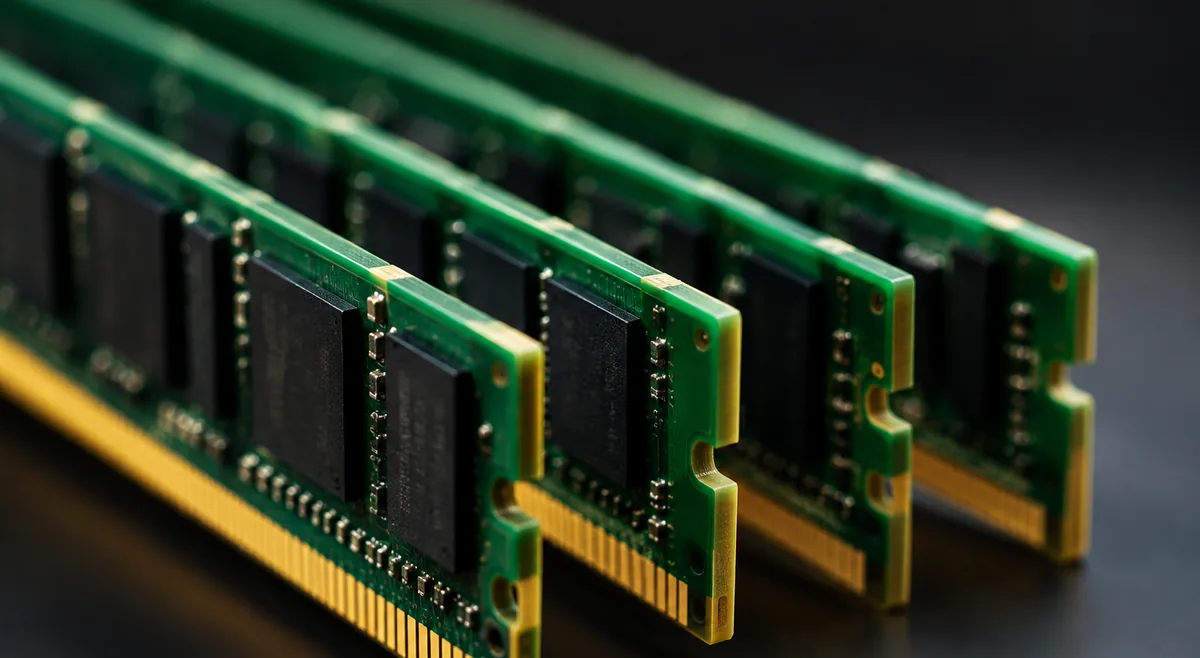
DRAM upcycles are not new. What is new is the structural reason supply cannot respond the way it used to: HBM and conventional DRAM share wafer capacity, and as AI demand pulls HBM allocation higher, standard DDR5 gets a smaller slice of the same pie. Samsung's executive vice president stated that HBM will account for nearly 30% of DRAM manufacturers' wafer capacity in 2027, up from about 20% currently, with BusinessKorea separately reporting Samsung's own HBM share of its DRAM output at 27% last year and an expected 40% in 2027. TrendForce notes HBM and conventional DRAM keep competing for limited advanced-process and wafer resources, with tightness expected to persist into 2027. Micron's CEO added a demand-side data point, as reported by Seoul Economic Daily: more than 75% of 2027 output is already committed and most active negotiations now concern 2028, at prices expected to be higher — an expectation about future deals, not a statement of signed 2027 prices. Translation for buyers: even as total DRAM capacity grows (BusinessKorea puts Samsung's DRAM capacity growth at +14% this year and +16% in 2027), the share available to standard server DDR5 grows much more slowly. Capacity growth no longer equals supply relief for the products you buy.
Spot vs contract: the two prices that matter
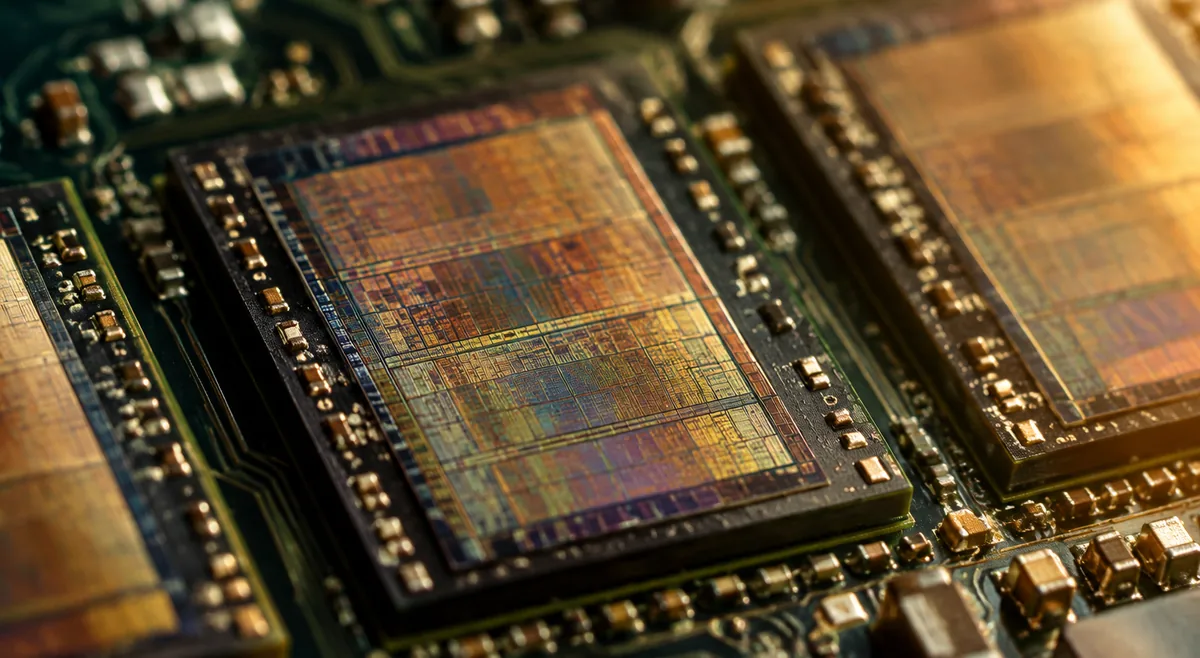
This is where procurement strategy splits in two — and where this article deliberately differs from our earlier Micron LTA piece, which focused on long-term-agreement mechanics. Here the question is timing: when to commit, and through which channel. Spot price ($2,000+ for 32GB RDIMM in the reported window) measures immediate scarcity: volatile, visible, and what broker and distribution-channel quotes react to first. Contract price moves slower but in the same direction: TrendForce's expectation that server DRAM contract prices would rise 13–18% in a single quarter (Q3 2026) — an expectation set before the quarter, not a realized result. It shows what suppliers were expected to do to the base, not proof of what they had already done to it. Cloud providers and large OEMs buy through LTAs, so their realized prices lag spot — but contract renewals now reference a spot market that has multiplied in a year. For mid-size buyers without LTA leverage, the practical implication: the gap between 'announced price' and 'what you actually pay' is widening. A quote from six months ago is history, and suppliers are repricing faster than procurement cycles usually assume.
The timeline debate: 2027 vs 2028
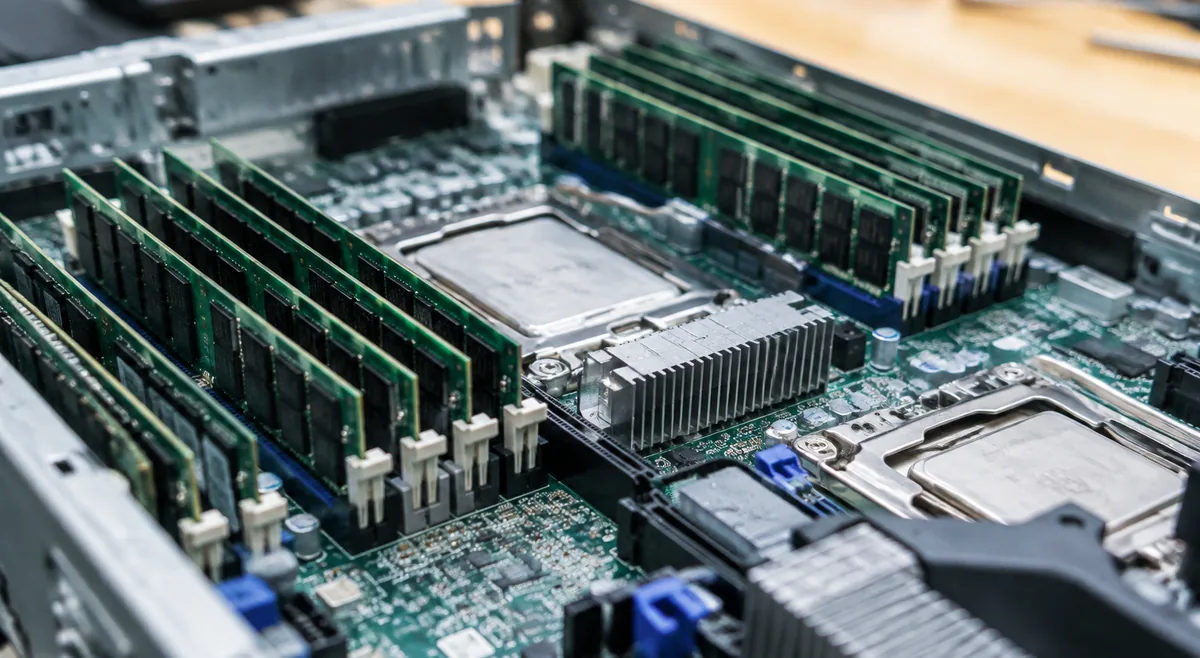
Not everyone agrees on how long this lasts — and the disagreement itself is useful data. On the long side, Micron's disclosed position points to no near-term slack: more than 75% of its 2027 output is already committed and its key supply negotiations have moved on to 2028 volumes (Seoul Economic Daily, October 1) — a seller-side position from an interested party, to be weighed as such. On the shorter side, Acer's chairman and CEO expects PC prices to peak around mid-2027 (per TechPowerUp's report); the reporting dates no decline after that peak. TrendForce sits between the two: supply expected to remain tight through 2027. Buyers should treat all of these as what they are: informed opinions from interested parties, not facts. The operational takeaway doesn't depend on picking a winner: plan capacity as if 2027 stays tight; treat any 2028 relief as upside.
A buyer's timing playbook
One — separate your spot exposure from your contract exposure: quantify any volume still bought spot or through short-cycle distribution; that's where the 5x moves hit first. Two — lock the long tail, not just the headline part: DDR4, LPDDR5X, and registered server DIMMs are exposed to the same cycle, though not identically (DDR4 runs on mature nodes — see the FAQ); reviewing only your biggest DDR5 line item misses the secondary exposures. Three — qualify alternates now, not when you're desperate: cross-vendor qualification takes weeks to months; in a market with 52-week lead times, starting at the moment of shortage is starting too late. Four — watch the signals that actually lead: TrendForce quarterly contract pricing, 2027 HBM pricing expectations, and suppliers' disclosed wafer-capacity splits move before your quotes do. Five — don't confuse a pull-in with a recovery: TrendForce has warned about over-ordering risk in adjacent categories this year; order to your real build plan and buffer strategically, not emotionally.
What to watch next
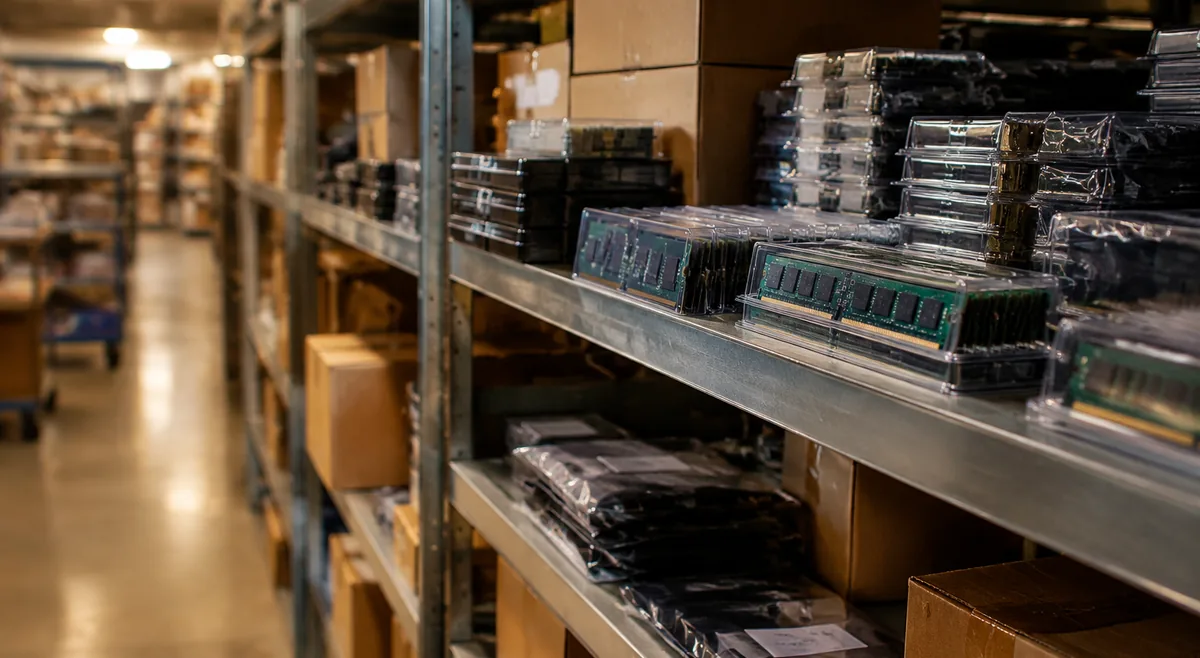
The next hard data arrives with each quarter's contract pricing and each supplier earnings call: whether the higher prices expected in 2028 negotiations show up in contracted volumes, whether the industry's ~30% HBM wafer share materializes, and whether any OEM besides XMG starts passing costs through — the moment consumer PC and phone makers all raise prices, the shortage has fully crossed from allocation to end-market inflation. Memory went from a commodity line item to a strategic constraint. Buyers who treat 2026 DRAM like 2023 DRAM will pay for the mistake in both price and lead time.
Buy now or wait: three scenarios for your next order
Scenario one — you buy spot today: you pay roughly 5x the late-2025 level on the 32GB RDIMM spot benchmark cited above (other densities and channels differ) for whatever is actually on the shelf — a spot quote is not guaranteed stock; sensible only if a build is blocked and the margin on the finished system absorbs it — never for buffer stock. Scenario two — you lock contracted volume for 2027: on the forecasts cited here you would pay above 2026 prices but cap the upside risk — the exact premium depends on the terms you negotiate; sensible for base-load volume you can forecast within about 20%. Scenario three — you wait for post-peak PC-price relief (the Acer view): you risk paying even more if Micron's through-2028 view proves right, and you save nothing if TrendForce's middle path holds; sensible only for deferrable, non-critical builds. Most mid-size buyers end up with a barbell: contracted coverage for the base load, spot discipline (short validity windows, frequent re-quotes) for the variable tail — and no panic buying at peak spot under any scenario.
Frequently asked questions
Did DDR5 really go up 6x? XMG said its DDR5 SO-DIMM prices had risen nearly sixfold since mid-2025 — one OEM's reported experience, not a global average. Server RDIMM spot is separately up about 5.4x in ten months per DRAMeXchange data. How is this different from your Micron LTA article? That piece covered long-term-agreement mechanics; this one covers the spot-vs-contract timing decision and the HBM wafer-squeeze mechanism. How long will the shortage last? Micron has committed more than 75% of its 2027 output and moved key negotiations to 2028 volumes, Acer's chairman and CEO expects PC prices to peak around mid-2027 (the reporting dates no decline after the peak), TrendForce says tight through 2027 — plan for tight 2027, treat 2028 relief as upside. Should I buy memory spot right now? Quantify your spot exposure first, move what you can to fixed-price coverage, and don't panic-buy at peak spot — secure 2027 contracted volume instead. When will DDR5 prices come down? No source gives a firm date. Micron's committed 2027 book and its 2028-volume negotiations point to tightness persisting, Acer's chairman and CEO expects PC prices to peak around mid-2027 (the reporting dates no decline after the peak), and TrendForce expects tight conditions through 2027 — plan procurement for a tight 2027 and treat any 2028 relief as upside, not as a scheduled event. Is DDR4 affected too? Indirectly. The HBM wafer squeeze hits standard DRAM broadly. DDR4 runs on mature nodes with less direct competition from HBM; how much lighter its realized pressure is in any given channel is not independently established here — but it is not immune, and buyers standardizing new designs on DDR4 to dodge DDR5 pricing should still lock 2027 coverage.
Sources
Use the latest guidance for the exact part and manufacturer when deciding acceptance criteria.
- BusinessKorea: Server DDR5 RDIMM Prices Surge Past $2,000 (29 Sep 2026)
- TechPowerUp: XMG Adjusts Laptop Prices as RAMpocalypse Hits Supply Chain (23 Sep 2026)
- TrendForce News: Samsung Sees HBM Taking Nearly 30% of Industry DRAM Capacity in 2027, Up From 20% Currently (29 Sep 2026)
- Seoul Economic Daily: Micron's Long-Term Chip Deals Jump 63% as AI Memory Shortage Drags On (1 Oct 2026)
- TrendForce: AI Server Demand Sustains Memory Contract Price Increases in 4Q26 (30 Sep 2026)