The short version
The memory shortage has entered its second phase: demand destruction. IDC reported on October 14 that global smartphone shipments fell 22% year-on-year in Q3 2026 to 255.3 million units — the largest quarterly decline on record. Counterpoint (-20%, weakest Q3 since 2012) and Omdia (-20%) tell the same story with slightly different numbers. All three point to the same main cause: memory prices have surged roughly 350% year-on-year, and IDC's research director says "the worst is yet to come." But the most important signal is not the shipment number — it is the order cuts. On October 9, reports emerged that Apple had asked suppliers to cut iPhone 18 Pro/Pro Max component orders by at least 15% for October, and Korean media reportedly say Samsung's mobile division asked suppliers to trim Q4 component deliveries by 20-30% (unconfirmed). Neither company has confirmed these reports. Nikkei Asia's sources said October orders fell 15-20% for both Pro models; Apple has not confirmed. Treat the specific percentages as unconfirmed. But the direction — sharply falling volumes in all three trackers — is confirmed: the shortage is now destroying the end demand that created it. For component buyers, this changes the game. If you sell into the phone chain, your customers' volumes are falling even as your costs rise. If you buy components for non-phone products, the phone collapse may eventually free up capacity — but not yet, and not evenly. This article explains the demand-destruction cycle and what to do about it.
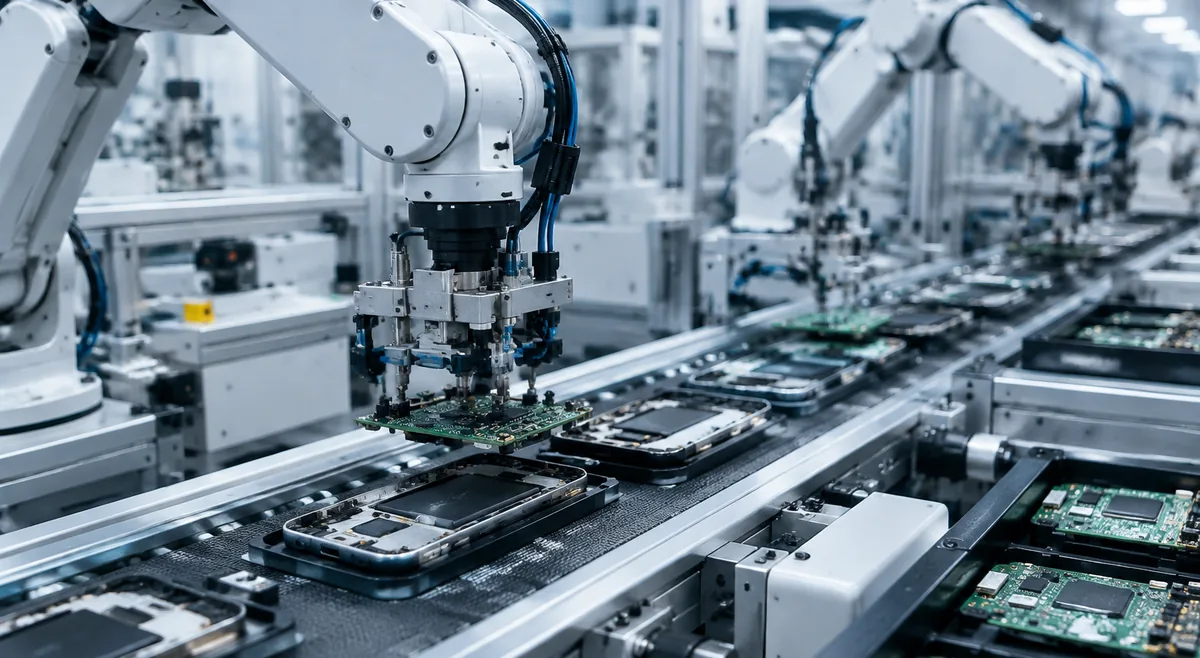
How a shortage destroys its own demand
The cycle has five stages, and smartphones just completed all of them: **Stage 1: AI absorbs capacity.** AI data centers consume DRAM and HBM. Memory makers redirect wafers to higher-margin HBM and server DRAM. Mobile DRAM supply shrinks. **Stage 2: Prices explode.** IDC: memory prices up ~350% year-on-year. Counterpoint: Q2 2026 phone memory prices up >80% quarter-on-quarter. Memory now accounts for over 65% of a low-end phone's bill of materials (Counterpoint BOM model). **Stage 3: OEMs raise prices and cut SKUs.** Global smartphone retail prices are up about 20% so far in 2026 (Counterpoint), and Counterpoint expects new launches to be up to 30% higher year on year by year-end. Low-end models — where memory dominates the BOM — saw costs rise ~70% year-on-year (Counterpoint BOM model). Mid-range +52%, high-end ~50%. In high-end phones, DRAM now costs more than the SoC — the most expensive single component in the phone is no longer the processor. **Stage 4: Consumers stop buying.** In a Counterpoint survey of more than 5,000 prospective buyers across five countries — stated intentions, not observed behaviour — 44% said they would stretch their budget, 37% would delay a purchase and 35% would look at other options within budget. The sub-$100 segment — 173 million units globally last year — saw shipments fall nearly 60% in Q2. Consumers hold phones longer and consider refurbished devices. **Stage 5: OEMs cut orders.** Apple and Samsung reportedly cutting component orders. Xiaomi cutting low-end exposure. OPPO consolidating brands. The shortage has now destroyed enough end demand that component orders fall — which is the beginning of the cycle turning. The critical insight: **Stage 5 does not mean the shortage is over.** Memory makers are still sold out through 2027. The order cuts reduce *phone* demand, but AI demand — the original cause — is still growing. We expect most freed-up capacity to flow to AI and servers, not back to phones. The cycle turns only when AI demand cools or new capacity arrives, neither of which is visible yet.
The polarization: premium survives, low-end dies
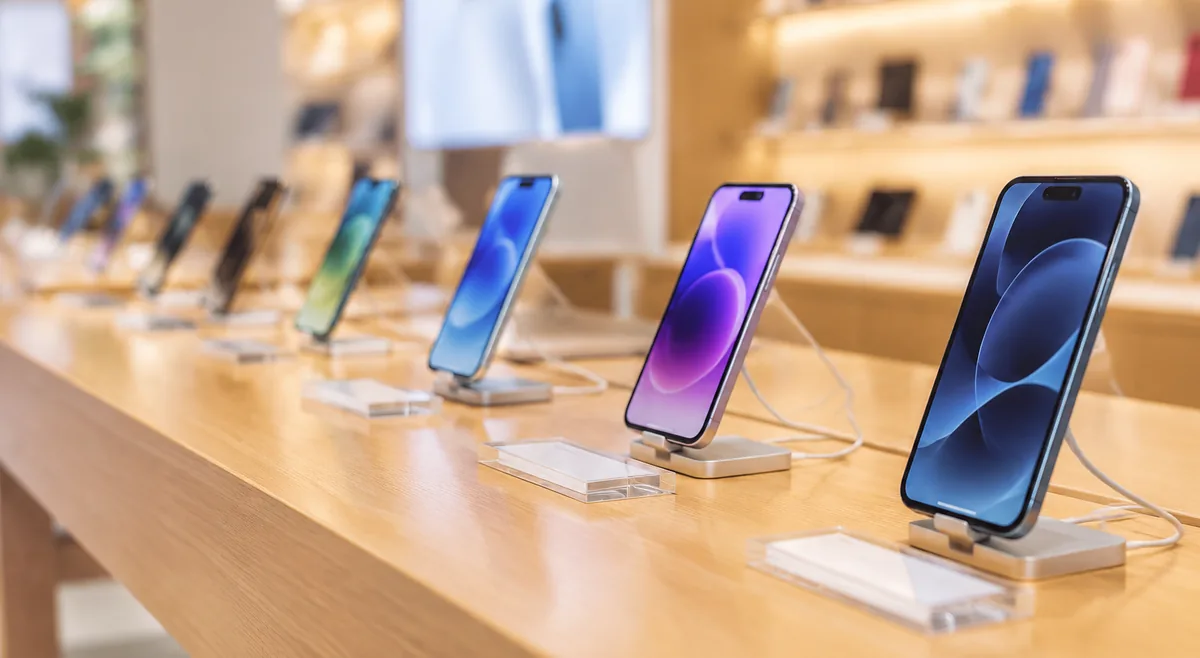
The Q3 data reveals a brutal polarization. The market is not falling evenly — it is splitting: | Brand | Q3 share | Shipment change | Story | |-------|----------|----------------|-------| | Samsung | 22.6% | -5.8% | Smallest decline of the top five; makes its own memory | | Apple | 22.4% | -4.0% | First time above 20% in Q3; no base iPhone 18 | | Xiaomi | 12.0% | -29.2% | Deliberate retreat from low-end | | OPPO | 10.0% | -34.5% | Consolidating brands | | vivo | 7.5% | -31.5% | Price hikes across lines | (IDC preliminary Q3 2026 data. Counterpoint put the total market at -20% — a different model, the same pattern.) Samsung and Apple together now hold about 45% of the market (IDC). They survive because they have premium products (where memory is a smaller share of the price), stable component supply (Samsung makes its own memory), and brand power to pass through costs. The losers are the volume brands that built their business on affordable phones. Xiaomi's shipments fell 29.2% year-on-year (IDC preliminary data); Counterpoint says it deliberately cut low-end and non-core overseas exposure. OPPO is consolidating OPPO, realme, and OnePlus operations and shifting capacity to higher-margin models. This is not a temporary dip; it is a strategic retreat from the segments where memory costs make phones unprofitable. For component buyers, the polarization means: **if your parts go into low-end phones, you are in the worst segment of the worst market.** If your parts go into premium phones, volumes are down single digits. Know which segment you serve.
The order-cut signals: what is confirmed, what is not
Two specific reports need careful handling: **Apple (via Nikkei Asia):** Nikkei Asia's sources said October orders fell 15-20% for both Pro models. **Apple has not confirmed this.** The figures are unconfirmed; the underlying pressure is real — Counterpoint's BOM model estimates the total bill-of-materials cost of a 1TB Pro Max rose by nearly $300 versus last year. That is an estimate of the whole BOM, not a memory-only figure and not a transaction price. **Samsung (via Korean media):** Korean media reportedly say Samsung's mobile division asked suppliers to trim Q4 component deliveries by 20-30% (unconfirmed). **Samsung has not confirmed this.** Samsung's dual role (memory seller + phone maker) makes it the most complex case: memory profits offset phone losses. The honest summary: shipment data confirms the volume collapse behind the reported order cuts, but shipment statistics alone cannot prove any one company's order behaviour. The specific percentages in press reports are unconfirmed and may reflect selective leaks. Do not build procurement plans around "Apple cut 15%" — build them around the confirmed fact that phone volumes are falling 20%+ and OEMs are prioritizing margin over volume.
The order-cut propagation timeline: when it hits your POs
The shipment collapse does not hit all suppliers at once. Based on the Q3 data and OEM behavior, we expect the propagation to follow this sequence: - **Q3 2026 (now):** OEMs cut component orders for Q4 production. Phone-specific parts (mobile DRAM, phone PMICs, phone sensors) feel it first. - **Q4 2026:** Distributors see phone-chain order deferrals and cancellations. Inventory of phone-specific parts starts building at distributors. - **Q1 2027:** The second-order effect arrives — component makers cut their own wafer/material orders, and lead times for phone-adjacent parts begin to loosen. - **Q2 2027 and beyond:** If AI demand stays strong, freed capacity is absorbed by AI/servers and the loosening stops. If AI demand cools, broader relief begins. Use this timeline to time your own moves. If you buy phone-specific parts, Q4 is your window to renegotiate — your suppliers are about to have inventory they need to move. If you buy industrial/automotive parts, don't expect relief before Q2 2027 at the earliest, and only if AI demand cools.
What this means for component buyers (not phone buyers)
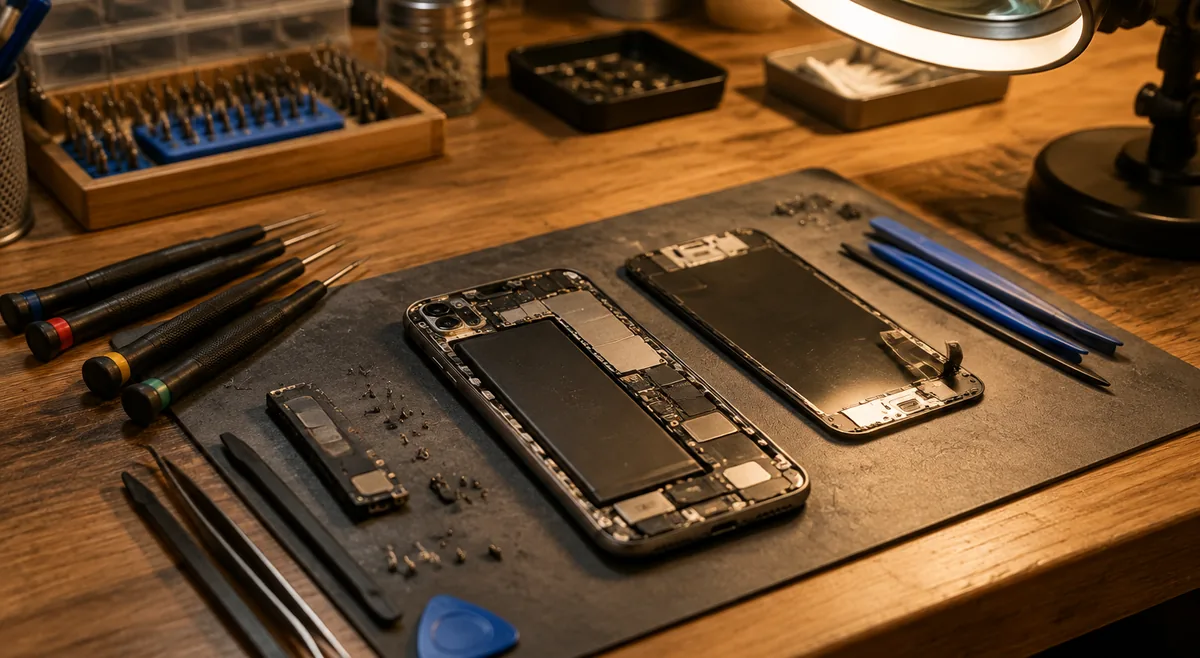
Most readers of this site are not buying phones — they are buying components. The smartphone collapse matters to them in three ways: **1. If you sell into the phone chain, your demand is falling.** Phone OEM order cuts propagate upstream. If you supply capacitors, connectors, sensors, power ICs, or any component that goes into phones, expect your phone customers to order less, later, and more cautiously. We expect the Q3 shipment collapse (-22%) to show up in component orders in Q4 and Q1. Do not extrapolate your 2025 phone-chain volumes into 2027. **2. If you buy components for non-phone products, relief is coming — slowly and unevenly.** As phone demand falls, some component capacity frees up. But the freed capacity is mostly in phone-specific parts (mobile DRAM, phone sensors), not in the industrial/automotive/embedded parts most buyers need. And we expect memory makers to redirect freed capacity to AI/servers, not to your segment. Expect selective relief in phone-adjacent categories, not a broad loosening. **3. The refurbished market is growing — and it needs parts.** Counterpoint notes consumers increasingly consider refurbished devices. The refurbished/repair market needs replacement components: batteries, screens, connectors, power ICs. If you supply the repair channel, this is a growth segment in a shrinking market.
The critical-point question: when does the cycle turn?
Huawei's Yu Chengdong said rising memory prices had added an average of about $200 to the cost of each handset, squeezing margins, and that Huawei would have to raise prices (Reuters). The "critical point" framing is useful but incomplete. There are two critical points, and they arrive at different times: **Critical point 1 (arriving now):** Phone OEMs cannot profitably sell low-end phones. This is already here — Xiaomi, OPPO, and vivo are retreating from the segment. In our view, the low-end phone market is effectively shutting down as a volume business. **Critical point 2 (not yet here):** AI demand cools or new memory capacity arrives, freeing supply and normalizing prices. None of the sources cited here points to this before late 2027. Micron says industry demand will continue to significantly exceed supply beyond calendar 2027. Between the two critical points, the market lives in a strange state: phones get more expensive and fewer, memory stays expensive and scarce, and the shortage persists even as its victims disappear. Plan for this interval — it could last 12–18 months.
A buyer's demand-destruction playbook
**1. Segment your exposure.** Divide your revenue by end market: phone vs. non-phone; within phone, premium vs. mid vs. low-end. Low-end phone exposure is the highest-risk segment. Premium phone exposure is the most resilient. Non-phone exposure (industrial, automotive, embedded) is insulated from the phone collapse but still faces memory/foundry tightness. **2. Don't over-commit to phone-chain inventory.** Phone OEM order cuts mean your phone customers may cancel or defer. Avoid building inventory against phone forecasts that assume 2025 volumes. Shorten your commitment horizons for phone-chain parts. **3. Watch the OEM order signals as leading indicators.** Apple and Samsung order adjustments are the earliest signals of demand shifts. Track them (with appropriate skepticism about unconfirmed percentages) as a leading indicator for your own phone-chain demand. **4. Pivot capacity toward non-phone demand.** If you manufacture or distribute components, the growth segments are industrial, automotive, embedded, and repair/refurbished — not phones. Reallocate sales effort accordingly. **5. Model 2027 as "tight supply + falling phone volumes."** The paradox of 2027: memory and foundry capacity stay tight (AI demand), but phone volumes keep falling (demand destruction). Your planning must hold both truths simultaneously. Tight supply does not mean strong demand for *your* parts if your parts go into phones. **6. Prepare for the eventual turn — but don't bet on its timing.** When AI demand cools or new capacity arrives, memory prices will fall and phone volumes will recover. That turn could be sharp. Keep supplier relationships warm and qualification current so you can move fast when it comes — but don't carry inventory betting on a specific date.
Frequently asked questions
**Is the memory shortage over because phone shipments crashed?** No. The phone collapse is a *consequence* of the shortage, not its end. Memory makers are still sold out through 2027, AI demand is still growing, and freed phone capacity is, in our view, more likely to flow to AI/servers than back to phones. The shortage persists; only its victims have changed. **Will phone prices come back down?** Not soon. Memory prices are still rising (+350% YoY), OEMs are prioritizing premium models, and any recovery is pushed to 2028 at the earliest (IDC). Expect continued price increases, especially for high-storage models. **Should I buy a phone now or wait?** If you need one, buy now — prices are rising and low-end options are disappearing. If you can wait until 2028, the market may normalize. The refurbished market is worth considering as a value option in the interim. **What does this mean for non-phone component prices?** Indirect relief at best. Phone-specific component capacity may loosen, but we expect memory and foundry capacity to stay tight due to AI demand. Don't expect broad price drops for industrial/automotive/embedded components in 2027. **Are the Apple/Samsung order cuts confirmed?** The specific percentages (Apple -15%, Samsung -20–30%) are **unconfirmed** — neither company has confirmed them. The underlying trend (falling phone volumes, OEMs prioritizing margin) is confirmed by three independent research firms. Use the trend, not the percentages, for planning. **When will the smartphone market recover?** IDC points to 2028 at the earliest for a modest recovery. IDC projects full-year 2026 shipments down 16.7% to ~1 billion units. The recovery depends on memory prices stabilizing — which depends on AI demand cooling or new capacity arriving. ---
Sources
Use the latest guidance for the exact part and manufacturer when deciding acceptance criteria.
- IDC: Global Smartphone Shipments Drop Record 22% in Q3 2026 (press release, 14 Oct 2026)
- Reuters via The Business Times: Huawei unveils Mate 90 phones; memory prices add about $200 per handset (30 Sep 2026)
- Counterpoint Research: Global Smartphone Shipments Hit a New Low with 20% YoY Decline (12 Oct 2026)
- IDC: Smartphone Shipments Set for Record 16.7% Drop in 2026, as the Memory Crisis Hits Full Force (26 Aug 2026)
- IDC: Global Smartphone Shipments Fall 7.4% in Q2 2026 as the Memory Crisis Splits the Market in Two (28 Aug 2026)
- Counterpoint Research: Reshuffling the BoM - Component Cost Dynamics Amid Memory Price Spikes (28 Jul 2026)
- Fortune: Apple reportedly slashes iPhone 18 Pro orders, citing Nikkei Asia (10 Oct 2026)
- The Korea Herald: Samsung Display faces profit squeeze as Apple, Samsung cut orders (26 Oct 2026)