The short version
The DRAM market just produced a paradox: the older memory standard is inflating faster than the newer one. According to Barclays data reported by Wccftech (12 Oct 2026), DDR4 8Gb chip contract prices rose 4% month-on-month in October, 24% over three months, while the DDR5 part in the same report rose 3% and 20% (a different density and terms — not a like-for-like part, as XenoSpectrum notes). In some product categories DDR4 already costs more than DDR5 — one reported comparison (XenoSpectrum, citing TrendForce contract-price data) put 2H-August average contract prices for 8GB SO-DIMMs at $142 for DDR4 versus $133 for DDR5, a single reported sample rather than a market-wide quote — while in others DDR4 is still cheaper. Analysts call it a price inversion. But the price numbers are only half the story. Barclays reportedly says new customer supply agreements now track market pricing rather than prior floor-and-ceiling structures (Micron says most of its existing strategic agreements still carry price bands). Buyers are losing the price protection that long-term agreements used to provide — right when they need it most. With Micron's CEO guiding to supply and demand conditions 'much tighter in fiscal 2027 and 2028 than they were in 2026', Barclays reportedly seeing Micron's DRAM supply constrained through calendar 2028 (some coverage says 2029), and Citi reported to project the DRAM supply-demand gap peaking at 13.9% in Q4 2027, DDR4-locked buyers (industrial, embedded, legacy server) face the worst combination: the fastest inflation, the least supply, and fast-eroding contractual shelter.
Why the old standard inflates faster: the DDR4 trap
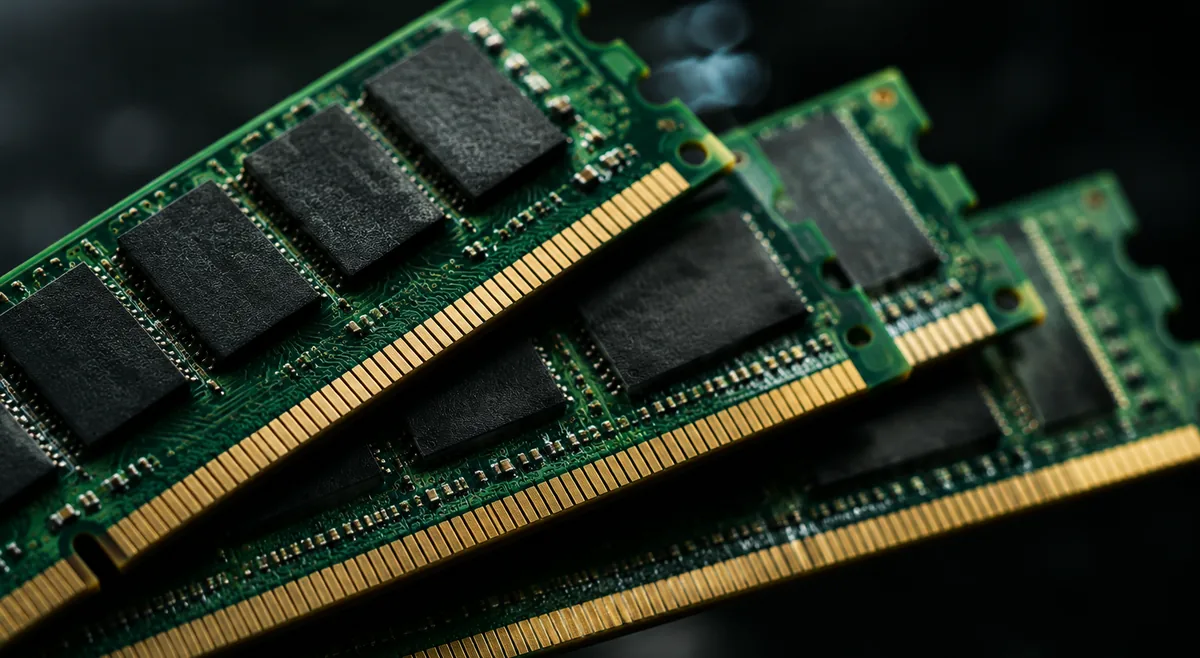
Three structural forces, all pointing the same way: **1. Supply is being deliberately retired.** The big three DRAM makers have been withdrawing from consumer DDR4 production, redirecting capacity to higher-margin DDR5 and HBM, leaving mainly industrial, automotive and networking supply (for example Micron's Virginia Fab 6). For consumer grades, the supply pool shrinks by design — not by accident. **2. Demand cannot migrate.** DDR4 and DDR5 are not interchangeable — you cannot put DDR5 in a DDR4 board. The enormous installed base of existing desktops, servers, industrial equipment, and embedded systems keeps generating replacement and expansion demand that has nowhere else to go. Barclays' data shows this captive demand clearly: it is the reason the older standard out-inflates the newer one. **3. The AI squeeze hits both, but DDR4 has no relief valve.** HBM's wafer appetite (roughly 3x the silicon per gigabyte versus standard DRAM) tightens the whole DRAM pool. DDR5 buyers at least benefit from capacity migration toward their standard. DDR4 buyers get the tightening with none of the investment. The result is the inversion: TrendForce forecast conventional DRAM contract prices to rise 13–18% quarter-on-quarter in Q3 2026, and Barclays' data show DDR4 contract prices rising faster than DDR5 over the three months to October — the supposedly dying standard, out-inflating the new one.
The bigger story: your price protection is disappearing
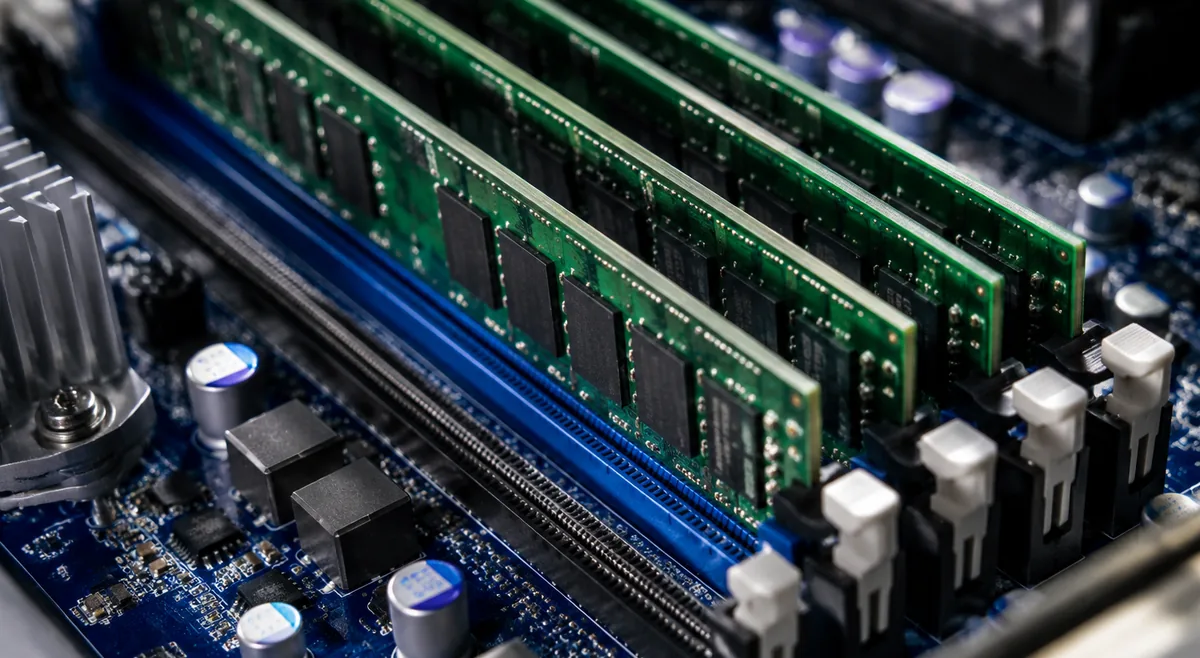
Read the Barclays finding carefully, because it changes procurement math more than any single price figure. Historically, memory supply agreements used collar structures — agreed floors and ceilings that bounded how far contract prices could move. That gave buyers predictability: even in a shortage, your contracted volume had a ceiling. Barclays reportedly says new agreements are dropping the collars and tracking market pricing instead. The bank's phrasing is worth quoting in spirit: the shortage has made long-term agreements more predictable for the *chip business*, while the old floor/ceiling protections fade for buyers. Translation: suppliers keep the predictability; buyers absorb the volatility. What this means in practice: - A "long-term agreement" signed in late 2026 may offer you *volume* security but no *price* security — read the pricing clause, not the headline. - Budget owners who modeled 2027 memory costs off 2026 contract curves need to remodel off spot-linked scenarios. - The negotiating leverage has inverted: in a shortage that Micron's CEO says will be much tighter in fiscal 2027 and 2028 than in 2026, with some strategic customer agreements reportedly extending purchase commitments into 2031, suppliers have little incentive to offer collars.
De-speccing: the canary in the shortage
Barclays flags a second-order signal worth watching: chip designers are de-speccing — reducing installed memory capacity or trimming product-line specs to control costs and keep shipping. Tesla's Elon Musk disclosed the company halved AI5 memory capacity at one point (later raising it to 96GB to avoid being the lowest-spec chip). The bank warns de-speccing is a reasonable short-term response but risks becoming a long-term norm if shortages persist — with real consequences for performance under heavy workloads. For buyers, de-speccing by your suppliers is a leading indicator. When vendors start shipping less memory per dollar rather than raising prices, the shortage is structural, not tactical. It also creates a qualification risk: a de-specced revision of a part you already qualified may not be drop-in equivalent for your application. Ask your suppliers explicitly whether any spec changes are planned.
The terminal-price signal
The cost pressure has reached consumers. From October 9, Huawei raised nova16/nova16 Pro suggested retail by 400 yuan (SE by 200 yuan), and Xiaomi raised the 17 Ultra across the board. Counterpoint separately estimates global smartphone retail prices were up ~20% year-to-date at its October 2026 report. When OEMs with Samsung-scale purchasing power pass through costs this visibly, smaller buyers should not assume shelter either.
A buyer's DDR4 playbook
**If your products are locked on DDR4 (industrial, embedded, legacy):** - Treat DDR4 as a *declining-supply* market, not a *mature-stable* one. The mental model most buyers still carry ("old tech = cheap and available") is now wrong and expensive. - Forward-cover where your demand is firm. With a reported +24% in three months and no relief in the cited forecasts, covering 2–4 quarters at today's contract prices can be defensive rather than speculative — a coverage decision for your own demand visibility, not a source-backed guarantee. - Get pricing clauses in writing — specifically whether your agreement has collars or is market-linked. If it is market-linked, your "LTA" is a volume agreement, and you should budget accordingly. - Start DDR5 migration planning now, even if the platform change is 18–24 months out. Every quarter you remain DDR4-locked, the inversion taxes you. **If you can choose (new designs):** - The inversion strengthens the DDR5 migration case on cost alone, before performance even enters the picture. - But verify availability: DDR5 is also up 20% in three months with its own tightness. Migration solves the *structural* DDR4 problem, not the *cyclical* shortage. **For everyone:** - Watch for de-speccing in your supply chain. Ask vendors directly; do not discover it in incoming inspection. - Model 2027–2028 with market-linked assumptions. Citi's reported deficit timeline (DRAM gap peak 13.9% in Q4 2027, NAND 8.3% in Q1 2028) and Micron's "tighter in 2027–2028 than 2026" guidance both point the same way. - Note that contract chip prices do not translate one-for-one to retail module prices (regional inventory, distribution costs and existing stock dampen pass-through); use them for direction, not precise budgeting.
Frequently asked questions
**Why is DDR4 rising faster than DDR5?** Deliberate supply retirement meets captive demand. The big three have been withdrawing from consumer DDR4 production while the installed base of DDR4-only systems keeps buying — and DDR4 cannot be substituted with DDR5. Barclays' October data: DDR4 contracts +24% over three months versus DDR5's +20%. **What does "price inversion" actually mean for my BOM?** In some product categories, DDR4 already costs more per unit than the newer DDR5 standard — the reported 8GB SO-DIMM comparison above ($142 DDR4 versus $133 DDR5, XenoSpectrum citing TrendForce data) is one such sample — while in others DDR4 is still cheaper. If your BOM uses one of the inverted categories, you may be paying a premium for older technology — the opposite of the normal tech-cost curve. This is the signal to accelerate any DDR5 migration plans. **Are memory LTAs still worth signing?** For volume security, yes. For price security, read the fine print: Barclays reportedly says new agreements are dropping floor/ceiling collars for market-linked pricing. An LTA without a price collar protects your supply, not your budget. Negotiate the pricing clause as hard as the volume clause. **How long will this last?** Barclays reportedly expects Micron's DRAM supply to stay constrained through 2028; Micron's CEO is guiding to conditions 'much tighter in fiscal 2027 and 2028 than they were in 2026'; Citi is reported to project the DRAM supply-demand gap peaking at 13.9% in Q4 2027. None of the sources cited here points to relief before late 2027. Plan 2027 as tight, treat any earlier relief as upside. **Should I switch to spot buying?** Only tactically. Spot can dip below contract briefly on inventory gluts, but in a structural shortage with spot-linked contracts becoming the norm, systematic spot-buying just means paying the peak every time. Use spot for gap-filling, not for base supply. **What is de-speccing and should I worry?** Vendors reducing memory capacity or trimming specs to manage costs (Tesla's AI5 went through this publicly). Worry in one specific way: a de-specced revision may not be equivalent for your application. Ask suppliers whether spec changes are planned, and re-qualify if they are. ---
Sources
Use the latest guidance for the exact part and manufacturer when deciding acceptance criteria.
- Wccftech (citing Barclays): DDR4 Memory Chip Contract Prices Surge 24% In Three Months, Outpacing DDR5 As Barclays Warns Micron's Memory Shortage Runs Until 2028 (12 Oct 2026)
- TrendForce: AI Server Demand Continues to Support Memory Prices in 3Q26, but Gains Moderate as Consumer Demand Weakens and High Base Effects Take Hold (3 Jul 2026)
- Counterpoint Research: Global Smartphone Shipments Hit a New Low with 20% YoY Decline, Lowest in 14 Years (12 Oct 2026)
- 36Kr: Huawei and Xiaomi Initiate New Round of Price Hikes (9 Oct 2026)
- XenoSpectrum: DDR4 price surge and supply shift — SO-DIMM comparison and comparable-part caveat