The short version
On October 19, Samsung Electro-Mechanics (SEMCO) announced a 360.5 billion won (about $251 million) long-term agreement to supply package substrates for memory semiconductors to a global big tech company, covering all of 2027. It is the company's seventh long-term supply contract since May, bringing its disclosed LTA total to roughly 4.3 trillion won. Three weeks earlier, SEMCO unveiled a 6.78 trillion won expansion of AI-server substrate capacity — the Sejong portion alone, 4.27 trillion won, is the largest single-product investment in its history. For component buyers, this is the substrate market's version of what memory did in 2025: capacity is being locked up by long-term agreements, and the lock-up is accelerating. SEMCO expects long-term agreements to cover more than half of its 2027 MLCC revenue, with about 50 customers signed or in negotiation (Q3 call, October 28); its substrate business is now following the same path. Meanwhile, SEMCO's headline expansion is not scheduled to relieve the market before 2028 on the September announcement's own timeline. SEMCO's October 28 earnings-call reporting separately points to new lines phasing into production from 2027 — a later, broader outlook that makes relief timing a range to watch rather than a single date. This article explains the substrate lock-up and what to do if you're not already in a long-term agreement.
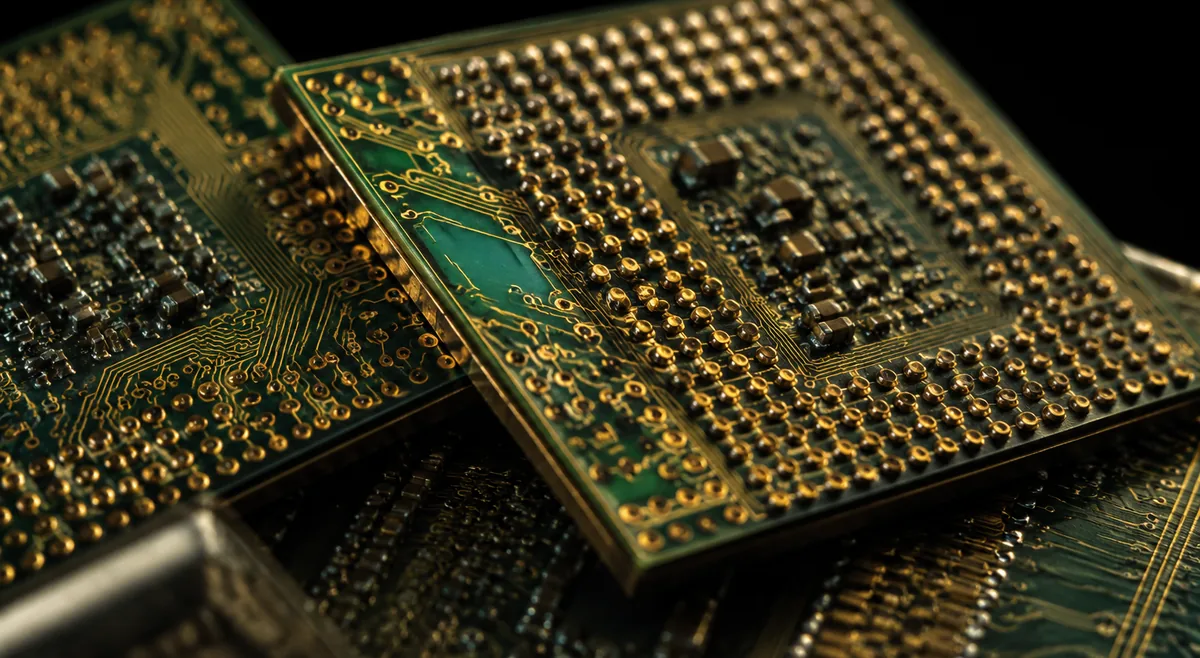
The deal: $251M, one year, customer undisclosed
The October 19 contract, disclosed in a regulatory filing: - **Value:** 360.5 billion won (~$251 million; the Korea Herald converts it at ~$271 million — the won figure is the authoritative one). - **Product:** Package substrates for high-performance memory semiconductors. - **Customer:** A global big tech company, undisclosed under confidentiality agreement. - **Period:** January 1 to December 31, 2027 — one year. - **Scale:** 3.2% of SEMCO's consolidated revenue last year (each contract above 2.5% triggers disclosure). This is SEMCO's seventh disclosed LTA since May. The sequence tells the story of an industry-wide lock-up: | Date | Product | Value | Period | |------|---------|-------|--------| | May 2026 | Silicon capacitors | 1.56T won | 2027–2028 | | Jun 2026 | MLCC | 454B won | — | | Sep 1, 2026 | AI server MLCC | 1.07T won (largest MLCC deal) | 2027 | | Sep 29, 2026 | MLCC + inductors | ~290B won | 2027 | | Oct 19, 2026 | Memory package substrates | 360.5B won | 2027 | Cumulative disclosed value: ~4.3 trillion won (SEMCO's own disclosed total). Every row in this table is itemized in a source we could read: the May, June, September 1 and September 29 rows follow Korea Herald's October 2 roundup of SEMCO's disclosures, and the October 19 row comes from SEMCO's own filing as reported by Korea Herald and Seoul Economic Daily (both October 19). The June row's period is blank because the October 2 roundup does not state it. SEMCO counts seven disclosed LTAs since May (Korea Herald, October 19); the two contracts we could not tie to a readable itemized source are omitted from the table rather than shown without values. SEMCO has signed MLCC LTAs with more than 10 global customers and claims over 40% of the AI-server MLCC market. The substrate deal extends the LTA strategy from components into package solutions — the first substrate LTA in the series.
The 6.78 trillion won expansion: the biggest bet in SEMCO's history
On September 28, SEMCO disclosed its substrate expansion plan: 6.78 trillion won for AI-server semiconductor substrates. The Sejong portion — 4.27 trillion won — is the company's largest single-product investment ever. - **Sejong, Korea:** 4.27 trillion won, investment through May 2028, mass production targeted September 2028. FC-BGA (flip-chip ball grid array) substrates for AI accelerators, GPUs, and server CPUs. - **Vietnam:** 2.51 trillion won, completion June 2030. - **Funding:** Global big tech and semiconductor customers are providing funding support and committing to mid- to long-term volumes for the expansion; SEMCO has not named them or disclosed amounts. The customer co-funding is the detail that matters most — but read it carefully. SEMCO's announcement does not say that funders receive priority, and it does not say the co-funded capacity is pre-sold. Our inference, not a disclosed term, is that customers who fund a supplier's factory usually expect allocation ahead of spot buyers, which would leave spot buyers competing for whatever remains. Treat that as a risk scenario to plan against, not as a contract fact.
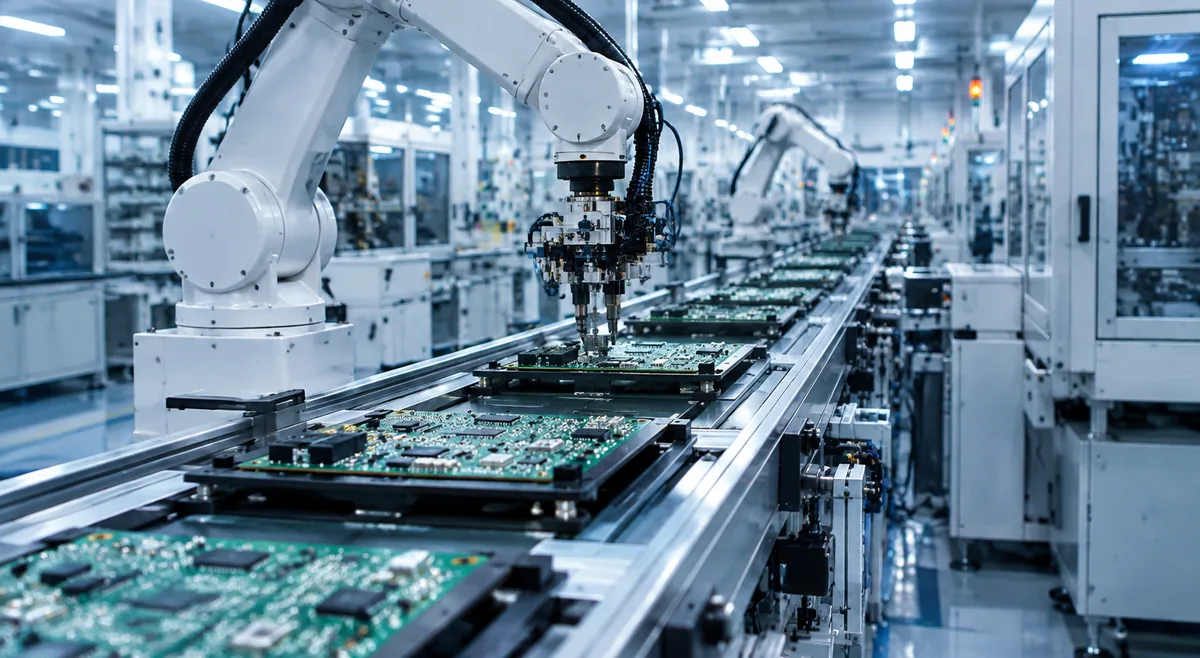
The equipment bottleneck: why we expect no relief from this expansion before 2028
SEMCO's expansion faces a constraint that money can't immediately solve: substrate manufacturing equipment has long lead times. - **Equipment lead times:** SEMCO's filings do not publish tool-level lead times; our planning assumption is that core-tool lead times stay long, which is one reason SEMCO's own build schedule runs to 2028 and beyond. The implication is arithmetic: equipment ordered today takes many months to arrive, then needs installation, commissioning, and ramp. SEMCO's Sejong plant targets mass production in September 2028 — and that's the optimistic case, assuming equipment delivers on schedule. **On the September announcement's schedule, we do not expect SEMCO's headline expansion to add meaningful substrate capacity before 2028** — that is our reading of the equipment timelines, not a guarantee. SEMCO's October 28 outlook for other lines phasing in from 2027 could pull some relief earlier; the two statements cover different lines and dates. The shortage is structural, not cyclical.
The LTA lock-up: how long-term agreements drain the spot market
SEMCO expects more than half of its 2027 MLCC revenue to come from long-term agreements, which should worry every spot buyer. That figure is a revenue share, not a capacity share — the two are not interchangeable, and it covers MLCC, not substrates. But to the extent LTA commitments track allocation, the spot market for those components gets thinner: fewer sellers, less volume, wider bid-ask spreads, longer lead times for non-contract buyers. For FC-BGA substrates specifically, according to Korea Herald (October 2), Hana Securities analyst Kim Min-kyung estimated product lead times at 48 to 56 weeks, against a more normal 12 weeks. The substrate business is now entering the same lock-up. The October 19 deal is the first substrate LTA, but SEMCO's official statement says it plans to "continuously enhance" its substrate business through customer cooperation and stable supply systems — corporate language for "more LTAs are coming." This is not unique to SEMCO. Across the AI-server component chain, the LTA wave is the defining commercial trend of 2026: - **Memory:** Multi-year LTAs at Micron and Samsung — the subject of our earlier memory coverage — on terms that are mostly undisclosed. - **MLCC:** SEMCO (more than 10 customers, per Korea Herald, October 2). We name only the makers our cited sources name, and do not generalize the pattern beyond them. - **Substrates:** SEMCO's first substrate LTA; we expect more to follow. The pattern repeats everywhere: AI-server demand is so strong and so concentrated that suppliers and customers are increasingly bypassing the spot market. For the capacity these agreements cover, the spot market is becoming the market of last resort — for whoever didn't sign.

What this means for component buyers
**1. If you buy substrates (FC-BGA, ABF, BT), sign an LTA now.** The window for favorable LTA terms is closing. On the current trajectory, every quarter that passes sees more capacity committed and the remaining pool shrink. If you have 2027–2028 substrate demand, negotiate now — not when you're desperate in Q2 2027. **2. If you're too small for an LTA, use a distributor with one.** Direct LTAs require volume. Smaller buyers should source through distributors or brokers who hold LTAs with substrate makers. Verify the distributor's allocation — "we can get substrates" is not the same as "we have contracted allocation." **3. Qualify multiple substrate vendors.** Samsung Electro-Mechanics, Ibiden, Shinko, Unimicron, AT&S — qualify at least two. Single-sourcing substrates in a lock-up market is the highest-risk position. Qualification takes months; start before you need it. **4. Design for substrate availability.** Where possible, design around standard substrate sizes and layer counts that multiple vendors can produce. Custom, large-body, high-layer-count substrates (the kind AI accelerators need) are the most constrained. Standardization is a supply-chain strategy. **5. Watch equipment lead times as a leading indicator.** Equipment lead times tell you when new capacity arrives. When equipment lead times start shortening, treat it as the first sign that relief is coming — not as a date. Until then, plan for tightness. **6. Don't confuse announcements with capacity.** SEMCO's 6.78 trillion won expansion is real money, but the Sejong line's mass-production target is September 2028 — plan around that date for Sejong output, with other lines on the phased schedule of SEMCO's October 28 outlook. Whether customer co-funding carries priority allocation is not disclosed; treat any pre-commitment of that capacity as a scenario to plan against, not a fact. Announcements move stock prices; only ramping factories move supply. The same lock-up logic applies to the power chain that feeds AI servers. Three parts in our catalog sit directly in that chain: PC817C optocouplers provide the isolation barrier in server PSU feedback loops — the component that keeps high-voltage primary and low-voltage secondary safely separated; UC3843BD1R2G PWM controllers drive the switching stages of those PSUs; LM358DR dual op-amps handle the monitoring and control loops around them. In our view, these are parts worth watching when AI-server builds accelerate. If your BOM includes server power, treat them with the same LTA urgency as substrates.
Frequently asked questions
**What is a package substrate, and why does it matter?** A package substrate connects a semiconductor chip to the main circuit board, carrying electrical signals between them. As chips get faster and more integrated (HBM, AI accelerators), substrates need finer circuitry, more layers, and tighter warpage control. They are the physical foundation of advanced packaging — without substrates, there are no AI chips. **Who is the customer in the $251M deal?** Undisclosed — SEMCO cited trade-secret protection. Given the product (memory substrates for a global big tech company) and the AI-server context, likely candidates include hyperscalers or memory makers, but this is speculation. The identity matters less than the pattern: big buyers are locking up substrate capacity a year in advance. **Is $251M a lot for a substrate contract?** It's 3.2% of SEMCO's annual revenue in a single one-year contract — significant for one customer and one product line. More importantly, it's the seventh such contract since May, totaling 4.3 trillion won. The individual deal is large; the pattern is enormous. **When will substrate supply loosen?** In our view, not before 2028 on the September expansion schedule: SEMCO's Sejong expansion targets September 2028 mass production, and build-and-ramp timelines constrain the whole industry. SEMCO's October 28 outlook has other lines phasing in from 2027, which could ease specific products earlier; slippage on either timeline pushes relief later, not earlier. Our earlier ABF analysis (#50) reached the same conclusion: shortage conditions persisting from 2027 with prices under upward pressure. Plan for tightness through 2028. **Should small buyers try to sign LTAs?** Direct LTAs usually require volume commitments that small buyers can't meet. Instead, work through distributors with contracted allocation, qualify multiple vendors, and standardize your substrate requirements. The goal is the same — secured supply — through a different channel. **How does this connect to the ABF shortage article (#50)?** It's the same story, one level up. #50 covered the ABF material and capacity shortage; this article covers the commercial response — suppliers and customers locking up capacity through LTAs, and the 6.78 trillion won in new capacity that, on SEMCO's announced schedules, is not due to reach mass production before September 2028. Read them together: #50 explains why substrates are short, this one explains how the market is adapting. ---
Sources
Use the latest guidance for the exact part and manufacturer when deciding acceptance criteria.
- Samsung Electro-Mechanics: Signs KRW 360.5 Billion Long-Term Supply Agreement for Memory Semiconductor Package Substrates (19 Oct 2026)
- Samsung Electro-Mechanics: Sejong KRW 4.27 Trillion, Vietnam KRW 2.51 Trillion Investment, AI Server Semiconductor Substrate Expansion (29 Sep 2026)
- Seoul Economic Daily: Samsung Electro-Mechanics Wins $251 Million Chip Substrate Order From Big Tech Client (19 Oct 2026)
- Korea Herald: Samsung Electro-Mechanics wins W360.5b memory substrate supply deal (19 Oct 2026)
- Korea Herald: Samsung Electro-Mechanics' AI component deals hit W3.6tr as buyers lock in future supply (2 Oct 2026)
- Seoul Economic Daily: Samsung Electro-Mechanics Sees AI MLCC Demand Jumping Eightfold Next Year (28 Oct 2026)