The short version
The memory shortage has a sequel, and it sits one layer below the chip. According to Morgan Stanley's October 14 research note (as reported by Zhitong Finance), the ABF substrate market enters sustained undersupply starting in 2027, with prices expected to rise more than 25% in 2027 and climb further in 2028. The bank's key distinction: reportedly, 2026's price rises were mostly raw-material cost pass-through; 2027's will be driven by genuine supply-demand tightening — a shift from "paying more for the same" to "paying more and still waiting." The numbers behind that call are stark. Ajinomoto's ABF lines have reportedly been running at virtually full capacity since the second quarter of 2026 (Edaily, August 26), and TrendForce data (via 36Kr, tracking AI-infrastructure substrates) show ABF substrate lead times at 48-56 weeks (roughly 11-13 months) by October. Morgan Stanley now sees ABF demand exceeding available supply by 9.3% in 2027 and 13.7% in 2028, up from 6.2% and 9.4%. And upstream, a single company — Japan's Ajinomoto — supplies the overwhelming majority of the ABF build-up film every advanced substrate depends on (Mitrade, in August 2026, put the share at more than 95%; Sekisui Chemical makes up most of the rest), with its lines at virtually full capacity and its third ABF plant (Gifu) not due to start operating until 2032. For buyers, the implication is blunt: you can secure the chip and still fail to ship the product, because the substrate — the "bridge" between chip and PCB — can become the binding constraint.
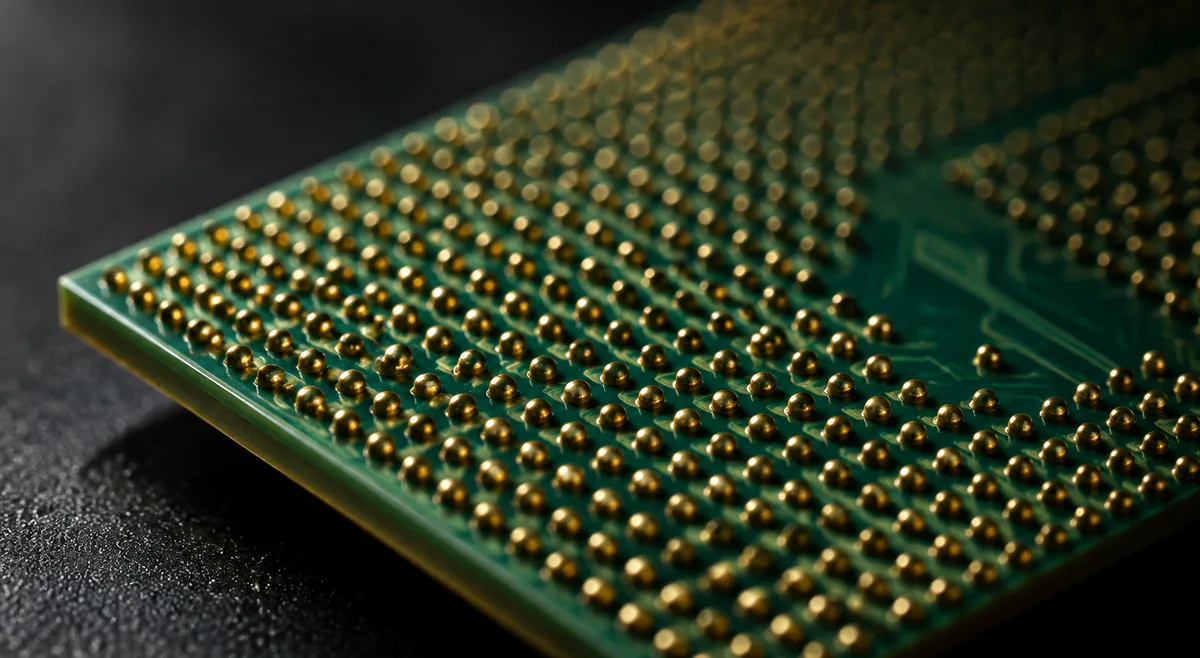
What an ABF substrate is, and why it suddenly matters
Most buyers never thought about substrates. They are the multi-layer boards that sit between a chip die and the printed circuit board, fanning out thousands of microscopic connections into something a PCB can actually route. A chip cannot connect directly to a PCB — the wiring density is too different. The substrate is the translator. Three AI-driven forces turned this quiet component into a bottleneck: **1. Packages got enormous.** AI chips have pushed substrate areas toward 10,000 mm2, which cuts the number of boards per production panel from about 270 (at 830 mm2) to about 20. Each chip now occupies significantly more production line time. The same factory that used to run ten smaller packages now runs far fewer large ones — effective capacity shrank even as nominal capacity grew. **2. Layer counts compound the problem.** More layers mean more build-up film, more lamination cycles, more yield risk. A 24-layer substrate is not 20% harder than a 20-layer one — the defect probability compounds with every added layer. **3. Everything converges on one film.** ABF build-up film is the insulation layer in every ABF substrate. Ajinomoto's overwhelming share (more than 95%, per Mitrade) means the entire global advanced-packaging industry — AI GPUs, server CPUs, HBM stacks, high-end FPGAs — depends on one supplier's output. Ajinomoto's ABF lines have been at virtually full capacity since Q2 2026 and it is prioritising supply for AI and high-specification products (Edaily, 26 Aug 2026). Ajinomoto's announced third plant (Gifu) is not planned to produce until 2032 (construction starting 2028). That is six years of structural single-source exposure.
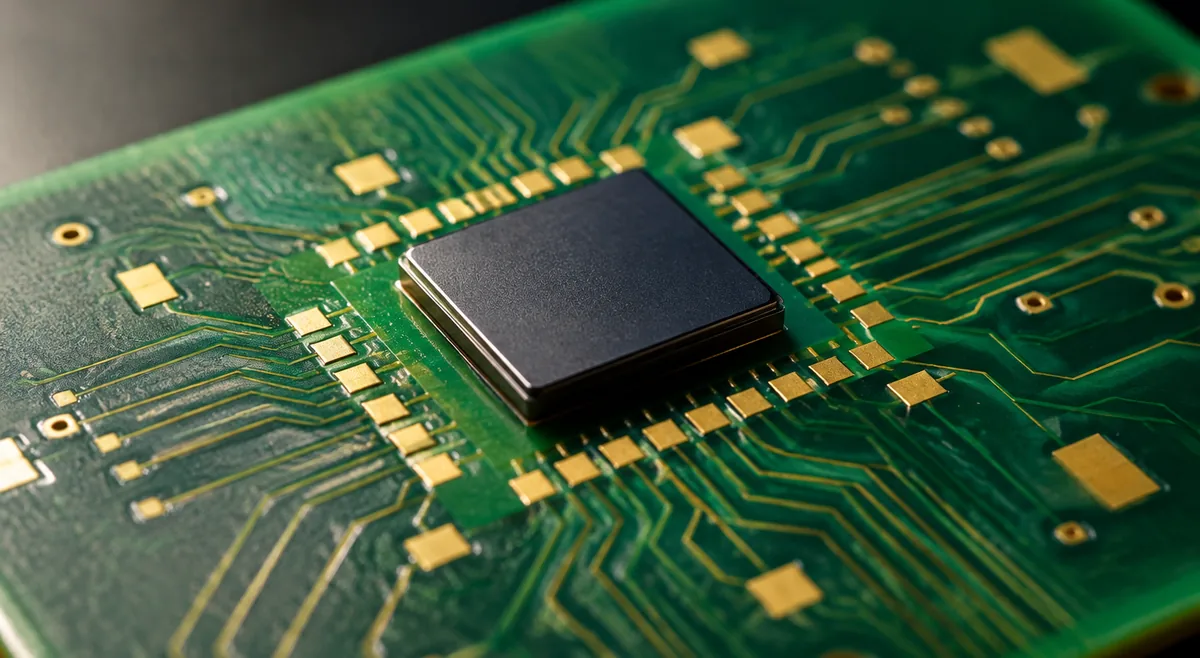
The price regime is changing: pass-through → scarcity
Morgan Stanley's most important observation for procurement planning is not the 25% figure — it is the *cause* of the figure. In 2026, ABF price increases were largely cost pass-through: raw materials got more expensive, and substrate makers passed the cost along. In 2027, the bank expects the driver to shift to supply-demand tightening: prices rise because there is not enough product, not because inputs cost more. Why this matters for buyers: - **Pass-through pricing is negotiable.** You can audit input costs, argue about input prices, benchmark across suppliers. - **Scarcity pricing is not.** When supply is the constraint, the supplier sets the price, and the alternative is no supply. Hana Securities made exactly this point in the October 16 Chosun Biz report: the market has entered a phase where "suppliers' pricing power is expanding, beyond a simple pass-through of costs," with additional hikes expected for high-value memory package substrates between end-2026 and early 2027. - **Budget models must change.** If your 2027 substrate budget assumes 2026-style pass-through increases, it is likely understated. Morgan Stanley's 25%+ is the bank's base case — and the bank notes it is *below* the ~50% increase some buy-side investors reportedly expect. Treat 25% as a planning baseline, not a ceiling — it is the bank's forecast, and final prices still depend on supplier-customer negotiations.
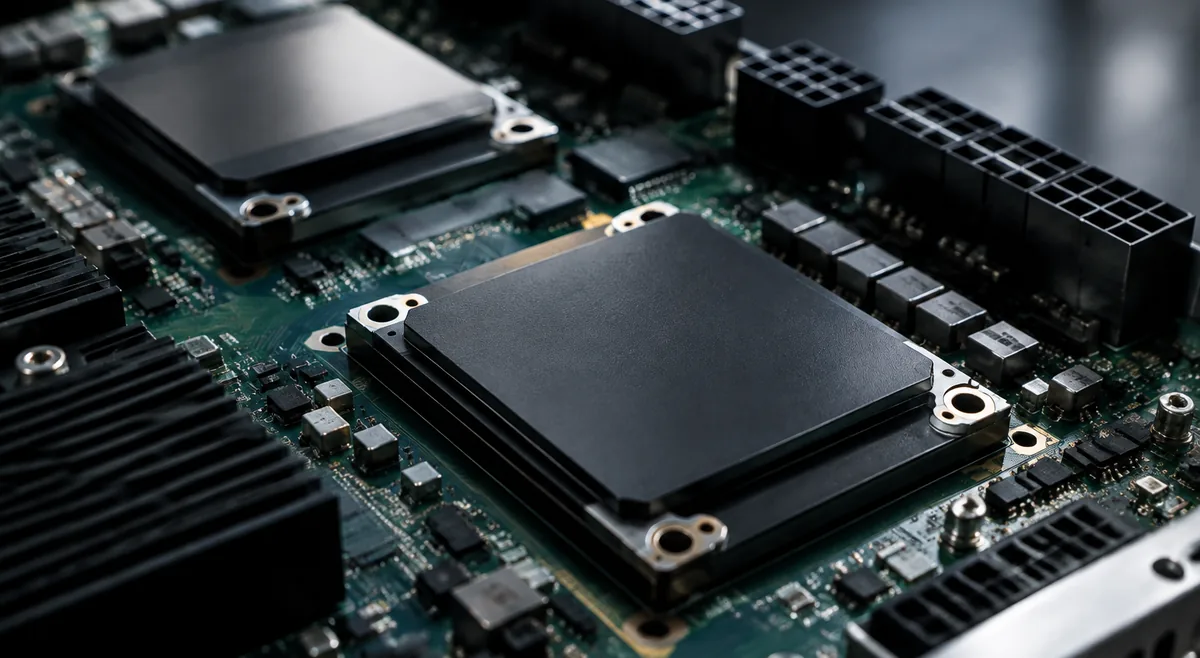
The lead-time trap: 48–56 weeks vs. your planning horizon
TrendForce's lead-time figure — 48-56 weeks (about 11-13 months) — is the number that should change buyer behavior most. Most component procurement plans on 8–16 week horizons. Substrates now demand a roughly 12-*month* horizon. That mismatch creates three traps: **Trap 1: You discover the shortage at tape-out.** If your design team finishes a new AI accelerator or server board in Q2 2027 and only then orders substrates, you are already 12 months behind. Substrate capacity must be reserved *before* the design is final, based on forecasted package size and layer count — not after. **Trap 2: Allocation favors the largest buyers.** When the major suppliers are fully booked, capacity goes to whoever committed earliest and largest. Smaller buyers who order on standard lead times get what is left. Hana Securities explicitly notes that new capacity additions are "concentrated in specific substrates," meaning the shortage is not evenly distributed — your specific substrate type may be worse than the average. **Trap 3: BT substrates are tightening too.** The same dynamic hits BT substrates (used in memory packaging and simpler ICs), driven by storage demand; Hana Securities expects the BT shortage to worsen. Buyers who think "we don't use ABF, we're fine" may find their memory-package substrates tightening in parallel.
The China-supply rumor: handle with care
One recent rumor deserves a specific caution: reports, from Chinese industry media and not confirmed by Ajinomoto, that Ajinomoto cut ABF supply to mainland China by 30%. This is **unconfirmed market rumor**, not a company announcement. What is confirmed is the structural fact underneath it: mainland China's domestic ABF self-sufficiency is reportedly under 5%, and local alternatives (Huazheng's CBF film, Newfex's NBF film) are still in validation and ramp-up. Whether or not the 30% cut happened, buyers sourcing from Chinese substrate makers face the same upstream concentration — their suppliers buy Ajinomoto film too. Do not build procurement plans around the rumor; build them around the confirmed concentration.
A buyer's substrate playbook
**1. Audit your substrate exposure now.** List every product that uses FC-BGA, 2.5D/3D, or Chiplet packaging. For each, record: package size, layer count, substrate type (ABF vs. BT), current supplier, and current lead time. Most buyers have never assembled this view — it is the single highest-value action in this article. **2. Reserve capacity 12+ months out.** Treat substrates like you treated wafers in 2021: commit early, in volume, with explicit delivery schedules. If your supplier offers capacity reservation or pre-booking, take it. At the reported lead times, Q4 2026 orders would arrive around Q4 2027. **3. Ask the three questions your supplier hates.** - "What share of your ABF film allocation is confirmed through 2027?" (Tests their Ajinomoto access.) - "What is my allocation if demand exceeds supply — am I tier 1, 2, or 3?" (Tests where you stand in the queue.) - "What is the price mechanism — cost pass-through or market pricing?" (Tests whether you face scarcity pricing.) **4. Qualify a second substrate source.** Dual-sourcing substrates is harder than dual-sourcing chips — qualification takes months and each supplier's process differs. Start now. A second source is worth more in 2027 than a 5% price saving. **5. Budget 25%+ for 2027 substrates, and model the supply gap.** Use Morgan Stanley's 25%+ forecast as your planning baseline and its 9.3% (2027) to 13.7% (2028) supply gap as your availability stress test. If your product cannot ship with that size of substrate shortfall, you need buffer inventory or a redesign that reduces substrate dependency. **6. Watch for the next bottleneck downstream.** Substrate shortage cascades: fewer substrates → fewer packaged chips → longer lead times for finished modules. If you buy packaged ICs (not bare die), ask your chip supplier whether *their* substrate supply is secured. A chip vendor with wafer capacity but no substrate allocation is a vendor who cannot deliver.
Frequently asked questions
**What is an ABF substrate and why should I care?** It is the multi-layer board connecting a chip die to the PCB — the "bridge" that makes advanced packaging work. You should care because reported ABF lead times for AI-infrastructure substrates are now 48–56 weeks (about 11–13 months), prices are projected up 25%+ in 2027, and without a substrate, a finished chip cannot ship. **How is this different from the CoWoS/interposer bottleneck?** CoWoS (covered in our earlier guide) is an advanced-packaging *process* bottleneck — limited interposer capacity at TSMC and partners. ABF is a *material* bottleneck — limited substrate and build-up film supply across the whole industry. They stack: a chip can be CoWoS-constrained *and* substrate-constrained simultaneously. **Will the shortage affect my products if I don't use AI chips?** Possibly. BT substrates (used in memory packaging and mainstream ICs) are also tightening, and Hana Securities expects the BT shortage to worsen. And ABF capacity diverted to AI packages reduces availability for everything else. Audit your exposure regardless of end market. **Can Chinese substrate suppliers solve this?** Not in the near term. Domestic ABF self-sufficiency in mainland China is reportedly under 5%, local film alternatives are still validating, and Chinese substrate makers buy the same Ajinomoto film. The concentration is upstream of geography. **Should I stockpile substrates?** Buffer inventory helps if you can get it — but substrates are design-specific (package size, layer count, pinout), so you cannot stockpile generically. Stockpile against confirmed designs with 12-month demand visibility, not speculatively. **When does this get better?** None of the sources cited here points to relief before 2028. Ajinomoto's announced Gifu plant is planned to start producing in 2032 (construction from 2028); Morgan Stanley's supply gap widens to 13.7% in 2028, and it expects prices to climb further in 2028. Plan 2027–2028 as tight, treat any earlier relief as upside. ---
Sources
Use the latest guidance for the exact part and manufacturer when deciding acceptance criteria.
- Mitrade: Ajinomoto holds more than 95% of the ABF film market (Aug 2026)
- Chosun Biz: Bargain hunting lifts Korea chip substrate stocks as brokerages see more hikes (16 Oct 2026)
- Edaily: Insulating Film Emerges as a New Bottleneck for AI Chips (26 Aug 2026)
- 36Kr (citing TrendForce): ABF is being frantically snapped up (24 Oct 2026)
- Zhitong Finance via Webull: ABF carrier board prices expected to rise more than 25% in 2027 (Morgan Stanley note, 14 Oct 2026)