The short version
In one week, the world's most powerful gaming GPU was reported missing from NVIDIA's US Marketplace and marked 'Not Carried' at Micro Center. On October 10, leaker MEGAsizeGPU reported on X that all future GB202 supply would be RTX Pro exclusive, and another leaker cited a factory notice that NVIDIA would stop making RTX 5090 models. By October 15 Micro Center had changed its RTX 5090 status to 'Not Carried', and on October 16 reports showed the card missing from NVIDIA's US Marketplace. Street prices for remaining stock were reported at roughly $4,800 to more than $8,000, with limited-edition variants listed higher, against a $1,999 MSRP. On October 16, NVIDIA's Jeff Fisher told Taiwanese media (reported October 17) that the RTX 5090 has not been discontinued. Both statements can be true at once. NVIDIA has not issued an end-of-life notice, and its spokesman says shipments continue. Separately, leakers claim the RTX 5090 is effectively unavailable because its silicon has been redirected to a product that sells for eight times the price — a claim NVIDIA has not confirmed. If the reports are right, this is **allocation arbitrage** — when the same die commands vastly different prices in different products, the lower-priced product starves. For GPU buyers (workstation, AI inference, rendering), this is the most important dynamic in the market right now, because it determines what you can actually buy, at what price, and when.
The timeline: leak, disappearance, denial
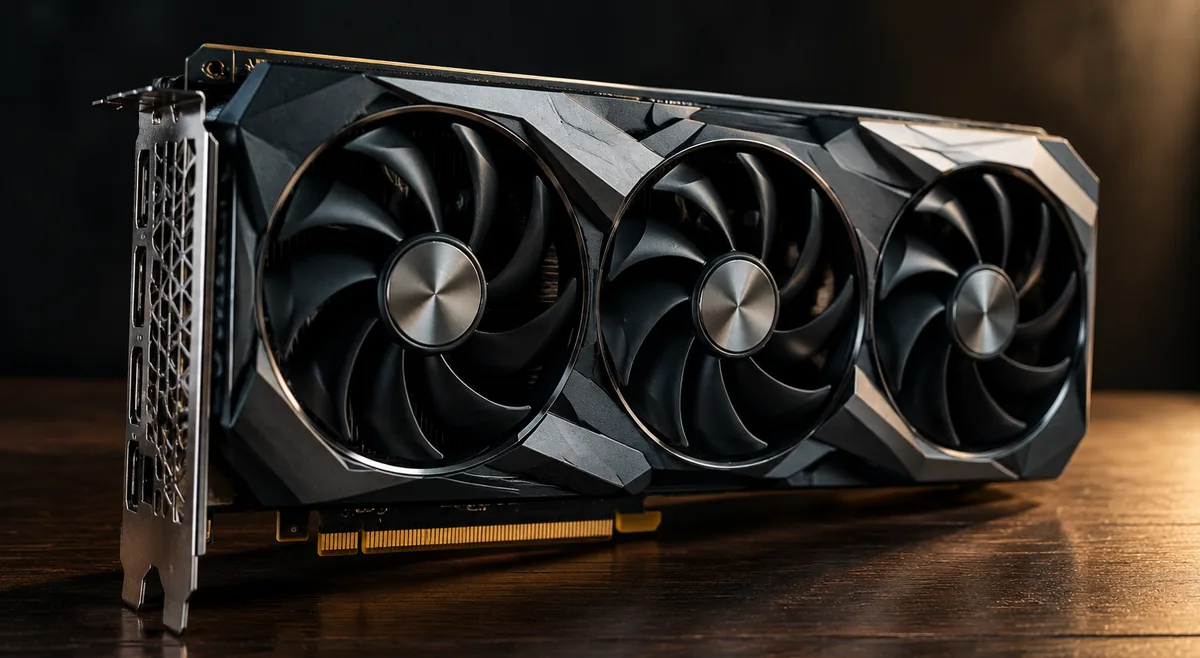
**October 10 — The leak.** Leaker MEGAsizeGPU reported on X that all future GB202 supply would be RTX Pro exclusive, and another leaker cited a factory notice that NVIDIA would stop making RTX 5090 models. GPU news outlets picked the claim up. **October 15–16 — The disappearance.** By October 15 Micro Center had changed its RTX 5090 status to 'Not Carried', and on October 16 reports showed the card missing from NVIDIA's US Marketplace. GameGPU also reported the RTX 5050 missing from the Marketplace, leaving the RTX 5080 as the top listed card. At least one Micro Center store was reported on October 2 to require photo ID and a signed no-export declaration for RTX 5090 purchases, including prebuilt PCs. **October 16–17 — The denial.** NVIDIA's Jeff Fisher told Taiwanese media (reported October 17) that the 5090 'has definitely not been discontinued' and that 'NVIDIA will continue to ship it'; he did not say whether partners are receiving new GB202 chips. Fisher said supply-chain capacity is 'somewhat constrained, but NVIDIA is going all out to bring products to market.' Read these three events together and the picture the reports paint is this: **NVIDIA has not killed the 5090, but — if the allocation reports are right — it has deprioritized it sharply.** Fisher did not say whether partners are receiving new GB202 chips — and given RTX Pro pricing, GeForce allocation may be rare. The denial is technically true and commercially almost irrelevant. This is the distinction buyers must learn to make: a product can be alive on paper and dead in the channel.
The math: one die, two prices, one winner
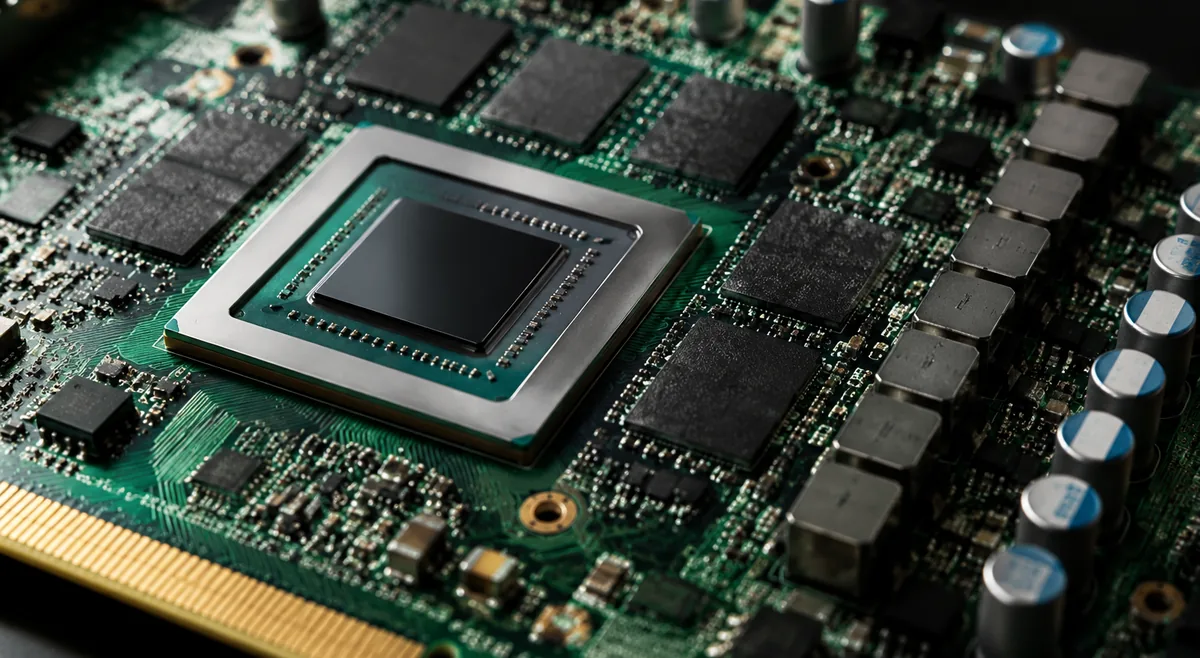
GB202 is the big Blackwell die. The RTX 5090 uses a cut-down version (21,760 CUDA cores, 32GB GDDR7, 512-bit bus); the RTX Pro 6000 Blackwell uses the full 24,064-core die with 96GB GDDR7. The pricing tells the whole story: | Product | Launch / early price | Recent price | Change | |---------|---------------------|--------------|--------| | RTX 5090 (GeForce) | $1,999 | ~$4,800–$8,000+ street (limited editions higher) | +140% to +300%+ | | RTX Pro 6000 Blackwell | $8,565 (Apr 2025) | $13,250 (Jun 2026) → $16,000 (Aug 2026) | +87% in 16 months, no hardware change | When the same die sits in a Pro card priced at $16,000 (TechPowerUp, August 2026) and a GeForce card at its $1,999 launch price, the business case for prioritizing gamers is weak. The Pro card's buyer (AI labs, enterprises, workstation users) will pay far more because the card generates revenue. Note what the $14,000 gap is and is not: it is the difference between two whole-card prices, not a per-chip profit figure — board, memory and channel costs differ, and NVIDIA publishes no die-level economics. It shows the direction of the incentive, not a measured loss per chip. This is allocation arbitrage in its purest form. It is the same dynamic as HBM vs. mobile DRAM (memory makers redirect wafers to higher-margin HBM), TSMC allocation (AI accelerators crowd out phone chips), and foundry pricing (2nm goes to whoever pays most). The GPU market is just the most visible case because the price gap is the largest.
The hidden constraint: GDDR7, not just the die
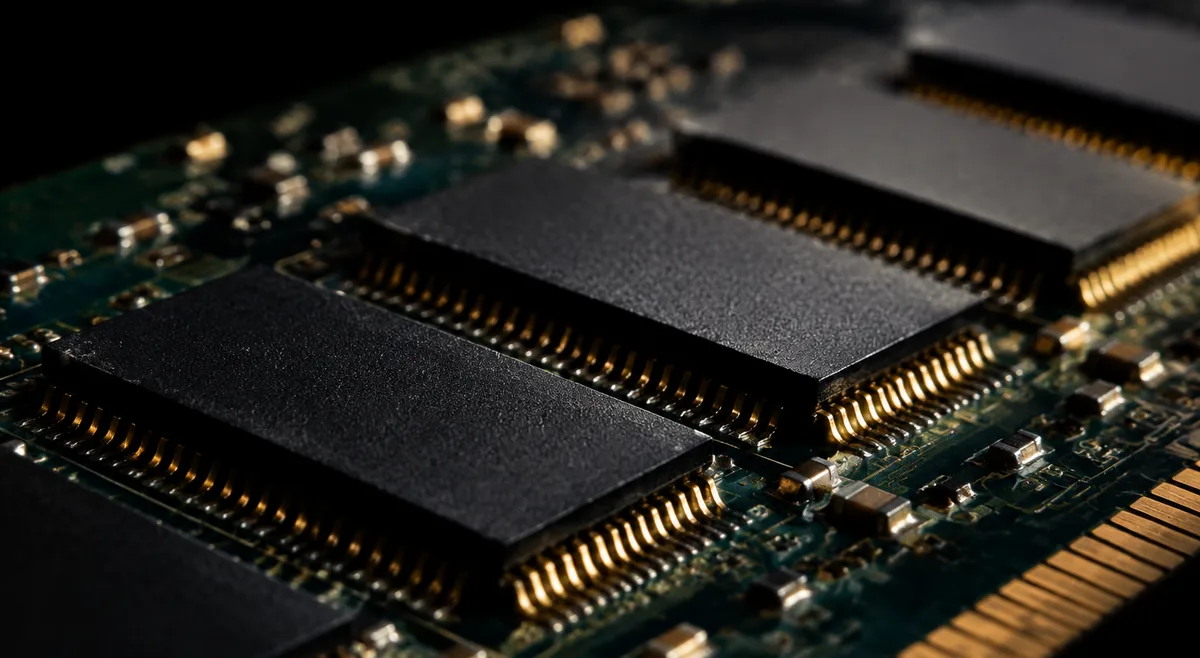
The die is not the only bottleneck. GDDR7 memory — the 32GB on the 5090 and 96GB on the Pro 6000 — is itself scarce. DRAM makers are redirecting capacity to HBM for AI accelerators, and GDDR7 costs have risen sharply. RTX 5080 16GB wholesale prices in China reportedly rose in late October amid tight supply and rumors that the 16GB model is being replaced. This matters because even if GB202 supply improves, GDDR7 may still constrain output. And GDDR7 is a shared resource: every 5090, 5080, and Pro 6000 competes for the same GDDR7 modules. The memory shortage (our running theme since #41) has now reached the GPU market's most expensive component.
The replacement: RTX 5080 24GB
BenchLife reports that NVIDIA plans a 24GB GDDR7 RTX 5080 for Q1 2027 to replace the 16GB model; NVIDIA has not confirmed it, and specifications and pricing are unconfirmed rumors. Reported specs: the GB203 die (10,752 CUDA cores — roughly half the 5090's), 24GB GDDR7, 256-bit bus, ~415W, at $2,000–$3,000. It would replace the 16GB 5080 ($999) as the new gaming flagship. The 5080 24GB is not a 5090 replacement — it has half the CUDA cores and a narrower bus. But on the reported specs it would be easier to ship in volume than a GB202 card, because GB203 is a smaller die and 24GB of GDDR7 is more obtainable than 32GB — which is the logic of the reported plan. For buyers, the message is: **the top of the consumer GPU market is being redefined downward.** The $1,999 flagship is gone from shelves; the reported successor would cost $2,000–$3,000 and deliver materially less, if it ships as reported.
What this means for GPU buyers (workstation, AI, rendering)
**1. If you need GB202, buy Pro — not GeForce.** The 5090 is effectively unavailable at MSRP in the US listings covered by these reports, and may never return to it. The RTX Pro 6000 is where GB202 allocation reportedly goes. Yes, the card was priced at $16,000 in TechPowerUp's August 2026 report. That is the real price of a GB202-based card in today's market. Waiting for a "fair" 5090 price is waiting for a product that NVIDIA has no incentive to supply. **2. If you need a consumer GPU, reset your expectations.** The 5090 is gone from those US listings at MSRP. The 5080 24GB (reportedly Q1 2027) is the expected new ceiling for consumer GPUs. Budget for a reported $2,000–$3,000, not $1,999, and expect less performance than the 5090. **3. Watch GDDR7 pricing as a leading indicator.** GDDR7 costs feed into both 5090 and Pro pricing. If GDDR7 prices stabilize, that pressure eases; if GDDR7 keeps rising, GPU prices are likely to follow — the RTX 5080 16GB's China wholesale price reportedly rose in late October. **4. Don't confuse "not discontinued" with "available."** NVIDIA's denial is about product status, not supply. A product can be "not discontinued" and still have near-zero allocation. Judge availability by channel data (retailer listings, distributor stock), not by manufacturer statements. **5. Consider alternatives for AI inference.** When NVIDIA's allocation starves a segment, alternatives emerge: smaller vendors pitch local-AI systems as rivals to NVIDIA's entry-level AI boxes. None of them is a drop-in replacement for CUDA workloads, but for non-CUDA inference they are worth evaluating — on their merits, not their brand. **6. The secondary market is now a collector's market.** Remaining 5090 stock on the secondary market has become a collector's item, listed at roughly $4,800 to more than $8,000, with limited-edition variants higher. Do not buy 5090s on the secondary market for production use without checking the individual listing: warranty and support vary by seller and are often absent on used cards, and authenticity is only as good as the seller's documentation.
The bigger pattern: allocation arbitrage is everywhere
The RTX 5090 is the clearest case, but allocation arbitrage is the defining dynamic of the 2026 chip market: - **Memory:** HBM vs. mobile DRAM (HBM wins, phones lose). - **Foundry:** AI accelerators vs. phone chips (AI wins, phones lose). - **GPU:** RTX Pro vs. GeForce (Pro wins, gamers lose). - **Packaging:** CoWoS for AI vs. everything else (AI wins). In every case, the same resource is split between a high-margin AI/professional buyer and a lower-margin consumer buyer. In each of the cases above, the high-margin buyer may be winning the allocation — that is the pattern the reporting points to, not a measured allocation split. The low-margin buyer gets price increases, spec cuts, or disappearance. For component buyers, the strategic implication is: **know which side of the arbitrage your products are on.** If your products use the same resources as AI products (HBM, leading-edge foundry, CoWoS, GDDR7), you are competing with AI buyers and you will lose on price. If your products use different resources (mature nodes, standard DRAM, conventional packaging), you are partly insulated — but still face second-order effects (foundry capacity, material costs).
Frequently asked questions
**Is the RTX 5090 discontinued?** NVIDIA says no — Jeff Fisher said the card 'has definitely not been discontinued' and that 'NVIDIA will continue to ship it', without saying whether partners are receiving new GB202 chips. But it was reported missing from NVIDIA's US Marketplace and scarce at major retailers, and GB202 allocation has reportedly shifted to RTX Pro. For planning purposes, treat availability through the US listings covered here as effectively nil for now, regardless of official status. **Will RTX 5090 prices come back down?** Unlikely in the near term. GB202 allocation reportedly favors RTX Pro ($16,000 per TechPowerUp, August 2026), GDDR7 costs are rising, and NVIDIA has little incentive to supply 5090s at $1,999. If you need GB202, budget for Pro pricing. **Should I buy an RTX 5090 on the secondary market?** No, for production use. Secondary-market 5090s are listed at roughly $4,800 to more than $8,000, with limited-edition variants higher, and warranty and support vary by listing — often absent on used cards — with authenticity dependent on the seller. Buy RTX Pro for production, or wait for the RTX 5080 24GB for consumer use. **What is the RTX 5080 24GB, and when does it arrive?** BenchLife reports NVIDIA plans it for Q1 2027 to replace the 16GB model; NVIDIA has not confirmed it. Reported specs — GB203 die, 10,752 CUDA cores, 24GB GDDR7, 256-bit bus, ~415W, $2,000–$3,000 — are unconfirmed rumors. It is not a 5090 equivalent — roughly half the CUDA cores. **Why did the RTX 5050 also disappear?** GameGPU also reported the RTX 5050 missing from NVIDIA's Marketplace. NVIDIA has not explained this. It may reflect GDDR6 allocation pressure, a product-line cleanup, or both. In that Marketplace view, it left the RTX 5060 as the most affordable card still listed. **How does this connect to the memory shortage?** GDDR7 is DRAM. The same HBM redirection that starves phones of mobile DRAM also starves GPUs of GDDR7. The RTX 5090 story is the memory shortage reaching the GPU market. It will persist as long as HBM demand absorbs DRAM capacity. ---
Sources
Use the latest guidance for the exact part and manufacturer when deciding acceptance criteria.
- TechPowerUp: NVIDIA Denies RTX 5090 Discontinuation Rumors, Admits Supply Is Tight (17 Oct 2026)
- TechPowerUp: NVIDIA RTX PRO 6000 "Blackwell" 96 GB GPU Now Costs $16,000 (12 Aug 2026)
- TechPowerUp: NVIDIA RTX 5080 24 GB Reportedly Planned For Q1 2027, but Board Partners Are Still in the Dark (12 Oct 2026)
- TechSpot: Buying an RTX 5090 from Micro Center now means signing a form promising it won't leave the US (2 Oct 2026)