The short version
Intel Foundry just had its best week in years. Reports this month again linked Tesla's Terafab to Intel's 14A process — a selection first reported in April 2026, though KeyBanc's October roundup still lists Terafab among the customers evaluating the node, so the status is unresolved. KeyBanc says Intel Foundry has reportedly won business from Broadcom, Google, Apple, AMD, Microsoft and NVIDIA on 18A-P/14A, while AWS, Anthropic and Terafab are still evaluating; none of these wins is confirmed by the customers. KeyBanc also put 18A yields at roughly 85%, up from ~65%, approaching TSMC's N2 at ~90%. For component buyers, this matters for one reason: **a credible second source is emerging for leading-edge foundry capacity.** Since our TSMC article (#51), the single most important buyer action has been "qualify a second foundry." Intel Foundry is now the most plausible candidate. But credibility is not the same as proven — the yield figures are unconfirmed survey data, the customer list is "evaluating" not "committed," and Intel Foundry still reportedly loses roughly $2 billion per quarter. This article separates what is proven from what is promised, and gives you a qualification checklist.
What happened: the week's three signals
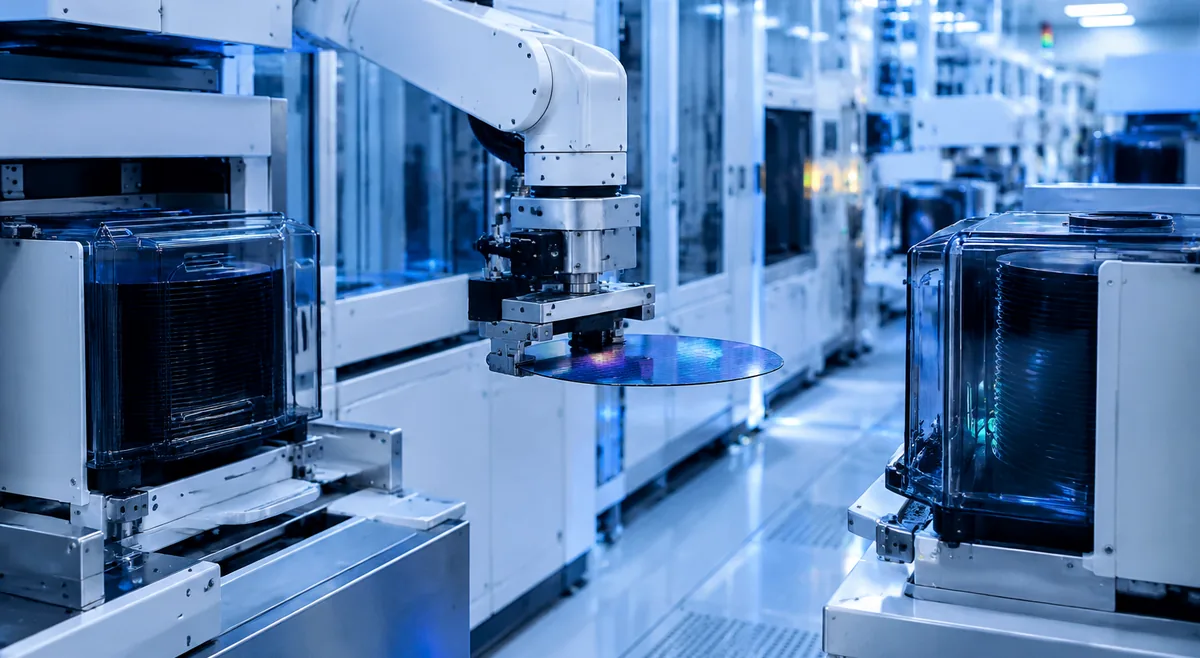
**Signal 1: Tesla and 14A — reported, not confirmed.** Reports since April 2026 have linked Tesla's Terafab to Intel's 14A process, but KeyBanc's October roundup still counts SpaceX's Terafab among the customers evaluating 14A and 18A-P, and neither Tesla nor Intel has confirmed a production commitment. If it converts, Musk's AI chipmaking complex (Tesla + SpaceX + xAI, near Giga Texas) would run partly on Intel's process. Intel's 14A timeline — risk production in 2H27, high-volume manufacturing in 2028 — is the company's stated target, not a delivered schedule; one July report put high-volume output in 2029 in one passage and late 2028 in another, so treat the year as unsettled. The 14A PDK 0.9 — the design kit external customers need to start designing — is, per Intel's CEO, coming soon. **Signal 2: 18A yields reportedly hit 85%.** A July report citing KeyBanc said Intel's 18A yield had improved to about 85% from about 65% a quarter earlier, versus roughly 90% for TSMC N2; other reports cite about 80%, and Intel has not published a comparable figure. Samsung's 2nm yield is variously reported between about 50-60% and over 70%; no company has confirmed a figure. **These are not figures any company has officially disclosed on a comparable basis.** Yields depend on product design, process stage, and measurement method. Treat 85% as a directional signal (18A is improving fast), not a verified benchmark. **Signal 3: Six reported wins, three still evaluating.** KeyBanc says Intel Foundry has reportedly won business from Broadcom, Google, Apple, AMD, Microsoft and NVIDIA on 18A-P/14A, while AWS, Anthropic and Terafab are still evaluating. None of these wins is confirmed by the customers. On packaging, KeyBanc lists Google TPU v9/v10 and Qualcomm AI300 on EMIB-T, and Amazon Trainium 3 and Microsoft Cobalt 400 on EMIB-M. **"Evaluating" and "potential" are not "committed."** The conversion from evaluation to contract is the real test.
The five tests: where Intel Foundry actually stands
A leading-edge foundry has to pass five tests. TSMC passes all five every quarter. Here is Intel's scorecard as of October 2026: **1. Process technology — largely won.** 18A is in volume ramp (Panther Lake) and 18A-P is in risk production. 14A targets 15–20% more performance than 18A at the same power, 25–35% lower power, up to 30% better density, with second-generation backside power delivery. Intel's CTO told KeyBanc 14A will land "within 5%" of TSMC's A14 — a deliberately conservative claim that does not say whether Intel expects to be ahead or behind. **2. Yield — improving, unproven.** 18A reportedly at 85% (unconfirmed). EMIB-T packaging yield was rumored in July at about 98%, but KeyBanc's October note says EMIB-T substrate yields are only 50-60% at Ibiden and 20-30% at UMTC. The trajectory is encouraging, but no company has disclosed yields on a comparable basis. The proof will come through Panther Lake availability and pricing, not survey numbers. **3. Customers — early, and the Tesla question is open.** External foundry revenue was $174 million in Q1 2026 and $293 million in Q2 2026 — tiny. Tesla would not be a small customer: if the reported Terafab engagement converts, it would be the most significant external foundry relationship in Intel's history and the strongest validation Intel has received. The question is whether the evaluators — Terafab included — convert. **4. Scale and profit — not yet.** Foundry reportedly loses ~$2 billion per quarter. Intel has said it aims to break even in its Foundry business around 2027. Analysts expect 18A at about 40,000 wafers per month by the end of 2026; 14A is still pre-production and is projected at about 6,000 wafers per month by the end of 2027. The backing is there — a US government 9.9% stake valued at $8.9B (itself made up of $5.7B in previously granted, unpaid CHIPS awards plus $3.2B in Secure Enclave funding, so it overlaps the CHIPS Act $7.86B figure rather than adding to it) and NVIDIA's $5B — but backing is not profit. **5. Ecosystem — the quiet bottleneck.** PDKs, IP libraries, EDA tool support, and design services determine whether customers can actually design for a node. Intel's 14A PDK 0.9, which Intel's CEO says is coming soon, is the starting gun for external design work. TSMC's ecosystem advantage — decades of IP, tooling, and design-services relationships — remains Intel's hardest gap to close.
The packaging twist: EMIB-T vs. CoWoS
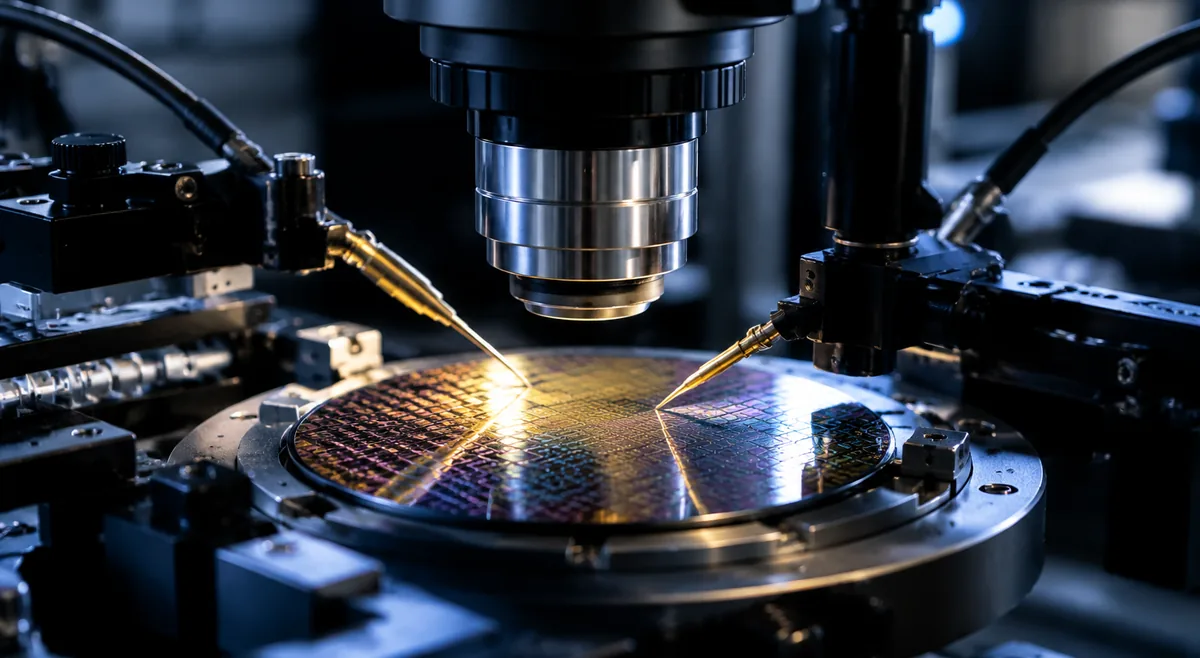
The most underappreciated part of the Intel story is packaging. Intel claims EMIB-T holds a lead even as TSMC introduces CoPoS heterogeneous integration. EMIB-T packaging yield was rumored in July at about 98%, but KeyBanc's October note says EMIB-T substrate yields are only 50-60% at Ibiden and 20-30% at UMTC. Google's next-generation TPU v9 and v10 are reportedly candidates for Intel packaging orders. Both companies are claiming packaging superiority. For buyers, the takeaway is practical: **packaging may be available from Intel before leading-edge logic is.** If your product needs advanced packaging (2.5D, chiplets, HBM integration), Intel's EMIB-T is worth evaluating independently of its logic nodes — it may be the faster path to a second source.
The Terafab question: why Musk's reported commitment matters
Terafab gets its own section because a confirmed engagement would be the single strongest evidence for Intel Foundry's credibility. It is not confirmed. The reporting chain runs: a Tesla–Intel 14A selection first reported in April 2026; KeyBanc's October roundup still listing SpaceX's Terafab among the customers evaluating 14A and 18A-P; and no production commitment confirmed by Tesla, SpaceX or Intel. Until one of them confirms, Terafab is the comeback story's biggest open question — not its proof point.
A buyer's Intel Foundry qualification checklist
**1. Start with packaging, not logic.** EMIB-T is Intel's most mature differentiator. If your product uses advanced packaging, evaluate EMIB-T now — it has the shortest path to production. **2. Request the PDK and evaluate it.** 14A PDK 0.9 is the entry ticket. Get it, run your design through it, and compare the design-rule complexity against TSMC's N2/A14 PDKs. PDK quality is a leading indicator of foundry maturity. **3. Demand yield data for YOUR design.** Survey yields (85%) are meaningless for your specific product. Ask Intel for yield projections on designs similar to yours, with the same die size and defect-density assumptions. If Intel won't share, that's information too. **4. Verify the customer list.** "Six reported wins plus three still evaluating" is not "nine companies committed." Ask which customers have signed binding capacity agreements, and for what volumes and timelines. As of this writing, no external commitment at scale — Tesla/Terafab included — has been publicly confirmed by the customer. **5. Model the breakeven risk.** Intel has said it aims for Foundry breakeven around 2027. If it doesn't get there, the announced backing (government stake, CHIPS awards, NVIDIA investment) still cushions the fab build, but none of it guarantees the foundry's economics — the business model stays fragile. Factor this into your long-term supply planning. **6. Keep TSMC as primary, Intel as second source.** The right posture for 2027 is dual-sourcing: TSMC for primary volume (proven yields, ecosystem, scale), Intel for diversification and packaging. Do not switch primary volume to Intel until 18A yields are proven in your product. **7. Watch three dates.** (a) 14A PDK 0.9 delivery — on time or slipped? (b) 14A risk production, 2H 2027 — does it start on schedule? (c) Intel Foundry breakeven, around 2027 — does external volume get there? Any slip on these is an early warning.
Frequently asked questions
**Is Intel Foundry now a real alternative to TSMC?** For packaging (EMIB-T), yes — it is a credible alternative today. For leading-edge logic (14A), not yet — it is a credible candidate in evaluation. The distinction matters: you can qualify EMIB-T now; 14A volume production is Intel's target for 2028, and some reports say 2029. **Can I trust the 85% yield figure?** No — not as a verified benchmark. It comes from a KeyBanc survey, not an official disclosure, and yields depend on product design and measurement method. Treat it as a reported signal that 18A is improving, not as proof that it has reached TSMC levels. **What would Tesla picking 14A mean for other buyers?** If the reported engagement converts, it would validate Intel's process, give Intel a high-profile reference customer, and in time consume significant 14A capacity. None of that is confirmed today — KeyBanc's October roundup still lists Terafab as evaluating. Start your own evaluation now anyway: what early movers actually secure is PDK access and qualification slots, not a place in a proven queue. **Should I switch from TSMC to Intel Foundry?** Not as a primary switch in 2027. Dual-source: keep TSMC for proven volume, qualify Intel for diversification. A full switch makes sense only after Intel proves 18A/14A yields in your product and demonstrates sustained external volume. **What is the biggest risk with Intel Foundry?** Execution. Intel has the process technology and the funding, but it has not yet demonstrated sustained high-yield volume for external customers at scale. The foundry business is still reportedly losing ~$2B/quarter. The risk is not that Intel's technology fails — it is that the business doesn't reach breakeven and the commitment wavers. ---
Sources
Use the latest guidance for the exact part and manufacturer when deciding acceptance criteria.
- Intel: Intel and Trump Administration Reach Historic Agreement to Accelerate American Technology and Manufacturing Leadership (22 Aug 2025)
- TechPowerUp: Intel Expects 14A Node to Be Within 5% of TSMC's A14 (25 Sep 2026)
- Wccftech: KeyBanc Says Intel Has Won Contracts From Broadcom, Google, Apple, AMD, Microsoft, And NVIDIA, While Amazon, Anthropic, And SpaceX's Terafab Continue To Evaluate Its 14A And 18A-P Processes (15 Oct 2026)
- Wccftech: Intel Foundry Snags AMD, NVIDIA, and OpenAI as Design Wins on 18A & 14A Nodes While EMIB Achieves 98% Yields (14 Jul 2026)