The short version
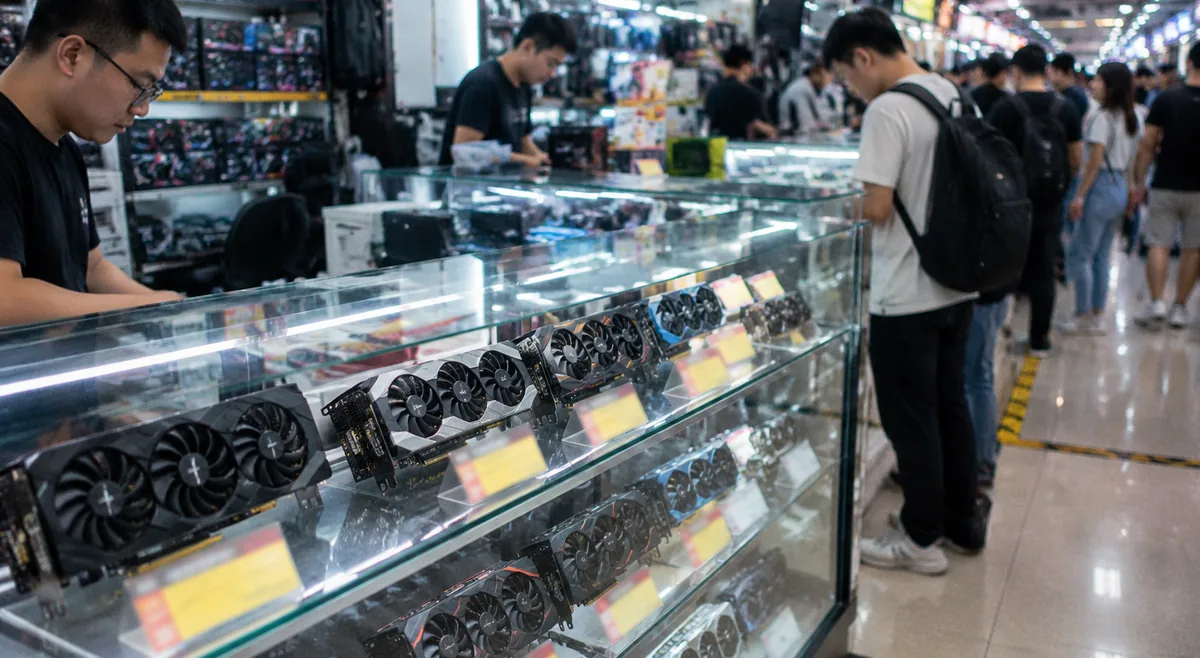
Shenzhen's Huaqiangbei — the world's largest spot market for electronics, and this company's home turf — is in the grip of a graphics-card frenzy. Channel prices for Nvidia's RTX 50 series have decoupled from any list price: the RTX 5090, reportedly launched at ¥15,000–16,000, was quoted in late-October on-the-ground reporting at roughly ¥51,000–60,000 depending on merchant and day (¥55,000–60,000 in wholesale-channel checks reported October 24); the RTX 5080 has reportedly doubled from ¥8,000 to ¥17,000; even the volume-selling RTX 5060 is reportedly up from ¥2,300 to over ¥3,600. Prices move so fast that merchants describe quotes as "one price a day" — sometimes one price a *morning* — and merchants are hesitant to put prices in writing. The trigger is a rumor, from October 10, that Nvidia has stopped supplying the GB202 chip used in the RTX 5090 to GeForce cards. Nvidia has publicly denied any discontinuation and confirmed continued shipments — while acknowledging that supply capacity is constrained. That combination is the whole story: the rumor is unconfirmed, the constraint is real, and the price has taken off anyway. This is the channel-level sequel to our earlier allocation analysis (#54): the same GB202 silicon that also powers Nvidia's RTX PRO workstation cards — which leakers claim Nvidia is redirecting toward those professional cards, an allocation claim Nvidia has not confirmed and which is separate from the discontinuation it has denied — has become so scarce at retail that expectation, not supply data, sets the price. For buyers who need GPUs — workstation builders, small AI shops, exporters — this article is about how to transact in a market where the quote expires before your PO does.
What the market is actually doing
On-the-ground reporting from Huaqiangbei (21st Century Business Herald, via ITHome, October 24; National Business Daily, from an October 25 visit published October 27) gives the texture that price trackers miss: - **RTX 5090:** launch reportedly ¥15,000–16,000 → over ¥40,000 last month (one merchant's account) → now quoting roughly ¥51,000–60,000 depending on merchant and day (¥55,000–60,000 in wholesale-channel checks reported October 24). Comparing today's top quotes with the launch range gives roughly 3.2–4× — a ratio of quote ranges across merchants and months, not any single card's transaction rise. - **RTX 5080:** launch reportedly ~¥8,000 → ¥12,000 two weeks ago → channel ¥16,000–17,000 now. - **RTX 5060** (the volume mover): reportedly ¥2,300 → ¥3,600+, a ~57% rise in the mainstream tier. - **Quote behavior:** merchants quoted in the reporting describe single-item spreads of several hundred yuan within a day or from one day to the next; merchants hesitant to put prices in writing; the quote follows spot stock, not a price list. - **Category divergence:** merchant accounts conflict — some say prices of other PC components have changed little recently, while at least one told the October 25 visit that low-end cards have risen even faster than high-end ones. Spillover beyond high-end GPUs is unsettled, not confirmed stability. Prices are trader quotes reported by the 21st Century Business Herald (via ITHome, October 24) and National Business Daily (October 25 visit, published October 27). The multiples and percentages are our own calculations from those quotes. Launch prices are official MSRPs, not current quotes. The merchants' own explanation for the shortage is consistent: they say Nvidia's silicon allocation tilts toward AI compute cards and consumer GPU supply is squeezed — the allocation tilt itself is the unconfirmed leak, not an Nvidia-confirmed fact. Some Huaqiangbei merchants expect high prices to persist, possibly into 2027; others expect demand to cool at current levels.
The rumor premium: why prices move before facts
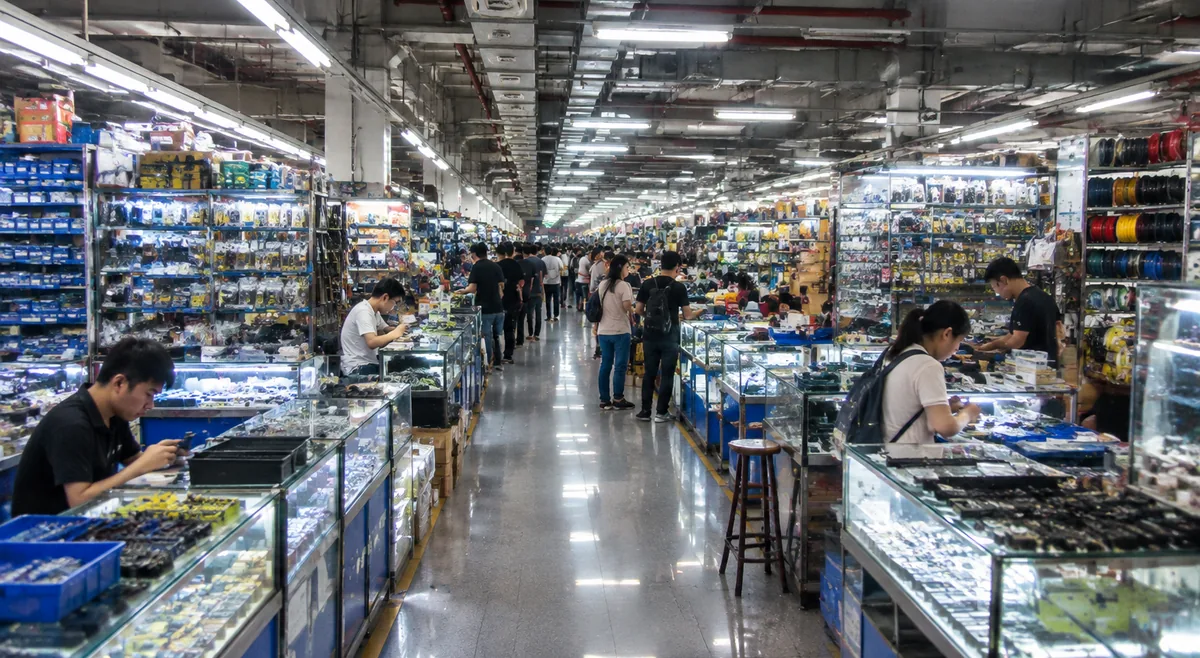
The most important line in the reporting is the summary: the discontinuation is still a rumor, Nvidia has denied it and confirmed ongoing shipments, but admitted capacity constraints — "the rumor is unconfirmed, the price has already taken off." That is not irrationality; it is how spot markets price *option value under scarcity*. When supply is genuinely thin, the cost of being caught without stock (a lost export order, an idle workstation build) exceeds the cost of overpaying today. Every merchant who believes tomorrow's price is higher holds stock back, which makes today's supply thinner, which makes the price higher. The rumor doesn't need to be true to be effective — it needs only to be plausible against a real constraint. Buyers should recognize the same mechanism from this year's other squeezes: the pattern our MLCC coverage tracked (#57) — announced Samsung Electro-Mechanics hikes arriving together with falling distributor inventories and rising prices. In each case, the expected future price may have changed present behavior first — merchants and buyers acting on the price they expected, before it fully arrived. Huaqiangbei's GPU counters are the same physics at retail speed. Two implications follow. First, **the peak price and the true supply situation are different numbers** — the ¥60,000 quote contains a rumor premium that evaporates if Nvidia ships visibly or the rumor dies; buying at the peak means underwriting that premium yourself. Second, **information is the scarce asset**: the buyers who verified actual shipment flow (rather than trading the rumor) were the ones best placed not to pay it.
What this means for buyers
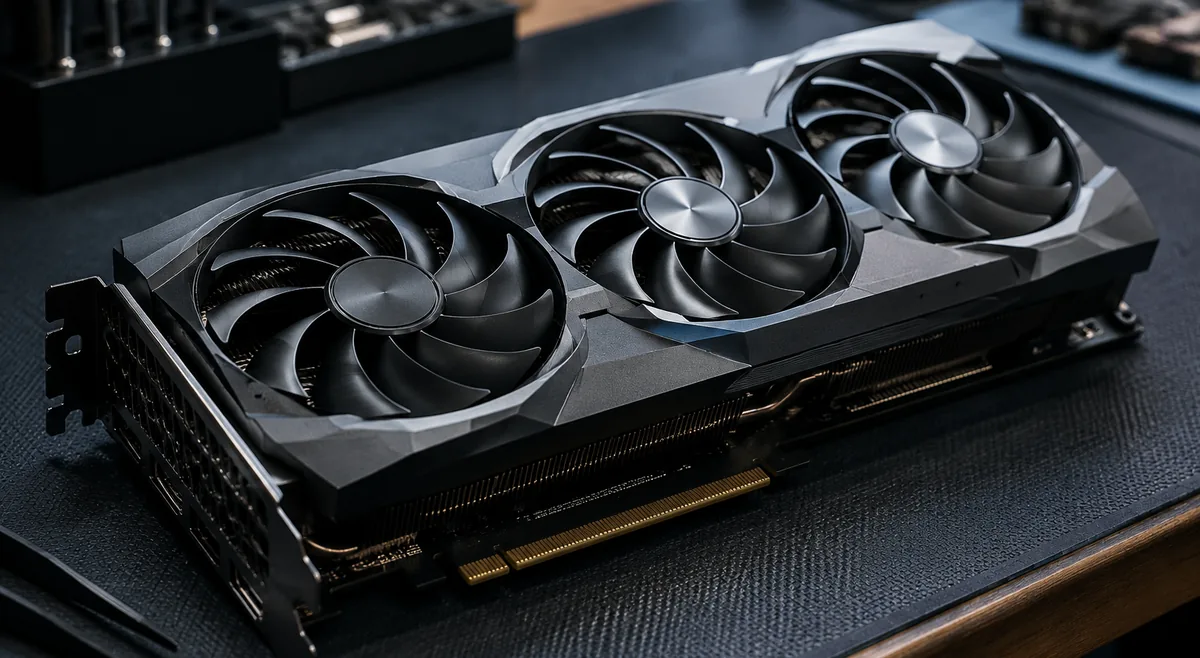
**1. Treat every quote as perishable — and contract accordingly.** In a one-price-a-day market, a quote without a validity window and a deposit behind it is a conversation, not a price. State the validity (hours, not days), lock with a deposit where the amount justifies it, and put the expiry in writing. Conversely, don't hold a supplier to a stale quote and burn the relationship — the merchant who honors last week's price in this market is subsidizing you once and avoiding you forever after. **2. Verify the rumor before paying for it.** Nvidia has denied discontinuation and confirmed shipments. Before paying a scarcity premium on any part, check the primary source (the manufacturer's statement), two or three independent channel sources, and actual availability at the *previous* price level anywhere in your network. A premium that survives verification is a market price; one that doesn't is a rumor tax. **3. Buy the substitute, not the story.** The 5080's surge may reflect a substitution cascade — demand priced out of the 5090 moving down a tier, each level inheriting the pressure of the one above. The cascade is predictable, so get ahead of it: price the professional line (RTX PRO series — where the unconfirmed allocation reports say GB202 is going, per #54), the previous generation, and the AMD alternative *before* the tier you're watching inherits the premium. In allocation markets, the best substitute is the one nobody has repriced yet. **4. Don't generalize category heat.** GPUs are spiking; merchant accounts conflict on how far the heat has spread beyond them — some say other components have barely moved, one said low-end cards rose faster than high-end ones. A supplier quoting "everything is going up" — or "everything else is calm" — as settled fact in this market is either uninformed or testing you. Category-by-category verification — the same discipline as #59's price-band analysis — is what separates a procurement function from a rumor relay. **5. Export buyers: assume your competition is in the same hall.** In a frenzy, allocation goes to whoever confirms first — walk-in cash buyers included. If you supply overseas customers, shorten your quote-to-order cycle, take deposits faster than feels comfortable, and don't expect loyalty to be the allocation currency. The components around this market — the power stages, connectors, and memory that board makers pair with scarce GPUs — are the next exposure to check. If you are building or exporting GPU-based systems, send us your BOM and we'll check which lines are exposed to channel-frenzy pricing and which lines still have verified stock at steadier levels.

Frequently asked questions
**Has Nvidia discontinued the RTX 5090?** No — Nvidia has publicly denied the discontinuation rumor and confirmed continued shipments, while acknowledging supply capacity constraints. Channel prices are trading the rumor plus the real constraint, not a confirmed EOL. **Why is the 5080 rising almost as fast?** A substitution cascade may be at work: buyers priced out of the 5090 may be moving down a tier, concentrating demand on the next card — the pattern the 5080's quote path (¥8,000 to ¥17,000 in the same reporting) is consistent with, though the reporting does not establish that 5090 demand is the cause. Expect the cascade risk to keep moving down while the top stays constrained. **How long will this last?** Some Huaqiangbei merchants expect high prices to persist, possibly into 2027; others expect demand to cool at current levels. Note this is the same market whose participants profit from urgency — treat the timeline as directional, and watch actual shipment flow for the turn. **Is this the same as the 2021 mining-era GPU shortage?** The shape rhymes (channel chaos, multi-x pricing) but the driver differs: this time the reported squeeze is allocation — silicon reportedly steered to AI datacenter products (#54), a claim Nvidia has not confirmed — amplified by rumor, not a demand explosion from mining. That makes it more durable than a fad and more sensitive to Nvidia's allocation choices. **Should I buy now or wait?** If a build is revenue-critical, buy verified stock at a verified price and accept some premium — downtime costs more. If the purchase is discretionary, the rumor premium is the most perishable part of the price; waiting for shipment visibility (or the early-next-year window merchants cite) is the lower-risk play — a trade-off, not a guaranteed better outcome. Never buy at peak from a single unverified quote. **Does this affect component prices beyond GPUs?** Indirectly, at most. Board-level parts around GPUs (power, memory, connectors) are the next exposure to check as AIB production scrambles, but merchant accounts conflict on how far prices have actually moved beyond high-end GPUs: some say other PC components have changed little, while one told reporters low-end cards have risen faster than high-end ones. Anyone quoting blanket increases — or blanket calm — is ahead of the evidence. ---
Sources
Use the latest guidance for the exact part and manufacturer when deciding acceptance criteria.
- TechPowerUp: NVIDIA Denies RTX 5090 Discontinuation Rumors, Admits Supply Is Tight (17 Oct 2026)
- Tom's Hardware: Nvidia reportedly halts GeForce RTX 5090 production in favor of AI data center and professional GPUs (10 Oct 2026)
- Digital Foundry: Report: RTX 5090 GPUs discontinued by Nvidia, as GB202 is reserved for AI workstation cards (12 Oct 2026)
- PC Gamer: Nvidia may not have discontinued the RTX 5090, but one AIB partner says it can't get hold of the parts required to make the card (27 Oct 2026)
- 21st Century Business Herald via ITHome/Sina Finance: RTX 5090 channel prices at Huaqiangbei (24 Oct 2026)
- National Business Daily via Sina Finance: on-the-ground Huaqiangbei visit — RTX 5090 spot quotes ¥51,000–55,000 (visit 25 Oct 2026, published 27 Oct 2026)