The short version
Memory got the headlines, but the quietest components on your board are having their own price crisis. In 2026, the world's MLCC makers have raised prices in round after round: Yageo reportedly up to around 50% in one report, Samsung Electro-Mechanics +30% on its Markup Business Code lines for shipments from August, Murata reportedly raised AI and automotive grades — and TrendForce estimates SEMCO will raise 4Q26 consumer-grade X5R prices by an average of 25–30% for OEM and ODM customers. Commercial Times reports that passive components have climbed to second only to GPUs and memory in the AI server BOM cost ranking. This is not a spot-market blip. Suppliers are repricing the category round after round — in part to pass through raw-material costs (palladium, silver, rare earths), in part to push buyers off mid- and low-capacitance parts so capacity can serve high-capacitance AI demand. With capacity expansions measured in years and the high end controlled by five Japanese and Korean makers, the reports cited here offer little prospect of relief in 2027. This article lays out the full 2026 price-wave timeline, the part-level picture, and the buyer's playbook.
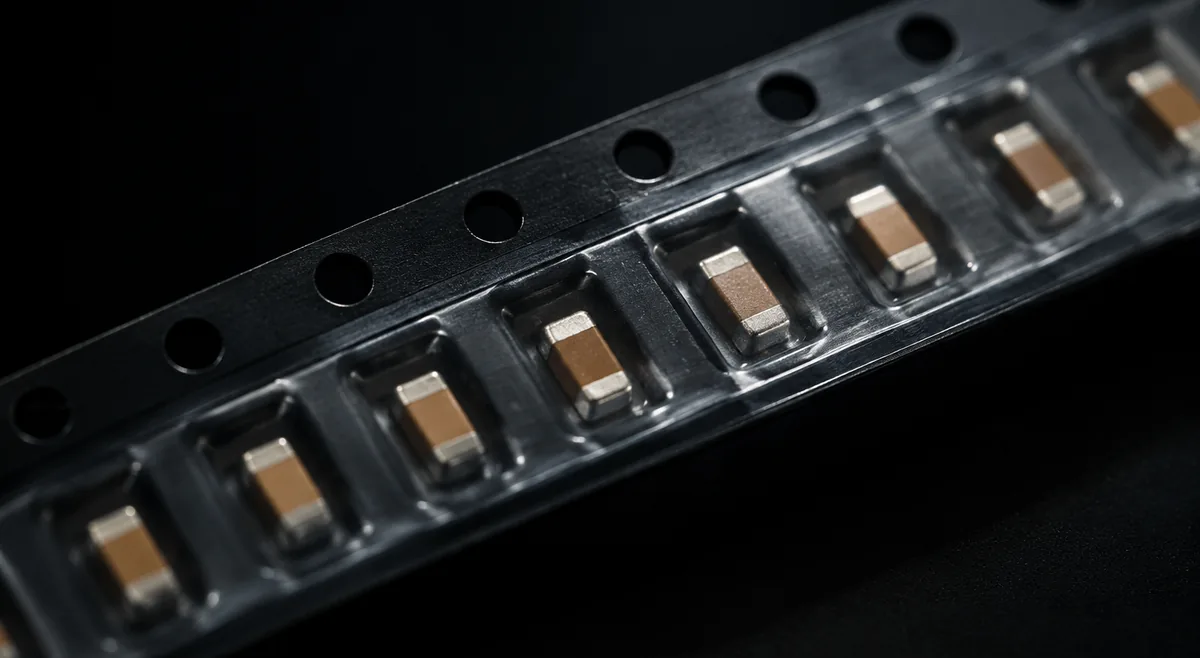
The 2026 price wave: round after round
The increases came in sequence, each maker citing the same drivers — AI demand, raw materials, and capacity reallocation: | When | Maker | Increase | |------|-------|----------| | H1 2026 | Market-wide (spot) | Spot prices rising into the July rounds (TrendForce, 1 Jul) | | Mar–Apr 2026 | Murata | Reported increases on AI-server and high-end automotive grades (figures in trade coverage vary; not independently verified here) | | Jul 2026 | Yageo | Reportedly raised prices across its entire capacitor portfolio from 1 July, with one report putting official prices up around 50% | | Aug 2026 | Samsung Electro-Mechanics | +30% on all MLCC products under SEMCO's Markup Business Code, for shipments from 1 August | | Sep 2026 | Taiyo Yuden | Reported plan to raise MLCC prices from 1 September 2026 (TrendForce, 29 Jul — an expectation at report time) | | Q4 2026 (TrendForce estimate) | Samsung Electro-Mechanics | Estimated +25–30% average on consumer-grade X5R MLCCs for OEM/ODM customers | | Q4 2026 (forecast) | Taiwanese / Chinese suppliers | TrendForce expects Taiwanese and Chinese suppliers to raise 4Q26 prices for mid/high-capacitance consumer MLCCs by an average of 10-20%, while Murata, Taiyo Yuden and Kyocera were holding prices flat as of late August | One detail matters. On TrendForce's reading, the Q4 X5R increase is explicitly strategic: the estimated rise is meant partly to *reduce* orders and free capacity for high-end production. When a supplier raises your price to make you go away, you are not a priority customer — plan accordingly. Samsung Electro-Mechanics' book-to-bill reached 1.31, Murata's 1.30 and Taiyo Yuden's 1.25 in late June (TrendForce). Book-to-bill above 1 at all three is consistent with the rationing behaviour described across this article — the ratio alone doesn't prove it for any single maker, but the pattern matches.
The part-level picture
Category averages hide the pain. Specific mainstream parts show where the pressure lands: - **Samsung CL21A106KAYNNNE** (10 µF, 0805/2012) and **Samsung CL21A226MAYNNNE** (22 µF, 0805/2012): mainstream 0805 grades of the kind buyers stock by the reel. We name them as examples of the mainstream class, not as parts with a recorded 2026 price move — the sources cited here carry no part-level price record for either, so check the maker's current round before assuming one applies. (Case size per Samsung's numbering: the CL21 family is the 2012-metric case.) - **Samsung CL10A226MQ8NRNC** (X5R): a consumer X5R grade of the type the Q4 OEM/ODM increase estimate (+25–30%, TrendForce) covers. The lesson sits at class level: grade, dielectric and maker decide exposure more than any single part number.
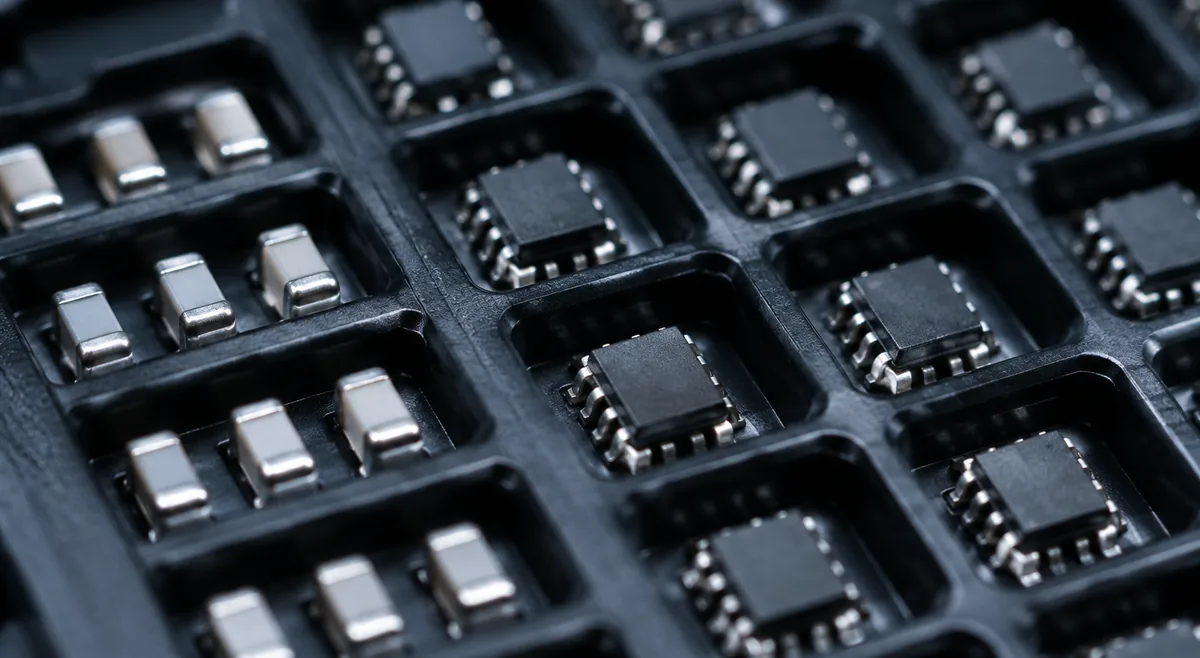
Why this is structural, not cyclical
**Demand concentration.** AI server MLCC demand is the growth engine in every account cited here, and the makers' own capacity behaviour (Taiyo Yuden's ~10%/yr additions, Murata's capex split across two fiscal years) is consistent with strong growth continuing into 2027 — our reading of the pattern, not a cited forecast. The MLCC counts designed into a single AI rack skew to high-capacitance, high-reliability parts — in our reading, that mix absorbs a disproportionate share of the industry's best capacity. Automotive adds a second premium demand stream on the same lines. **Supply concentration.** High-end MLCC supply sits with five makers — Murata, Samsung Electro-Mechanics, Taiyo Yuden, TDK, Kyocera. Capacity expansion takes 1.5–2 years; Taiyo Yuden adds roughly 10% per year, Murata's added ~¥80 billion is split across FY2026–27. There is no swing producer. **Deliberate mix shift.** Makers are reallocating toward high-capacitance AI and automotive parts and away from general mid/low-voltage grades (SMCC). The consumer and industrial grades most buyers use are exactly the ones being deprioritized — hence the X5R increase TrendForce describes as meant to moderate orders. **Raw materials.** Palladium, silver, and rare-earth input costs have risen sharply through 2026, and upstream commodities from tungsten to helium have inflated with them. Even without AI demand, passives would be repricing; with it, they are rationing.
The second-source opening — and its limits
As Japanese and Korean leaders prioritize AI and automotive, Chinese makers are gaining ground from a small base, Chaozhou Three-Circle among them. For non-critical consumer and industrial specs, Chinese MLCCs are an increasingly real second source. The limits are the familiar ones: high-capacitance, high-voltage, and automotive-grade parts remain dominated by the big five, qualification takes time, and Chinese makers are raising prices too — they sell into the same tight market. Treat second sources as supply insurance, not as a discount.
What this means for component buyers
**1. Audit your MLCC exposure this quarter.** Count the MLCC line items on your active BOMs: case sizes, capacitance, dielectric (X5R vs X7R), voltage, brand. You cannot manage exposure you haven't mapped — and the Q4 round targets exactly the consumer X5R grades most designs default to. **2. Lock pricing and forecasts before the next round.** With TrendForce estimating SEMCO's Q4 consumer X5R increase at +25–30% and Taiwanese and Chinese suppliers expected to raise mid/high-capacitance quotes by 10–20%, pricing agreed before those estimated increases land is likely better than pricing after them — our judgment, not a market guarantee. Convert spot buys into scheduled orders with price validity; give distributors forecasts they can allocate against. **3. Qualify second sources now — including Chinese makers for suitable specs.** Murata, SEMCO, Yageo, TDK, Taiyo Yuden, plus Three-Circle/Fenghua-class alternatives for non-critical positions. Qualification during a shortage is slow; starting before you're desperate is the whole game (the same lesson as the CXMT case). **4. Design for flexibility.** Where electrical requirements allow, approve multiple footprints and dielectrics, and avoid sole-sourced high-capacitance parts in new designs. A design that can take X7R or X5R, 0603 or 0805, from two makers, survives repricing rounds that strand rigid designs. **5. Treat EOL notices as supply events.** Murata has issued EOL notices for selected specifications across nine MLCC product series (TrendForce, 11 Sep 2026) — check each notice for last-order and last-shipment dates; lifecycle risk appears at the part-number level before it shows at the market level. Review every EOL/PDN notice against your BOM and use the window to qualify alternatives. **6. Buffer the long-lead passives.** Extend the same buffer review to your other passives — polymer capacitors and inductors included — rather than assuming MLCCs are the only passive that can bite. Identify the handful of passives that can stop your line and hold cover for them. For the parts in our catalog, the pattern is direct: Samsung CL-series and Murata GRM-series MLCCs are the mainstream grades repricing fastest, and every board you ship carries dozens to hundreds of them. A steep move on a low-cost part sounds trivial until it is multiplied by your unit volume — and until the part, not the price, becomes unavailable. Send us your BOM and we will map your MLCC exposure for each line.
Frequently asked questions
**Why are MLCC prices rising so fast in 2026?** Three forces compound: AI servers are designed around very large MLCC counts per rack, suppliers are shifting capacity to high-end grades (SEMCO's estimated consumer-grade increase is described as partly meant to suppress orders — TrendForce), and raw materials (palladium, silver, rare earths) keep inflating. Five makers control the high end, and new capacity takes years. **Which MLCCs are hit hardest?** High-capacitance AI-server grades (repriced sharply in Yageo's July round) and, paradoxically, the consumer mid/high-capacitance grades being deprioritized — SEMCO's X5R consumer line is estimated at +25–30% in Q4 (TrendForce). Mainstream 0805 parts feel the pass-through when consumer grades are repriced, but exposure is set by grade and maker: for Samsung's CL21A106KAYNNNE specifically, the sources cited here carry no part-level price record. **Will MLCC prices come down in 2027?** Supply additions are gradual (Taiyo Yuden ~+10%/year; Murata's ¥80B split over two fiscal years) while AI demand is expected to stay strong into 2027 — our judgment from the capacity picture, not a sourced forecast. Expect tightness and firm pricing through 2027, with relief grade-by-grade rather than across the board. **Are Chinese MLCCs a viable alternative?** For many consumer and industrial specs, increasingly yes — makers like Chaozhou Three-Circle are gaining ground from a small base (industry reporting; not independently measured here). For high-capacitance, high-voltage, and automotive grades, the Japanese/Korean big five still dominate. Qualify early; don't expect discounts — Chinese makers price into the same tight market. **What is the single most important action?** Map your exposure and lock current pricing and forecasts before the estimated Q4 increases take effect on your lines. In a rationing market, allocated customers get parts; spot buyers get quotes — eventually, at the new price. **How do I know if a specific MLCC is at risk?** Check its grade (consumer X5R = current target), its maker (the big five dominate the reported 2026 rounds), and its lifecycle status (EOL notices for selected series are already out). Distributor risk monitors track part-level price/inventory moves weekly — or send us the part list and we'll check it against our sourcing channels. ---
Sources
Use the latest guidance for the exact part and manufacturer when deciding acceptance criteria.
- TrendForce: SEMCO Leads 4Q26 OEM Price Hikes, Signaling Start of MLCC Industry Upcycle (27 Aug 2026)
- TrendForce News: Samsung Electro-Mechanics Lifts MLCC Prices 30% Starting Aug. 1; Taiyo Yuden Reportedly Eyes Sept. 1 Hike (29 Jul 2026)
- TrendForce News: Passive Component Prices Rise as YAGEO Reportedly Begins Broadest Capacitor Hike in Years on July 1 (1 Jul 2026)
- TrendForce News: Samsung Electro-Mechanics' MLCC Revenue Seen Topping KRW 8T in 2027; Murata EOL May Reshape Market (11 Sep 2026)