The short version
Counterpoint Research's Q3 2026 India tracker, published October 23, is the cleanest measurement yet of what the memory crisis does to a real market. India's smartphone shipments fell **20% year-on-year to their lowest level in a decade**. The damage was not evenly spread: shipments of phones under ₹20,000 (~$240) collapsed **47%**, while the premium tier held up — Apple's iPhone 18 Pro series opened nearly 20% *above* last year's launch. Samsung reclaimed the #1 spot (17% share) after nine quarters. Counterpoint credited 'relatively measured price hikes and proactive management of rising memory costs'. Samsung is also a major memory maker, which is our reading of why it could manage those costs. For component buyers, this is the demand-destruction phase of the supercycle made concrete (#52 tracked the global version). The question is no longer whether high memory prices kill end demand — India just measured it, price band by price band. The questions now are who survives it (suppliers with upstream control), what it does to orders (OEMs chose margin over volume and ran channels lean), and what comes next (Counterpoint guides to *another* round of price hikes after the festive season).
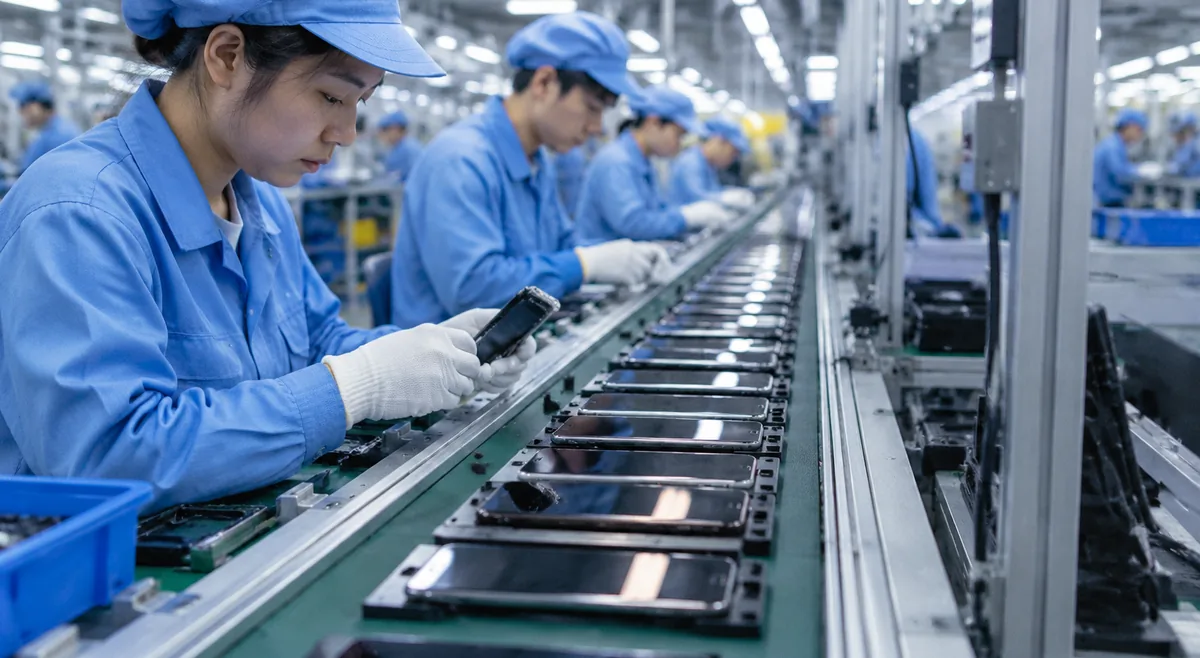
What happened in India
The quarter in numbers, all from Counterpoint's Monthly India Smartphone Tracker as reported across PTI, The Hindu, CNBC-TV18, and Fortune India: - **Total shipments −20% YoY** — the lowest Q3 level in a decade, in what is normally the pre-festive stocking quarter. - **Sub-₹20,000 shipments −47%.** Research analyst Shubham Singh: rising component costs pushed model prices into higher bands, pressuring affordability and "weakening the traditional mass-market volume engine, particularly below ₹15,000." - **Full-year 2026 forecast: −13%** (research director Tarun Pathak), with pricing pressure weighing on affordability and replacement demand; consumers extended replacement cycles and deferred upgrades. - **OEMs held back channel inventory** even ahead of the festive season — prioritizing, in Singh's words, "margin protection, portfolio rationalization and leaner channel inventory over aggressive volume expansion." - **The cause, as stated by Counterpoint:** record-high memory prices driving up device costs. Counterpoint estimates smartphone memory prices rose more than 300% year-on-year in Q2 2026. And the reshuffle: Samsung 17% (top spot after nine quarters; the only top-five brand with YoY shipment growth), vivo 16% (excluding iQOO), OPPO 12%, Xiaomi 12% including POCO. Indian brands, led by Ai+, raised their combined share from 2% to 7%; Ai+ was the fastest-growing brand at +306% YoY. MediaTek remained the top chipset supplier with 45% share. Google grew over 50%.
Why Samsung won the quarter: the vertical-integration dividend
Counterpoint's explanation deserves a slow read for anyone who buys components: Samsung outperformed because of "relatively measured price hikes and proactive management of rising memory costs." Translate that into supply-chain terms. Samsung buys memory from Samsung. Its handset division faces the same internal transfer prices as everyone — but its cost curve is the manufacturer's, and Counterpoint reads its milder ("measured") hikes as proactive management of the same increases — a structural advantage, not a supply guarantee anyone has documented — and it can choose to absorb increases at group level to defend share. Every other top-five brand buys DRAM and NAND on a market where some mobile-storage measures are up ~300% year on year (Counterpoint, Q2 2026), at contract resets they don't control (Apple reportedly accepted +30–40% for Q1 2027), with allocation behind the AI datacenter queue. The result is a structural lesson for buyers far beyond smartphones: **in a shortage cycle, your supplier's upstream position is a deliverable.** Two suppliers quoting the same part are not equivalent if one controls its critical input and the other buys it spot. The one without upstream cover raises prices in bigger steps, rations earlier, and — as India's budget segment shows — eventually stops shipping the low-margin products altogether.
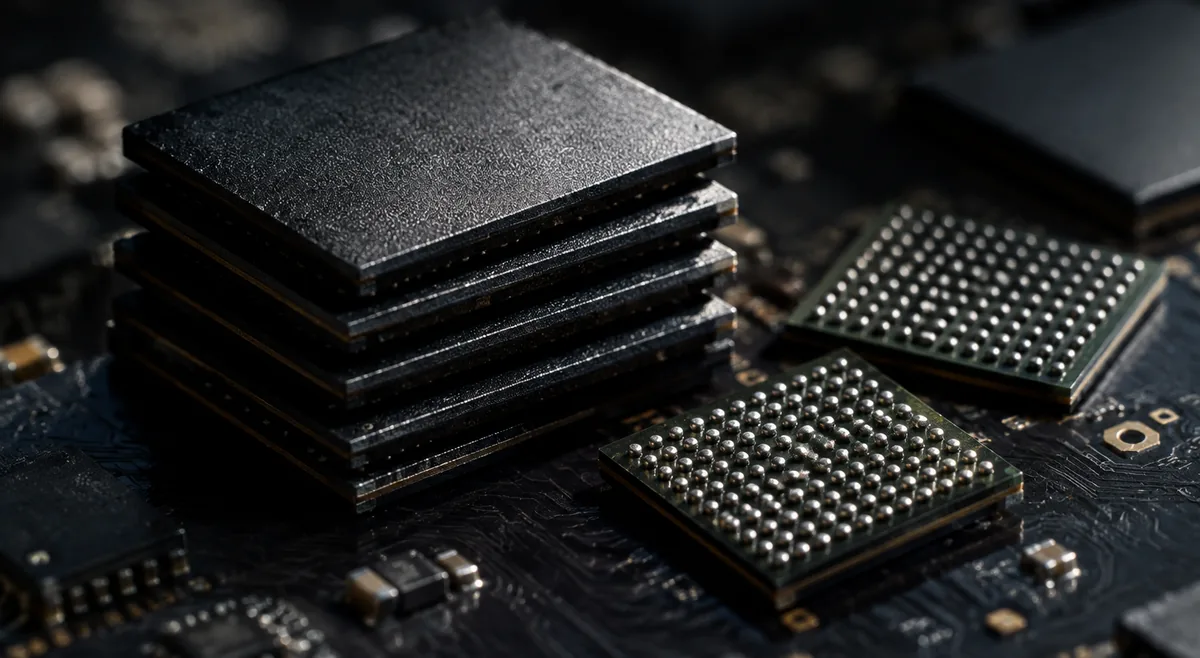
The barbell: why the low end dies first
India's data is a perfect cross-section of shortage economics: - **Budget (sub-₹20,000): −47%.** Memory is a large share of a budget phone's BOM — on a ₹12,000 device, the DRAM+NAND stack can run to roughly a quarter of total cost (illustrative). A several-fold run in that line item cannot be absorbed or passed to a buyer choosing between phone models ₹500 apart. So models were repriced into higher bands (mechanically shrinking the segment), thinned out ("portfolio rationalization"), or dropped. - **Premium: resilient.** iPhone 18 Pro initial sales +20% YoY. On a ₹120,000 device, even a doubled memory stack is a single-digit percentage of price, and its buyers are the least price-sensitive. Cost passes through; volume holds. - **The middle gets squeezed both ways** — pushed up by costs, traded down from by deferred upgraders. For component buyers, the barbell predicts order patterns: demand for memory-adjacent and cost-heavy configurations in price-sensitive products keeps falling while memory stays scarce, while premium product lines keep pulling components with far less price resistance. If your product sits in the "budget" half of its category — in any industry — your BOM is where the cycle bites first, and your end customers are the ones deferring.
What this means for component buyers
**1. Re-underwrite your low-end exposure.** If your products serve price-sensitive segments, India's −47% is your scenario planning number. Memory and other inflated components are a larger BOM share for you than for premium competitors; your choices are reprice (and lose volume), absorb (and lose margin), or redesign (see 4). Pretending the old price points hold is how brands lost half a segment in one quarter. **2. Score suppliers on upstream control, not just price.** Ask where your supplier's critical inputs come from and what cover they hold. A vertically integrated or LTA-covered supplier is worth a premium in a rationed market — Samsung's quarter is the proof case. Build this into RFQ scoring for 2027. **3. Expect lean-channel order patterns from OEM customers.** India's OEMs ran inventories down deliberately into the festive season. If you sell into consumer electronics, expect orders to stay lumpy and conservative even where end demand stabilizes — the channel is being managed for margin, not volume. Don't read one strong month as a restock cycle. **4. Design-out is now a mainstream response.** "Portfolio rationalization" means OEMs are cutting SKUs and, within surviving models, re-spec'ing content — smaller memory configurations, alternative parts, cheaper chipsets (MediaTek's 45% share is part of this story). Buyers who pre-qualify lower-cost alternatives and pin-compatible second sources get chosen in this process; buyers holding single premium specs get designed out. **5. Plan for the guided next hike.** Pathak explicitly expects "another round of price hikes after the festive season" as elevated component costs persist. That lands after the festive season — likely late 2026 into early 2027 — the same window in which Samsung's memory resets (+30–40% reported) and TSMC's reported wafer hike takes effect (TSMC is reportedly planning wafer price increases of about 3–6% from January 2027, not confirmed by TSMC). It is a stacked repricing window across the whole BOM. Budget it as one event, not three surprises. The memory parts at the center of this — mobile DRAM and eMMC/UFS storage like the Samsung KM-series devices in our catalog — are precisely where contract resets are steepest. Send us your memory BOM — part numbers and quantities — and we'll check each line against the Q1 2027 reset points and what configuration or second-source options exist before the post-festive hike lands.
Frequently asked questions
**Is India's crash a memory story or a demand story?** Both, in sequence. Counterpoint attributes the trigger to record-high memory prices pushing device costs up; the transmission was consumer deferral (longer replacement cycles) and OEM margin defense (lean inventory, rationalized portfolios). Weak underlying demand amplified it, but the cost shock is the identified cause. **Why did Samsung gain while making the same phones as everyone else?** It doesn't buy its memory the way everyone else does. As the world's largest memory maker, Samsung's handset arm buys at a manufacturer's cost curve and — on Counterpoint's reading — managed the increases proactively, letting it raise prices more gently ("measured hikes") and keep shipping into bands rivals vacated. **Does the sub-₹20,000 collapse mean budget phones are finished?** No — it means the current price architecture is. Shipments fell partly because models were repriced *out* of the band into higher ones. As (if) memory costs plateau, bands refill. Counterpoint still expects full-year India shipments down ~13%, not a permanent halving. **What about the Indian brands' jump?** Ai+ and peers grew from a small base (2% → 7% combined share) with expanded portfolios — likely absorbing demand at price points global brands vacated. It shows share is available for anyone who can hold a price point, if they can source the memory to build at it. **Should buyers of non-phone products care?** Yes — the mechanism is general. Any product where memory or other shortage components are a large BOM share, sold to price-sensitive customers, faces India's math. Automotive accessories, IoT devices, budget computing, and consumer appliances are the same shape. **When does it ease?** Not in Q1 2027 on current guidance: Counterpoint expects another hike round post-festive season, memory contracts reset up, and wafer prices rise. Relief depends on new capacity; the expectation cited here puts meaningful additions in 2028 — an outlook, not a schedule. ---
Sources
Use the latest guidance for the exact part and manufacturer when deciding acceptance criteria.
- Counterpoint Research: India Smartphone Market Slumps 20% YoY in Q3, Sub-INR 20,000 Shipments Nearly Halve (23 Oct 2026)
- Counterpoint Research: Global Smartphone SoC Shipments Fall 15% YoY in H1 2026 Amid Rising Memory Costs (29 Jul 2026)
- Counterpoint Research: Global Smartphone Shipments Hit a New Low with 20% YoY Decline, Lowest in 14 Years (12 Oct 2026)
- Macworld (citing DigiTimes, Semiconductor Insider): More iPhone price hikes loom as Apple reportedly accepts brutal memory deal (17 Sep 2026)
- TechPowerUp (citing Liberty Times, Commercial Times): TSMC Could Charge Up to 20% More for CoWoS Packaging Amid AI Crunch (28 Oct 2026)