The short version
Samsung's next-generation memory has reportedly cleared one of the toughest gates in the industry — and the emphasis belongs on "reportedly." According to Korean media reports (Hankyung, as relayed by English-language outlets), Samsung's 12-layer HBM4E passed customer quality verification with Nvidia and major hyperscalers at the end of September 2026. Samsung itself says it cannot confirm the report. No supply contract, no volume, no delivery schedule has been disclosed. That gap — between a reported test pass and a commercial deal — is the entire story for buyers. This guide explains what qualification actually proves, what it doesn't, and the five concrete signals that would turn this report into a real supply event.
What was reported (and what wasn't)
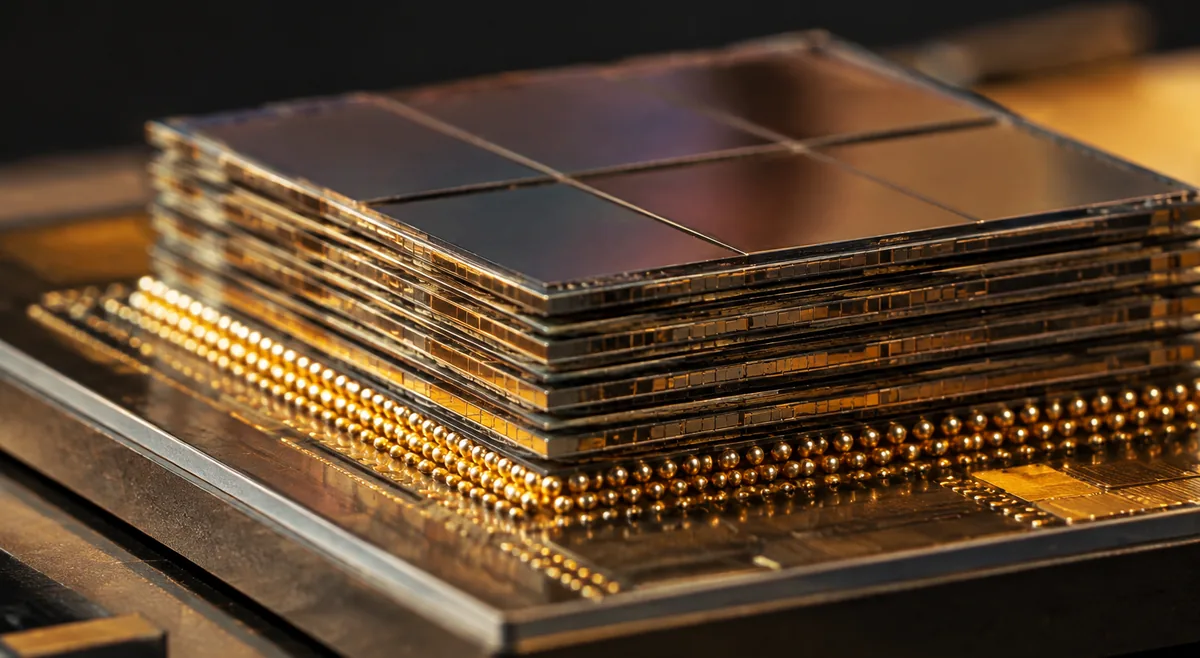
Tier the evidence before drawing conclusions. **Media report (Hankyung, October 7, 2026, as relayed by English-language outlets from October 7):** Samsung's 12-layer HBM4E cleared customer qualification tests with Nvidia and major global hyperscalers; the verification was completed at the end of September. The report describes the approval as strengthening Samsung's position against SK Hynix and Micron in the next-generation AI memory race. Samsung told the outlet it could not confirm the claim. **Company-confirmed milestone (Samsung, May 29, 2026):** Samsung announced it had begun shipping 12-layer HBM4E samples to major global customers — the industry's first such samples, per the company. That announcement established that sampling was underway; it did not name Nvidia as a recipient and did not claim any customer had completed qualification. **English-language coverage (from October 7, 2026):** Wccftech and TechPowerUp both republished the Hankyung report on October 7; neither independently confirmed it. One detail to handle with care: TechPowerUp's version of the story additionally links the qualification to Nvidia's next-generation Rubin Ultra platform. We could not verify that link — neither Samsung's announcements nor the Wccftech relay confirms any product assignment, and we have not independently read the original Korean report. Treat the platform connection as TechPowerUp's reporting, not an established fact. What is *not* in any source reviewed: official confirmation from Samsung or Nvidia, any supply contract or order volume, any mass-production delivery schedule, or any confirmed product the HBM4E would ship in.
What HBM4E is — and what Samsung has actually claimed
HBM4E ("E" for enhanced) is Samsung's follow-up to HBM4: a 12-high stack of DRAM dies on a logic base die, aimed at AI accelerators where memory bandwidth is the binding constraint. The specifications below are Samsung's own published figures from its May sample announcement — company statements, not independent benchmarks — and buyers should read them as targets, not test results. | Specification | Samsung's published figure | |---|---| | Configuration | 12-layer stack | | Capacity | 48GB per stack | | Pin speed | 14Gbps, extendable to 16Gbps | | Bandwidth | Up to 3.6TB/s per stack (May announcement); Samsung separately cited up to 4.0TB/s at Nvidia GTC 2026 — the two announcements cite different figures, and Samsung has not explained the difference | | DRAM process | Sixth-generation 10nm-class ("1c") | | Logic base die | Samsung Foundry 4nm | | Efficiency/thermal | Samsung claims ~16% better power efficiency and >14% lower thermal resistance vs. its prior generation | Samsung said in its May announcement that it plans 32GB (8-layer) and 64GB (16-layer) configurations in line with customer requirements. The key buyer takeaway from the spec sheet: this is a credible next-generation part on paper. Whether it ships in volume at competitive yield is a separate question that no spec sheet answers.
Why it matters: a three-supplier race takes shape for 2027
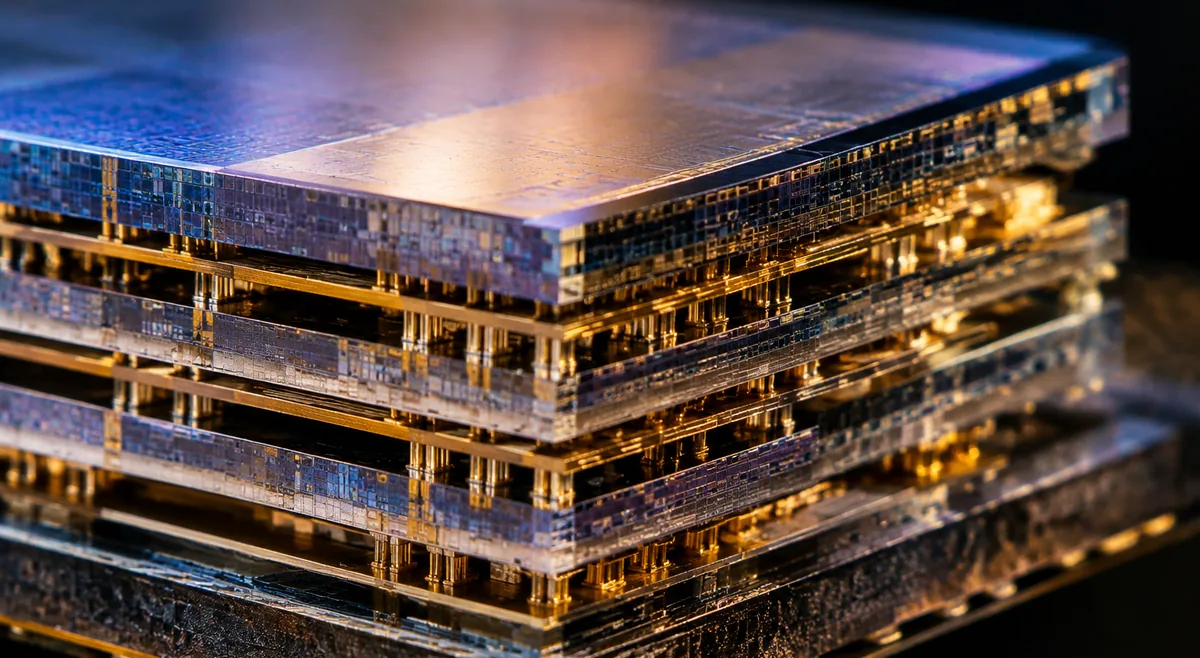
Step back from the single report and look at the structure. Through the HBM3 and HBM3E generations, Samsung famously struggled — its HBM3E reportedly did not meet Nvidia's requirements (TechPowerUp). Through that generation, the qualified HBM supply buyers could actually source centred on SK hynix and Micron. A qualified HBM4E would change the shape of the 2027 contest from a two-horse race into a three-supplier market. That matters to buyers for reasons that go beyond any single purchase order: **1. Negotiating leverage returns to the buy side — eventually.** Hyperscalers allocating 2027 HBM supply with three qualified vendors instead of two gain real alternatives. That doesn't lower prices tomorrow, but it changes the 2027 allocation conversation, where single-source dependence has been the buyer's weakest position. **2. It validates Samsung's catch-up, not its victory.** Passing one customer's qualification is a technical milestone. The commercial test — consistent yields, volume ramp, on-time delivery across multiple customers — is still ahead. On its Q2 earnings call (July 30, 2026), Samsung said it expected HBM4 sales in the third quarter to more than triple from the second quarter (as reported by ChosunBiz — an expectation stated in advance, not a reported result); HBM4E must now repeat that climb from zero. **3. Custom HBM is the real 2027 story.** The more consequential shift may be architectural, not commercial. Samsung is reportedly moving to a dual-track base-die strategy — building the logic base die in its own foundry or at TSMC depending on customer requirements — as HBM becomes customized per accelerator. If that holds, "which foundry made the base die" becomes a new line item in memory supply-chain diligence. (Treat this as reported, not confirmed: TrendForce News, October 9, relaying ZDNet Korea and industry sources on custom-HBM base-die strategies — not a Samsung announcement.)
The core lesson: qualification is not an order
This is the single most expensive confusion in memory procurement, so make it explicit. A reported qualification moves through three distinct stages, and the October report concerns only the first: **Stage 1 — Technical qualification.** The customer tests whether the memory meets its requirements for performance, power, thermals, reliability, and integration. This is what was reportedly completed in late September. It proves the part *can* work in the customer's system. It proves nothing about commercial terms. **Stage 2 — Commercial allocation.** The customer decides which products use the component, in what volumes, at what price, and on what schedule. Nothing in the reporting discloses any allocation to Samsung — no stack count, no contract value, no product assignment. **Stage 3 — Volume production and delivery.** The supplier manufactures at commercial scale and ships on schedule. This depends on yields, capacity reservations, and the customer's product ramp — none of which the report addresses. Each stage needs its own evidence. A test pass improves the odds of future business; only orders and shipments establish revenue. Buyers who treat Stage 1 news as Stage 2 fact end up planning around supply that doesn't exist yet — the same mistake, in reverse, as ignoring Stage 1 news entirely and being surprised by Stage 2.
Five signals that would turn this report into a supply event
Don't watch the headlines — watch for these, in roughly this order: | # | Signal | What it would confirm | Where a buyer can watch it | |---|---|---|---| | 1 | Official confirmation | That the qualification actually happened — a Samsung or Nvidia statement, or an explicit earnings-call reference | Company press releases, earnings call transcripts | | 2 | Supply agreement or allocation disclosure | Commercial reality: volumes, contract value, delivery window | Regulatory filings, credible press reports of contract terms | | 3 | Product assignment | Which accelerator uses it, and in which configuration (8/12/16-layer) | Product announcements, teardown reporting | | 4 | Yield and ramp evidence | That Samsung can build it at scale, not just in the lab | Samsung's quarterly HBM revenue commentary; supply-chain checks | | 5 | 2027 HBM pricing terms | Where the new supply sits in the price structure (TrendForce currently projects a 121% YoY rise in blended HBM average selling price for 2027) | Contract-price reporting, distributor quotes | Until signal 1 appears, the responsible read remains: an important technical milestone, reportedly achieved, with commercial consequences not yet established.
What it means for standard DRAM buyers
Here's where the story touches buyers who will never purchase an HBM stack. Keep the causal chains separate — this discipline matters. **Chain A (supported): HBM expansion competes with conventional DRAM for wafer capacity.** HBM and standard DRAM share advanced-process wafer capacity. Every wafer Samsung dedicates to HBM4E is a wafer not making conventional DRAM. The more HBM demand grows — and a third qualified supplier can accelerate that growth — the tighter the shared pool gets for standard memory. This is the mechanism behind the persistent tightness analysts describe: TrendForce expects conventional DRAM contract prices to rise 10–15% in Q4 2026 (a marked slowdown from the much larger increases earlier in 2026, but still rising), and TrendForce says DRAM suppliers continue to prioritise advanced-process capacity for server products, keeping the market undersupplied, with PC DRAM supply potentially declining in 2027. **Chain B (separate): Samsung's foundry business is a different story.** Do not connect HBM4E qualification to Samsung's logic-foundry fortunes. Memory qualification wins don't transfer to foundry orders, and foundry capacity doesn't consume DRAM wafers. The bundling dynamics we covered in our October 10 guide are a negotiation tactic, not a production linkage. The practical implication of Chain A is the same one from our DDR5 timing guide: plan 2027 as if standard DRAM stays tight, qualify alternates now, and treat any 2028 relief as upside. A new HBM supplier entering the market is good for HBM buyers' leverage — and neutral-to-negative for conventional DRAM availability.
Frequently asked questions
**Did Samsung's HBM4E really pass Nvidia's qualification?** Reportedly — and that's the precise word. Hankyung reported it on October 7, 2026, and Wccftech and TechPowerUp republished it the same week without independently confirming it. Samsung says it cannot confirm the claim, and Nvidia has said nothing publicly. Treat it as a credible media report, not a confirmed fact. **What's the difference between HBM4 and HBM4E?** HBM4E is Samsung's enhanced next generation: 12-layer stacks at 48GB per stack — over 30% more capacity than the previous generation, per Samsung — 14Gbps pin speeds, which Samsung puts at over 20% higher pin speed than HBM4, and up to 3.6TB/s bandwidth per its May figures. It also moves to a 1c DRAM process with a 4nm logic base die. **Does qualification mean Nvidia has ordered Samsung's HBM4E?** No. Qualification is Stage 1 of three: it proves the part meets technical requirements. Orders — Stage 2 — require separate commercial negotiation on volumes, pricing, and schedule, and none has been reported. Never plan procurement around a qualification headline as if it were a supply contract. **Will Samsung's HBM4E be used in Nvidia's Rubin Ultra?** That connection comes from TechPowerUp's reporting. The Samsung announcements and the Wccftech relay we read name no specific Nvidia product, and we have not independently verified the original Korean report's details. Until Nvidia or Samsung assigns the part to a product, treat any platform claim as unconfirmed. **When will HBM4E ship in volume?** No confirmed schedule exists. Samsung began shipping samples in May 2026; the path from a reported September qualification to volume production depends on yields, capacity allocation, and customer product ramps — none of which are public. Watch the five signals above rather than calendar predictions. **Should buyers of regular DRAM care?** Yes, through the capacity chain: HBM and conventional DRAM compete for the same advanced wafers, so a successful HBM4E ramp tightens the pool for standard memory even as it gives hyperscalers more HBM options. If you buy commodity DRAM, this story argues for locking 2027 coverage, not waiting for relief. ---
Sources
Use the latest guidance for the exact part and manufacturer when deciding acceptance criteria.
- Samsung Semiconductor: Samsung Electronics Begins Shipment of Industry-First HBM4E Samples (29 May 2026)
- Samsung Semiconductor: Samsung Unveils HBM4E, Showcasing Comprehensive AI Solutions, NVIDIA Partnership and Vision at NVIDIA GTC 2026 (16 Mar 2026)
- Wccftech: Samsung's 12-Hi HBM4E Reportedly Passes NVIDIA Qualification (7 Oct 2026)
- TrendForce: HBM Supply Constraints Persist, 2027 Price Outlook Revised Upward with Blended ASP Forecast to Rise 121% YoY (29 Sep 2026)
- TrendForce: AI Server Demand Sustains Memory Contract Price Increases in 4Q26 (30 Sep 2026)
- TechPowerUp: Samsung HBM4E Passes Testing for NVIDIA's Rubin Ultra GPU (7 Oct 2026)
- ChosunBiz: Samsung Q2 2026 earnings-call coverage — HBM4 Q3 sales expected to more than triple (30 Jul 2026)
- TrendForce News: NVIDIA's NVHBM Reshapes Memory Makers' Base Die Strategies (9 Oct 2026)