The short answer
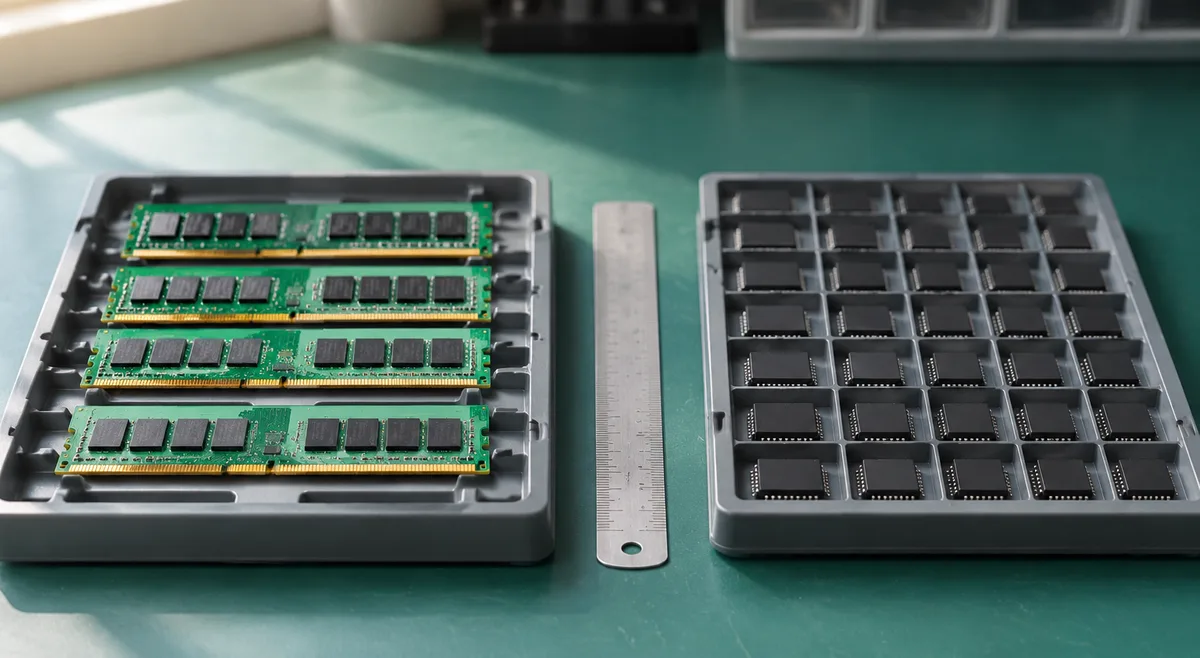
October split the memory market in two. DRAM set another record. The NAND benchmark stopped rising. Each side now needs its own buying plan, its own timing, and its own negotiation.
- DRAM is a supply story: makers moved wafers to AI server memory, and PC DRAM output may fall sharply in 2027. Buy DRAM on contract logic, not spot logic.
- Mainstream MLC NAND has paused at a high level, not fallen. A flat benchmark is a negotiation opening, not a reason to wait for a crash.
- SLC NAND is still rising, especially at 4Gb and above. Embedded and industrial buyers face the tightest legacy-node supply of all.
- Split every memory BOM into three tracks — DRAM, volume NAND, and SLC NAND — and run each track on its own clock.
The October split, in numbers
According to DRAMeXchange data reported by ChosunBiz on October 30, the average fixed transaction price for DDR4 8Gb 1Gx8 reached $27.5 in October. That is up 5.77% from September and the highest since the survey began in June 2016. Module prices rose faster: DDR4 8GB modules gained 14.86% to $170, DDR5 16GB modules 11.34% to $275, and DDR5 8GB modules 24.06% to $165. The NAND benchmark moved the other way: 128Gb MLC NAND held at $30.61, unchanged on the month.
- Contract price: the fixed transaction price is what makers and large buyers settle in advance for volume. It anchors negotiations; it is not a spot quote.
- Why DRAM rises: Samsung and SK hynix are reallocating wafer capacity to AI server memory, according to ChosunBiz. PC DRAM is what gets squeezed.
- 2027 supply: TrendForce projects Korean makers' PC DRAM output will fall more than 20% next year. Counting reduced PC-maker purchases and long-term contract lock-ups, the decline could exceed 40%.
- Q4 talks: TrendForce maintains its forecast of a 13–18% rise in Q4 PC DRAM contract prices, a forecast it had raised from 3–8% earlier in the autumn, according to FnNews.
- Settlement reality: suppliers reportedly asked for 15–20% increases. Actual transactions concentrated at 10–15%, and TrendForce expects most Q4 talks to wrap up in November.
- Why MLC stalled: TrendForce says demand is fading as buyers switch to cheaper SLC parts or denser TLC parts. High prices also cut purchase volumes.
- Why SLC still rises: makers are shifting fabs to advanced 3D NAND, which shrinks legacy-node supply. SLC prices rose 5–10% in October, and parts of 4Gb and above climbed 9.0–9.9%.
How to buy each side of the split
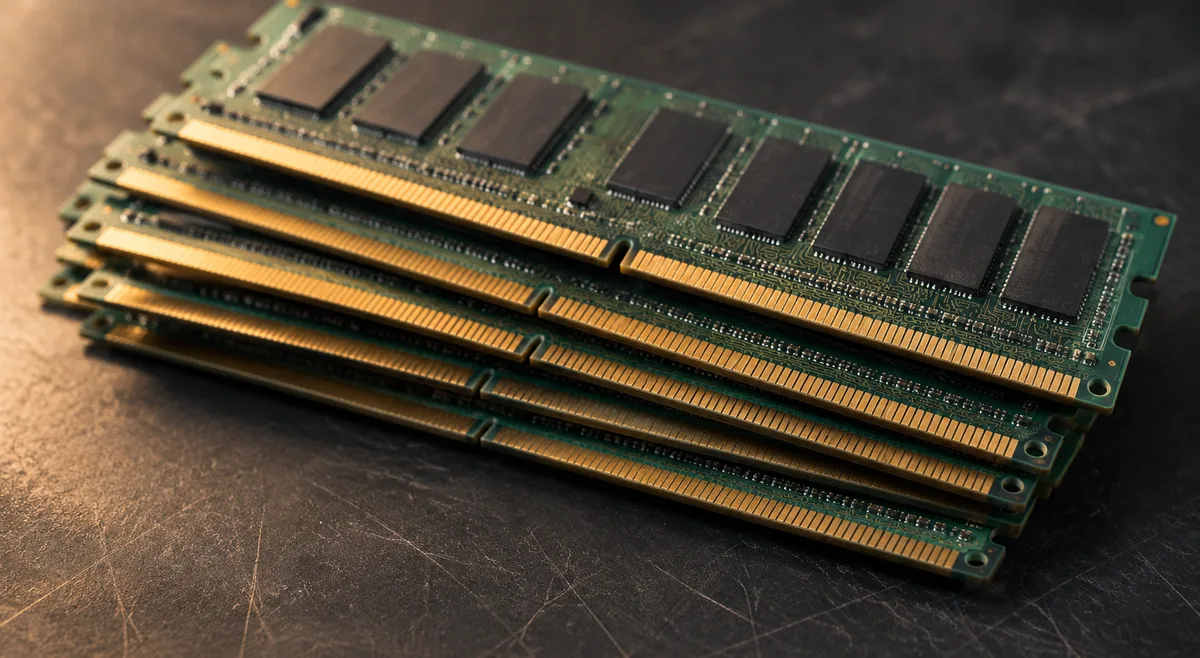
Work the three tracks in this order. DRAM first, because its negotiation window closes in November. SLC second, because its supply shrinks every quarter. MLC and TLC last, because the flat benchmark gives you time.
- Step 1 — Price your 2027 DRAM exposure now. Use the TrendForce Q4 range as your planning floor, and treat any 2026 price in your cost model as expired.
- Step 2 — Close DRAM volume before the November wrap-up; after talks end, late buyers negotiate against a smaller residual pool.
- Step 3 — Audit legacy DRAM lines separately. A part like the MT41K256M16TW-107:P is DDR3L: it will not follow DDR4 benchmarks, but legacy capacity exits first when wafers move.
- Step 4 — Lock SLC NAND volumes early. Parts such as the S34ML04G200TFI000 and the GD5F2GM7UEYIGR sit in the segment still rising 5–10% a month.
- Step 5 — Use the MLC pause as leverage, not as a forecast. Ask for price protection or bands while the benchmark is flat; TrendForce expects MLC to stagnate at high levels or slip slightly, not to drop hard.
- Step 6 — Qualify the SLC-for-MLC swap where your design allows it. TrendForce notes buyers are already moving from MLC to SLC or TLC; a qualified second footprint is cheaper than a line-down.

Common mistakes
Most split-market losses come from treating memory as one line item. The four mistakes below show up in RFQs every cycle.
- Negotiating one memory discount across DRAM and NAND. The two markets now move in opposite directions, so a blended deal overpays on one side and under-covers the other.
- Reading the flat MLC print as a turning point. One unchanged month after 21 monthly gains is a pause at the top, and contract cover matters more than direction guesses.
- Waiting for legacy parts to get cheaper. Legacy DRAM and SLC NAND lose wafer capacity first, so the oldest lines on a BOM usually carry the highest shortage risk.
- Assuming a module price tells you the chip price. October module gains (up to 24.06%) ran far ahead of the chip benchmark (5.77%), because module supply tightens faster.
Before you send an RFQ
A split market punishes vague RFQs, because each track is quoted against a different clock. Our RFQ guide covers the general fields. For memory this quarter, add the track-specific items below — and see Samsung's Q3 guide for why contract coverage now decides who gets served first.
- List DRAM, NAND, and SLC lines as separate groups, each with its own target date. Do not merge them into one delivery window.
- Give the full MPN with density and organization — for example 8Gb 1G x 8 — because benchmarks and supply differ by exact configuration.
- State which lines need contract-style cover into 2027 and which are one-off buys. The answer changes the sourcing route.
- Name acceptable alternates per line, including an SLC or TLC option where your design can take one.
- Share your quarterly forecast, even a rough one. In an allocation market, forecast history is part of your credibility with suppliers.
Frequently asked questions
Short answers on the split, and what it changes for buyers.
- Q: Is NAND finally getting cheaper? A: Not yet. The 128Gb MLC benchmark was unchanged at $30.61 in October, after 21 straight monthly gains. TrendForce expects MLC to stagnate at high levels or slip slightly in Q4 — a plateau, not a decline.
- Q: Why did DDR4 modules outrun DDR5 16GB modules in October? A: Makers are cutting DDR4 output first as wafers move to server memory, while a large installed base still buys DDR4. In October, DDR4 8GB module prices rose 14.86%, ahead of DDR5 16GB modules at 11.34% (DDR5 8GB modules rose faster, 24.06%).
- Q: Should I switch my design from MLC to SLC NAND? A: Only if the density fits. TrendForce says buyers are making that switch, and SLC supply is tight at 4Gb and above. Qualify the change on a test build before you commit production volumes.
- Q: What happens to DRAM prices in 2027? A: In our view, the direction depends on contract coverage, not spot quotes. TrendForce projects Korean PC DRAM output down more than 20%. Buyers inside long-term agreements may see stability; buyers outside them may face the residual market.
Sources
Use the latest guidance for the exact part and manufacturer when deciding acceptance criteria.