The short version
One day after SK hynix's sold-out call, Samsung confirmed the same allocation regime from the other half of the duopoly — with harder numbers. Its Q3 set records; its outlook locks 2027.
- Revenue 195.3 trillion won and operating profit 107.4 trillion won — the first quarter above 100 trillion won of operating profit in tech history; the DS division earned 106.5 trillion of it.
- DRAM prices rose about 20% quarter on quarter while bit shipments grew only low-to-mid single digits: this cycle is paid for in price, not volume.
- 2027 HBM volumes are sold out at Samsung's target prices; DRAM long-term agreements are signed with 10 large customers, with 10 more in negotiation.
- Samsung expects tight supply through 2028, citing the synthesis of market research firms — narrower than SK hynix's own sold-out-through-2029 order book (see the SK hynix guide).
What Samsung reported
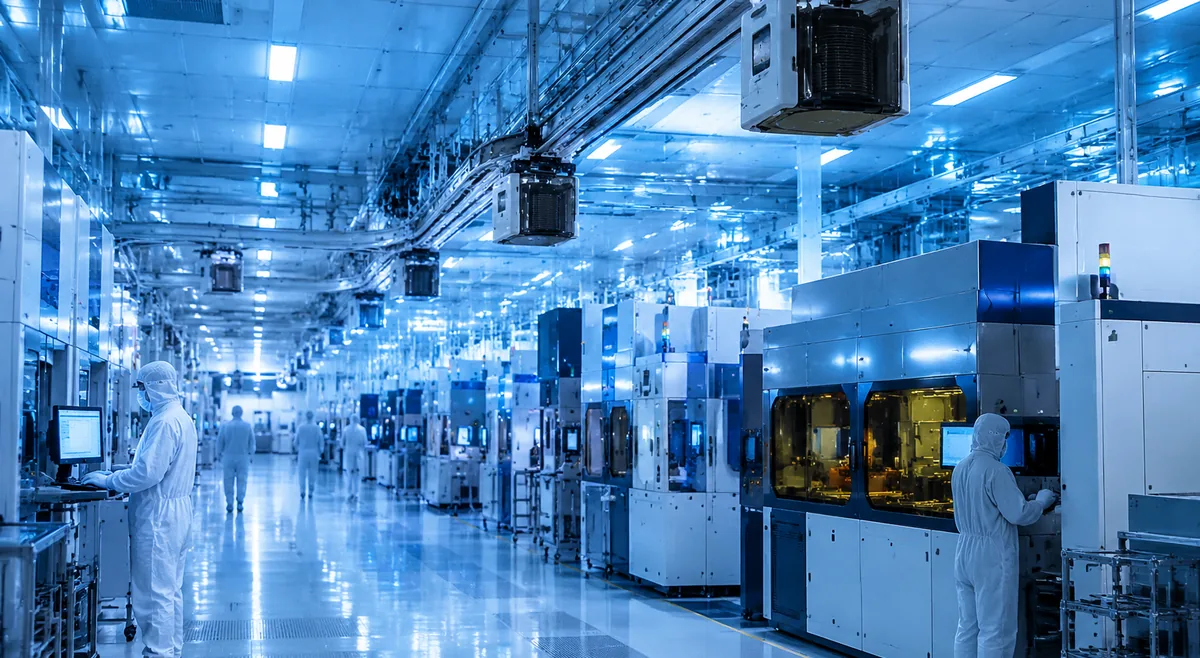
Samsung's Memory Business set all-time highs for quarterly revenue and operating profit, achieved, in its words, by managing product mix toward AI products amid capacity constraints. HBM4 revenue more than tripled quarter on quarter to about 60% of HBM revenue, and HBM4E samples shipped in May drew positive early evaluations ahead of H1 2027 mass production. The pricing power showed inside Samsung's own house: the DX division posted a 0.8 trillion won operating loss as memory costs squeezed its phone and consumer businesses.
- Final figures matched the October 8 preliminary guidance (revenue ~195 trillion won, operating profit ~107.4 trillion); net profit of 75.13 trillion won missed the Yonhap Infomax analyst average of 87.01 trillion — a gap in the net line, not in operating profit.
- Q4 guidance: bit shipments up mid-to-high teens for DRAM and mid-teens for NAND, with mix shifting further to HBM, server DRAM, SSDs, high-speed server DDR5, and QLC SSDs on personal AI agent demand.
- 2026 capex is planned at about 84.4 trillion won (76.8 trillion to the DS division); Q3 shareholder dividends totaled 30 trillion won.
Why supply cannot answer quickly
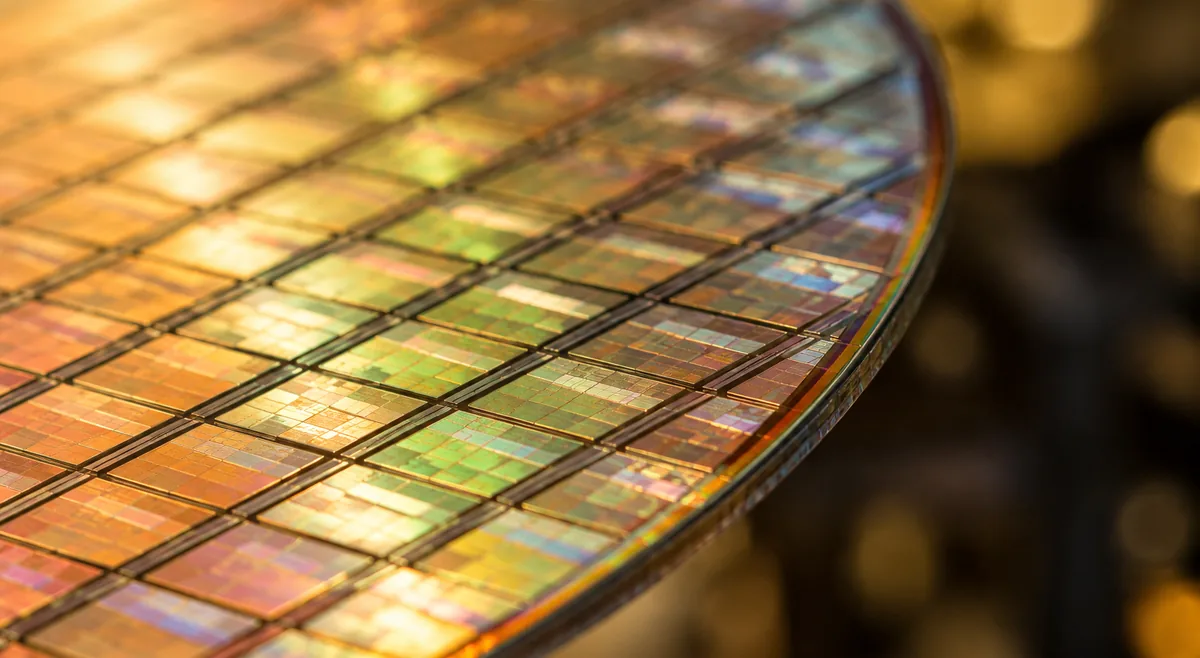
Samsung's memory VP Kim Jae-joon gave three structural reasons on the call. First, contract coverage keeps expanding: rolling extensions are running far above expectations, and Samsung's goal of long-term agreements covering 60–70% of production capacity by 2030 is, in its words, becoming clearer. Second, money cannot buy speed: even sharply higher 2027 industry capex will be largely absorbed by cleanroom space and construction costs, and fab lead times keep it from becoming 2028 wafer output. Third, physics: HBM's conversion ratio means every additional HBM wafer subtracts conventional DRAM capacity.
- LTA customers are expanding beyond hyperscalers and server makers into mobile, automotive, and networking buyers — segments that historically bought quarter to quarter.
- The boundary, stated plainly: Samsung's sold-out claim covers 2027 HBM volumes. Its tightness-through-2028 view is a synthesis of research firms' opinions, and its 2027 outlook is that AI demand will far exceed industry supply.
- Q3 DRAM ASP rose about 20% and NAND ASP the high teens, per the call — scarcity pricing on capped volume, not cost pass-through.
What this means for component buyers
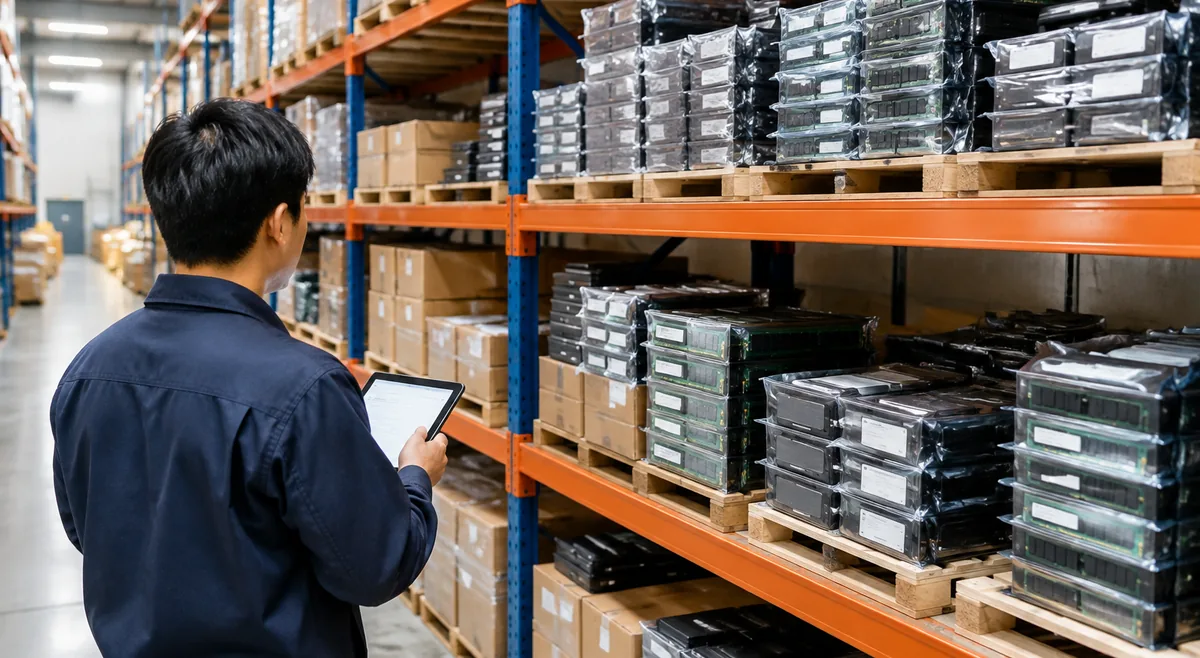
Two of the world's memory giants have now allocated 2027 on the record, in consecutive days. Treat contract coverage as the market's default state and plan your transactional buying for a residual pool that shrinks by design.
- Re-price 2027 now: if your cost models assume flat or softening memory prices, they are wrong at both Korean vendors at once.
- Get inside the LTA perimeter if your volumes qualify — Samsung's list now reaches mobile, automotive, and networking — or assume longer lead times and firmer prices outside it.
- Embedded storage rides the same allocation system: Samsung eMMC lines such as the KLMBG2JETD-B041 and KLM8G1GETF-B041 are made in the same fabs, so qualify alternates (Kioxia eMMC, Winbond and GigaDevice SPI NAND) this year.
- Use the ASP-versus-bits split in negotiations: prices are scarcity rents on capped volume, so push for caps, bands, and formula transparency in any multi-year deal.
- Keep the two-market map from the SK hynix guide: contract volume is locked and expanding; transactional volume is thinner, pricier, and first in line for any 2028 correction.
Frequently asked questions
Short answers to the questions buyers ask us about Samsung's quarter.
- Q: Did Samsung beat its preliminary guidance? A: No — final revenue of 195.3 trillion won and operating profit of 107.4 trillion won matched the October 8 preliminary figures almost exactly; the shortfall versus analyst averages was in net profit, not operating profit.
- Q: What exactly did Samsung say is sold out? A: Its 2027 HBM supply volumes — negotiations completed at target prices, with major customers still requesting more. That is narrower than SK hynix's sold-out-through-2029 claim for DRAM and HBM capacity.
- Q: Why did prices rise about 20% while shipments barely grew? A: Capacity is the constraint, so price does the rationing. Mix shift toward AI products raised averages further — HBM4 alone is now about 60% of Samsung's HBM revenue.
- Q: What is the HBM conversion tax on conventional DRAM? A: HBM uses far more wafer area per bit than conventional DRAM, so — in Samsung's own framing — the more HBM output rises, the less capacity remains for general-purpose DRAM.
- Q: Should eMMC and NAND buyers care about server LTAs? A: Yes. Samsung's LTA base is expanding into mobile, automotive, and networking, toward 60–70% of capacity by 2030 — embedded parts are allocated inside the same system.
Sources
Use the latest guidance for the exact part and manufacturer when deciding acceptance criteria.