Accuracy is a cost ladder
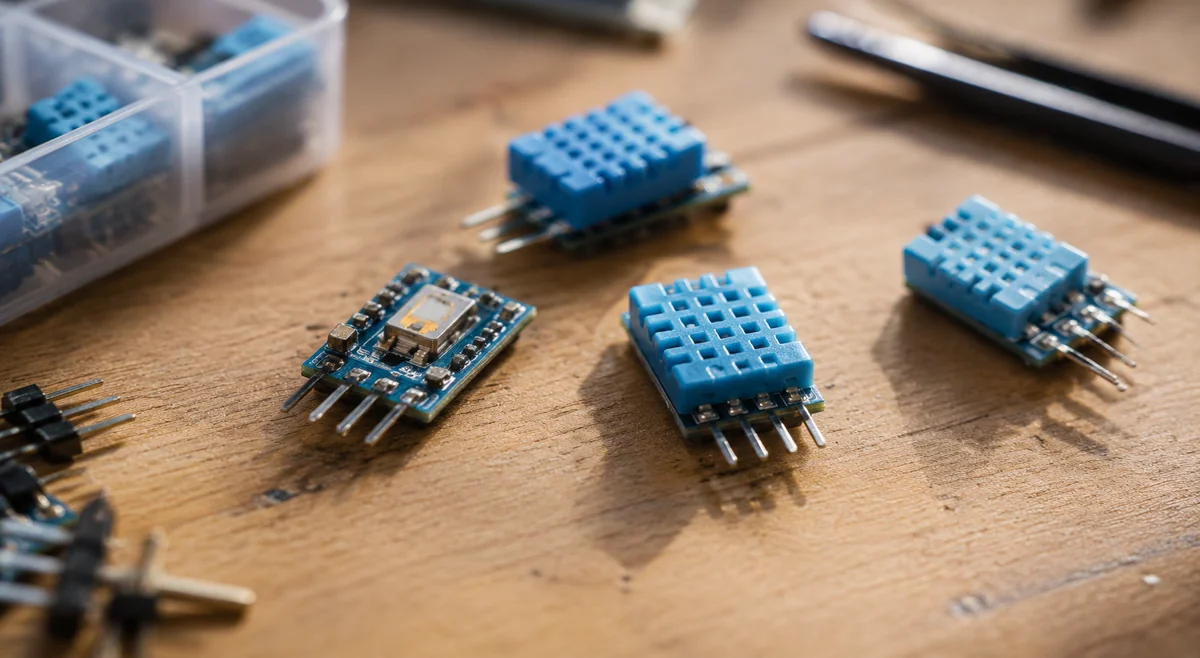
Temperature-humidity sensors sell accuracy in tiers — roughly ±5 %, ±3 %, ±2 % RH — and each rung up the ladder costs more. The expensive mistake is climbing it blindly. A ±2 % sensor in an unsealed enclosure with no temperature control will not deliver ±2 % in practice; ambient gradients and self-heating consume the margin you paid for. Match the tier to the environment, not to the ambition: room monitoring and HVAC feedback rarely need the top rung, while calibration references and controlled chambers might. Remember also that temperature accuracy and humidity accuracy are linked — the humidity reading is computed against temperature, so temperature drift drags humidity along with it. The decision: define the worst acceptable error for your application, then buy the cheapest tier that holds it inside your real enclosure, per the datasheet — not the best number on the parametric table.
Interface decides integration effort
Digital I²C parts dominate new designs because they arrive factory-calibrated with a ready driver ecosystem — but the bus brings its own chores. Check the address options first: many sensors offer only one or two I²C addresses, and a collision with another device on the same bus is a board spin waiting to happen. Bus capacitance and pull-up sizing matter on longer runs or with several devices attached; a sensor at the end of a cable may need stronger pull-ups or a slower clock to stay reliable. Analog-output sensors skip all of this and suit the simplest MCU-less or legacy designs, at the cost of the calibration work landing on you. The rule of thumb: if the board already hosts a managed I²C bus with free addresses and short traces, go digital; if the sensor sits far away or the host is minimal, weigh the analog route. Prototype the bus early — integration effort is decided at selection time, not at bring-up.
Drift, hysteresis and reconditioning
The specification most buyers skip is the one that bites in year two: long-term drift. Polymer humidity sensors drift with time and with exposure history — a sensor parked in condensing humidity reads differently afterward, and the datasheet quantifies both the drift rate and the recovery procedure. Some parts specify a reconditioning bake to restore accuracy after high-humidity exposure; if your application sees steam, rain, or washdown, that procedure belongs in your maintenance story, not in a footnote. Hysteresis — different readings on the way up versus the way down — matters wherever humidity cycles, such as dryers or environmental chambers. None of these appear in the headline accuracy figure. Read the drift, hysteresis, and reconditioning notes in the datasheet before comparing headline numbers; two sensors rated at the same ±3 % can behave very differently after one wet summer. Buyers qualify a sensor in a dry lab, deploy it to a washdown site, and then blame the batch when readings wander — the reconditioning note was in the datasheet all along. Match the sensor to the site, not the lab.
Power and packaging for the real environment
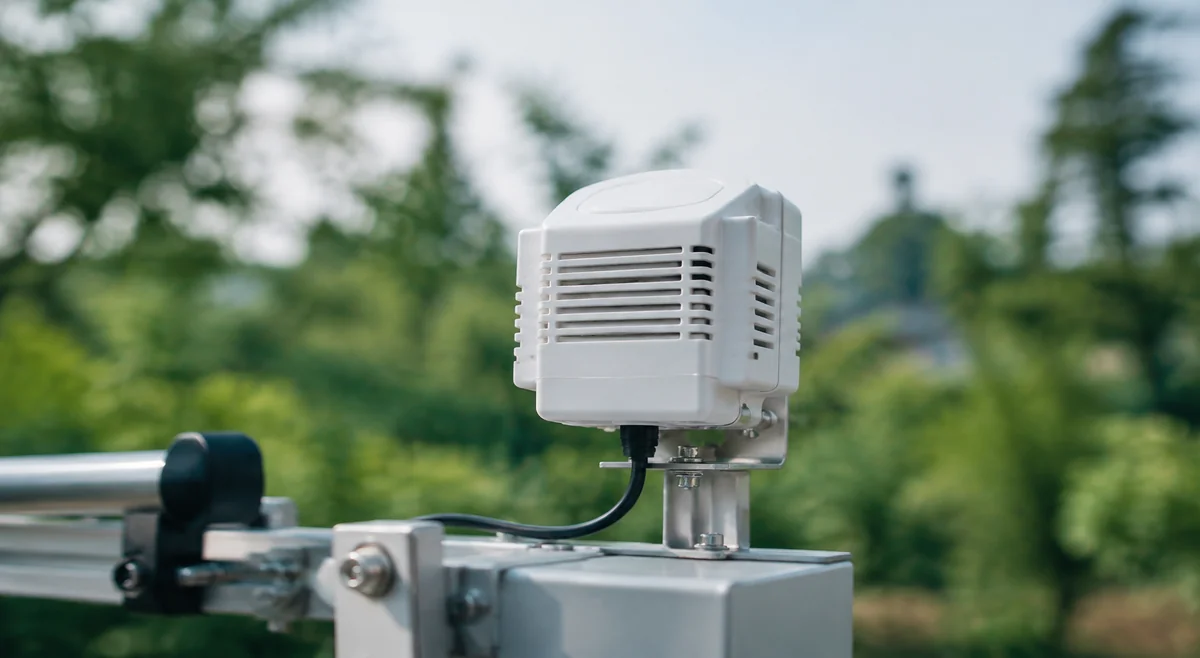
The electrical interface is only half the story — the package decides whether the sensor survives your installation. Supply voltage must match your rail, and sleep current matters for battery designs where the sensor wakes briefly to sample and sleeps the rest of the hour. DFN and similar small packages save board space but demand proper reflow profiles, and these parts carry moisture-sensitivity levels: a sensor that spent too long outside its dry pack can absorb moisture and shift readings or fail during reflow. For dusty or condensing environments, check filter membranes and protective covers — some families offer them as options, and omitting protection at a harsh site is a field-failure plan. Match the package and protection to the installation site first and the PCB footprint second. The handling and storage notes in the datasheet are procurement requirements, not suggestions — hand them to your buyer along with the part number. This handoff often never happens unless someone insists on it — engineering reads the datasheet, purchasing buys the part, and the moisture clock runs out in between. Put the handling notes on the RFQ line itself.
Selection snapshot: three real parts
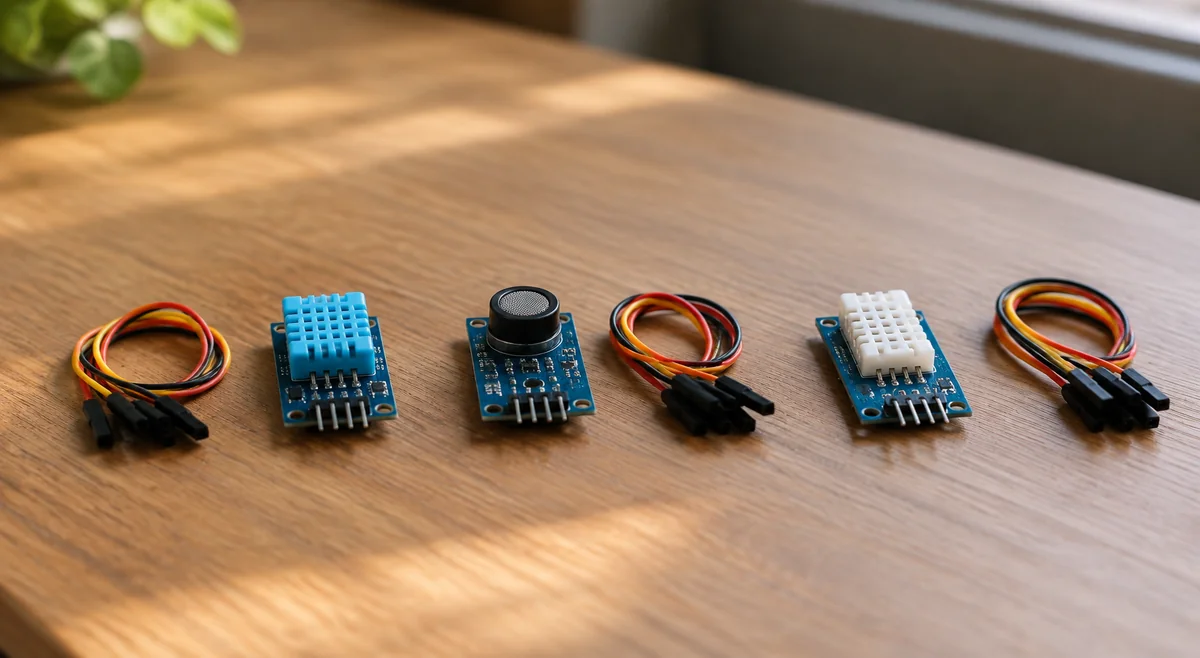
Three parts, three different jobs. SHT30-DIS-B2.5KS is the calibrated digital workhorse: I²C interface with factory calibration — the default choice for room monitoring, HVAC, and data loggers where you want trustworthy readings with minimal firmware effort. AHT20 covers the same temperature-humidity job in a cost-sensitive package with a strong domestic supply ecosystem — pick it when the application tolerates its tier and your supply chain favors local sourcing, but verify the critical specs against the datasheet rather than assuming parity. SCD41-D-R1 is a different instrument entirely: it adds CO₂ sensing to temperature and humidity. Reach for it only when the application genuinely needs CO₂ — demand-controlled ventilation, indoor air quality monitors, occupied-space sensing. If you do not need the CO₂ channel, it is the wrong part: more power, more cost, and more integration work for data you will ignore. Name the measurand first, then choose.
- Calibrated I²C temp-humidity with minimal firmware → SHT30-DIS-B2.5KS.
- Cost-sensitive temp-humidity with local supply → AHT20; verify specs per the datasheet.
- Indoor air quality including CO₂ → SCD41-D-R1; do not buy a CO₂ channel you will not use.
Market availability and buying practice
Mainstream digital temperature-humidity sensors are multi-vendor parts — confirm current channel availability when you buy, since ‘steady supply’ is a snapshot, not a property of the part. The buying risks here are suffixes and storage, not scarcity. The digital-interface suffix (DIS) and its variants are distinct ordering codes — mixing them breaks what the firmware expects, so the BOM must carry the full code. AHT20 and its siblings are not interchangeable without checking the exact variant. And because these are moisture-sensitive devices, confirm original sealed packaging and the moisture-sensitivity level with your supplier, and handle opened reels per the datasheet — a sensor that absorbed moisture before reflow is a latent defect waiting for the field. A Douyin video by @Feizhuxia (111 likes, observed 2026-09-30) shows the buying pitfall from the buyer’s side: why to avoid DHT22-style single-bus sensor modules — #dht22 #temperature sensor: try to avoid sensors with this kind of communication. The lesson matches the guidance above: suffix discipline plus sealed, traceable sourcing beats the cheapest listing. For live availability, search the complete ordering code on your preferred mall and read the current listings. Static prose cannot track a moving market; the method is the durable part.
Frequently asked questions
Quick answers to the questions buyers ask most about choosing temp-humidity sensors.
- Q: Is a ±2 % RH sensor always better than ±3 %? A: Only inside a controlled environment. In an unsealed enclosure, ambient gradients and self-heating consume the margin you paid for.
- Q: Can I hang several sensors on one I²C bus? A: Check the address options first — many sensors offer only one or two I²C addresses, and a collision is a board spin waiting to happen.
- Q: My sensor drifts after a humid summer — is it broken? A: Probably not. Polymer humidity sensors drift with exposure history — check the datasheet's drift rate and reconditioning procedure.
- Q: Does the DIS suffix really matter? A: Yes — interface variants are distinct ordering codes. Mixing them breaks what the firmware expects, so the BOM must carry the full code.
Sources
Use the latest guidance for the exact part and manufacturer when deciding acceptance criteria.