Not one shortage — two
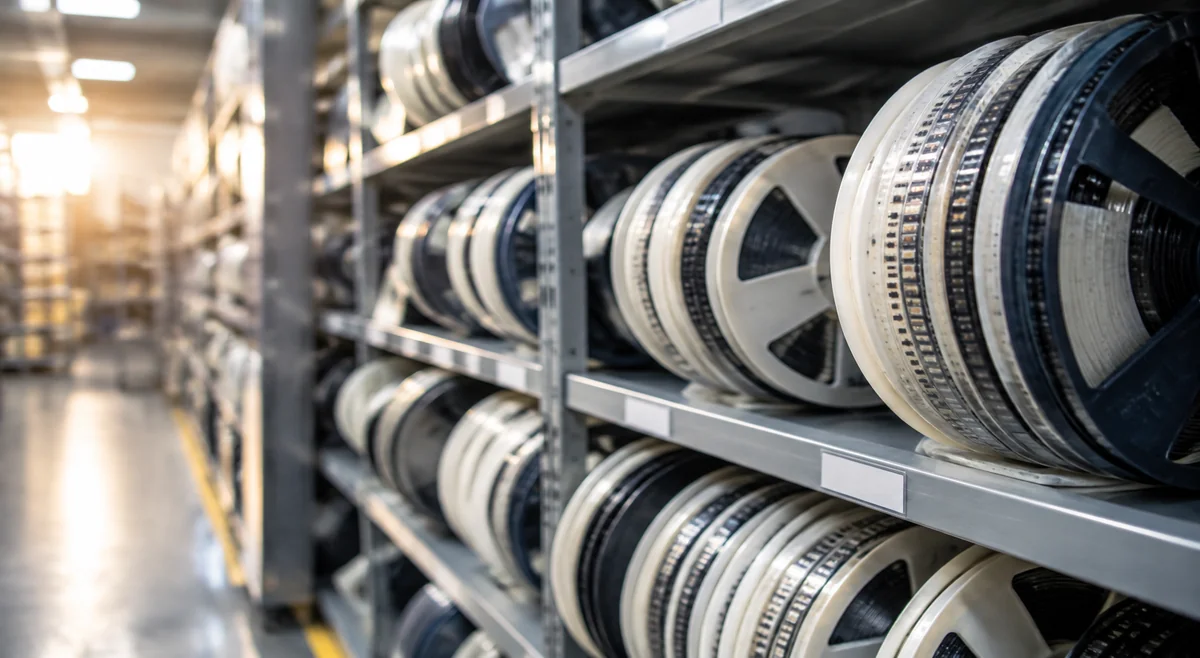
The MLCC market in 2026 is split in two, and your strategy depends on which half your BOM lives in. On one side, AI data-center demand has absorbed enormous volumes of high-capacitance parts: a single NVIDIA GB300 rack consumes roughly 440,000 MLCCs, and makers including Murata, Taiyo Yuden and Samsung Electro-Mechanics have signaled price increases of 6 to 13 percent as structural tightness persists through at least mid-2027 (Findchips, 2026). On the other side, general-purpose demand has not collapsed — it is simply being crowded out. Taiwanese maker Walsin (华新科) flagged 47 uF as the single scarcest value, noting that AI-related orders squeezing Japanese and Korean capacity have spilled over into the high-volume 10 uF and 22 uF X5R parts used in phones and PCs (reported by 科创板日报, June 2026). A widely shared Douyin video from 财眼观大A described this as the longest MLCC shortage in history, potentially extending into 2028 — a view consistent with Chinese financial media reporting that the current wave could exceed the 2018 passive-components crunch. For buyers, the practical read is this: 47 uF-and-up high-capacitance MLCCs in 0805 to 1210 are genuinely rationed, with constrained families quoted at 26–40 week lead times, while commodity 0603/0805 values still move but at spot prices up 15–20% since February 2026, with AI-grade parts up 50–60% (asrwe, September 2026). First, figure out which tier your part sits in — then pick the playbook below.
The decision tree when the exact part is gone
When your exact ordering code cannot be had, do not start swapping at random. Work this tree in order, changing one variable at a time: Step 1 — is the part discontinued or merely allocated? A part on a manufacturer withdrawal list (see the Murata nine-series check in section 4) needs a permanent redesign of the BOM line; an allocated part may only need a bridge buy plus a qualified alternate. Step 2 — can you step up one package size? Moving from 0603 to 0805 for the same capacitance and voltage is the lowest-risk substitution in MLCCs, provided the footprint change clears your layout and reflow process. Step 3 — is the voltage rating negotiable? A 25 V part on a 12 V rail can sometimes drop to a 16 V rating, but only if the effective capacitance at the rail voltage — read from the maker’s DC-bias curve for the exact candidate code, not the nominal print — still meets the circuit’s requirement. (The derating principle behind this is covered in our MLCC selection guide; what matters here is the buying decision, not the physics.) Step 4 — is the dielectric negotiable? X5R to X7R swaps are usually safe on temperature range and often open up more vendor options. Step 5 — can two smaller parts do the job of one big one? Two 22 uF 0805s in parallel approximate a 47 uF, but re-verify the combined effective capacitance and double-check mounting inductance in high-frequency decoupling positions. The iron rule across all five steps: change one variable, re-qualify against the datasheet of the actual candidate, and record the approval. A substitution approved from memory is how boards come back from the field.
- Discontinued vs. allocated: withdrawal-list parts need a permanent BOM change; allocated parts need a bridge buy plus a qualified alternate.
- Safest first move: step up one package size (0603 to 0805) at the same capacitance and voltage.
- Voltage or dielectric changes are only valid if the effective capacitance at rail voltage, from the maker’s curve, still meets the circuit need.
- Never change capacitance, voltage, dielectric, and package in a single unrecorded swap.
Cross-manufacturer substitution: the four numbers that must match
The fastest legitimate escape from an allocation is a second source, but MLCC cross-references are only safe when four numbers agree: nominal capacitance, rated voltage, dielectric (X5R/X7R), and case size — plus tolerance where your circuit is sensitive. Real example, all three parts verified as real, currently listed ordering codes on 2026-10-01: Murata’s GRM188R61A106KE69D is a 10 uF, 10 V, X5R MLCC in 0603 (listed Active on DigiKey), and Samsung’s CL10A106MQ8NNNC is a 10 uF, 6.3 V, X5R MLCC in 0603 (listed Active on DigiKey). Three of the four numbers match — but the voltage ratings differ, so the Samsung part is only a substitute if your rail derates safely at 6.3 V; on a 5 V rail it usually qualifies, on a higher rail it does not. For 22 uF in 0805, Murata’s GRM21BR61E226ME44L (22 uF, 25 V, X5R, Active per Arrow) is a real alternative line worth qualifying. The trap buyers fall into is assuming identical nominal values mean identical behavior: two vendors’ 10 uF X5R parts can differ substantially in effective capacitance under DC bias, so pull each maker’s curve before signing off. Our guide to finding alternative components safely covers the qualification paperwork; the four-number match is the gate that decides whether that paperwork is worth starting.
- Match all four: capacitance, rated voltage, dielectric, case size — then check tolerance.
- Worked example: GRM188R61A106KE69D (Murata, 10 uF 10 V X5R 0603) vs CL10A106MQ8NNNC (Samsung, 10 uF 6.3 V X5R 0603) — the 10 V/6.3 V gap decides.
- Identical nominal values do not mean identical effective capacitance: compare each maker’s DC-bias curve.
Murata’s nine-series withdrawal: a three-step check
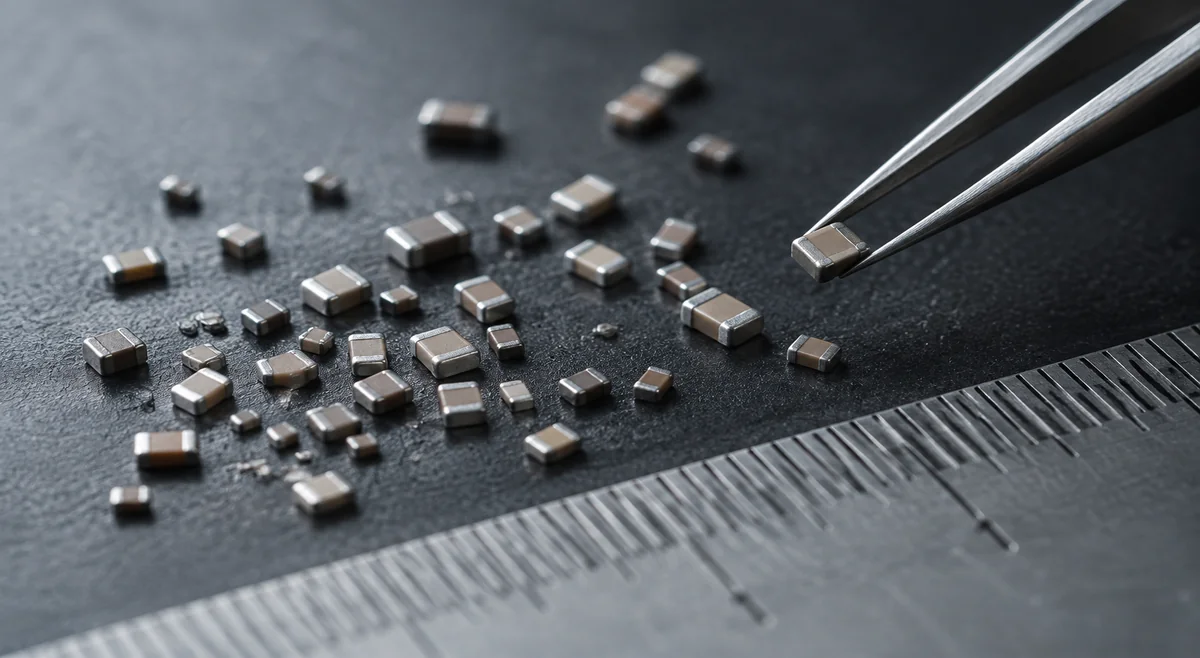
Separate from the allocation crunch, a discontinuation wave is rolling through Murata’s catalog. Multiple media outlets reported in September 2026 that Murata notified customers of the withdrawal of selected part numbers across nine MLCC series — GRM, GRJ, GRT, GXM, GXT, GCM, GCJ, GCG, and ZRA — with a customer response deadline of December 31, 2027, a final order date of March 31, 2028, and final shipment on March 31, 2029 (SemiMedia, September 14, 2026; independently corroborated by MK and Yonhap Infomax). Note carefully: this is reported as a Murata customer notification via trade media, not a page on murata.com — treat the dates as reported, and verify the status of your exact ordering code with your distributor or Murata representative. If any of your BOM lines carry one of those nine series prefixes, run this three-step check now: first, search your BOM for the nine prefixes and list every exact code; second, ask your channel in writing whether each code is on the withdrawal list and get the last-time-buy and last-time-ship dates confirmed — verbal assurances are worthless in a discontinuation; third, run the four-number cross-reference from the previous section immediately, while alternates can still be sampled and qualified. Discontinuation timelines look generous until the final-order window collides with an allocation market — and the 2028–2029 tail of this program lands squarely inside the shortage window analysts are describing.
- Nine reported series: GRM, GRJ, GRT, GXM, GXT, GCM, GCJ, GCG, ZRA — reported dates: respond by 2027-12-31, final order 2028-03-31, final shipment 2029-03-31.
- This is trade-media reporting of a customer notification, not a murata.com page: confirm your exact code with your channel, in writing.
- Qualify alternates now — the final-order window overlaps the shortage window.
Two calculations before paralleling or derating
Two pieces of arithmetic separate a clever workaround from a field failure. Calculation one: paralleling. Two 22 uF parts in parallel give roughly 44 uF nominal — but the number that matters is the combined effective capacitance at your rail voltage, read from each candidate’s DC-bias curve, and you must also account for doubled DC leakage and the extra mounting inductance in high-frequency decoupling spots. Calculation two: derating headroom. A 25 V-rated part on a 12 V rail keeps far more effective capacitance than a 16 V-rated part at the same nominal value, which is why buyers who can still find 25 V stock should prefer it. Our own catalog carries examples buyers are actually using this way: GRM31CR61E476ME44L, a Murata 47 uF 25 V X5R in 1206, and GRM21BR61E106KA73L, a Murata 10 uF 25 V X5R in 0805 — both 25 V-rated workhorses for 12 V rails after derating (on 24 V systems, verify a higher rated voltage against the DC-bias curve and transient headroom) (full ordering-code confirmation and the DC-bias principle are in our MLCC selection guide). The cost side sharpens the point: 1206 47 uF spot prices in Huaqiangbei rose from roughly 300 yuan per 2,000 pieces in May to about 1,582 yuan per 2,000 pieces — a 427% increase (BigGo Finance, September 2026). When one big part costs that much more than two smaller ones, the parallel workaround is not just engineering — it is procurement.
- Paralleling math: combined effective capacitance at rail voltage, not the nominal sum — plus doubled leakage and extra mounting inductance.
- Derating math: at the same nominal value, the higher voltage rating keeps more effective capacitance on a given rail.
- Market context: 1206 47 uF Huaqiangbei spot up ~427% from May to September 2026 (BigGo Finance) — two smaller parts can beat one big part on cost.
Rewrite your RFQ for a shortage market
In an allocation market, the RFQ itself is a competitive tool: distributors triage hundreds of requests and answer the quotable ones first. Rewrite yours around four additions. First, name your acceptable alternates explicitly, with the four matching numbers for each — a request that says "GRM188R61A106KE69D or equivalent 10 uF 10 V X5R 0603, Samsung CL10A106MQ8NNNC acceptable at 6.3 V for 5 V rails" can be quoted in one pass; a bare part number triggers a round of clarification emails. Second, state your flexibility up front: package step-up allowed or not, dielectric substitution allowed or not, and your date-code and packaging requirements (our date-code guide explains what to demand). Third, ask for split-lot options — partial quantity now with the balance on lead time — instead of a single all-or-nothing line. Fourth, keep one RFQ per BOM revision so alternate approvals stay traceable; see our guide on writing an RFQ that gets a useful answer for the full template. The pattern behind all four: remove every reason for the distributor to set your request aside. On the Sourceics RFQ page, each line already captures part number, manufacturer, package, date code, target price, and quantity, plus a notes field — use that notes field to state your substitution policy up front ("alternates acceptable where the four numbers match" or "exact part only"). Declaring it there is what turns a one-line part number into a quotable request during an allocation.
- Name acceptable alternates with all four matching numbers — one-pass quotable beats clarification rounds.
- Declare flexibility up front: package step-up, dielectric swaps, date-code and packaging limits.
- Ask for split-lot options and keep one RFQ per BOM revision for traceability.
Frequently asked questions
Quick answers to the MLCC shortage questions buyers ask most.
- Q: Is the MLCC shortage really lasting until 2028? A: That is the direction analysts and makers point: Walsin expects the shortage to run into 2027–2028 and exceed the 2018 wave (June 2026 media reports), Findchips expects structural tightness through at least mid-2027, and Murata’s own reported withdrawal program runs to final shipment in March 2029. Treat these as reported outlooks, not guarantees, and plan alternates accordingly.
- Q: Which MLCC values are hardest to find? A: 47 uF is the single scarcest value per Walsin, followed by high-capacitance 10 uF and 22 uF X5R in 0603/0805 — the values AI-server and high-density boards consume in volume.
- Q: Can I swap a Murata MLCC for a Samsung one? A: Yes, if the four numbers match — capacitance, rated voltage, dielectric, case size — and you recheck each maker’s DC-bias curve. Example: GRM188R61A106KE69D (Murata 10 uF 10 V X5R 0603) against CL10A106MQ8NNNC (Samsung 10 uF 6.3 V X5R 0603): the 10 V vs 6.3 V difference is what decides.
- Q: Should I buy extra stock now to beat the shortage? A: Do not hoard blindly. Lock qualified alternates into the BOM first — an unqualified reel bought in panic is a liability, not insurance.
Manufacturer references
Use the latest guidance for the exact part and manufacturer when deciding acceptance criteria.
- Murata — GRM21BR61E106KA73L product details (official PIM)
- SemiMedia — Murata to discontinue parts of 9 MLCC series (2026-09-14)
- Findchips — 2026 high-capacitance MLCC shortage: the root cause
- asrwe — Electronic component shortage 2026: memory, MLCC, LM324 sourcing
- BigGo Finance — 1206 47uF MLCC spot price surge, Huaqiangbei (2026-09)
- 163.com / 科创板日报 — MLCC shortage spreads, may run to 2027–2028 (2026-06)
- DigiKey — Samsung CL10A106MQ8NNNC specifications
- DigiKey — Murata GRM188R61A106KE69D specifications
- Arrow — Murata GRM21BR61E226ME44L specifications