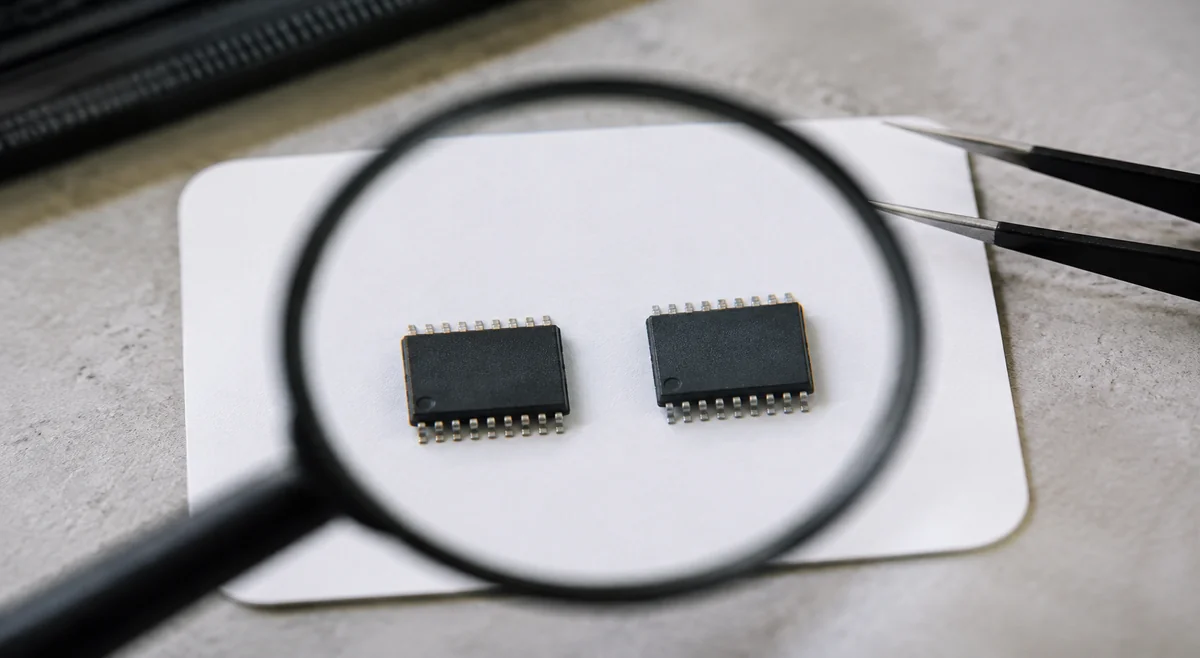
Start from the function, not the part number
Most substitution failures begin at the wrong starting point: the part number. Engineers search for “something like X” and land on a lookalike — same prefix, nearby suffix — that fails on the one parameter nobody checked. The safe method starts one level up: write down what the part must do. Electrical function, mechanical footprint, environmental range — the job description, not the name badge. A 555 timer is not “a NE555”; it is an oscillator and timer function with supply, frequency, and drive requirements that several different parts can satisfy. This shift matters because it widens the search in the correct direction: you stop hunting for clones and start qualifying candidates against requirements. The red line applies from the first minute: never infer substitutability from suffix patterns or family resemblance. Two codes that look alike can differ in exactly the parameter your circuit depends on — only a datasheet-to-datasheet comparison counts. A 'drop-in' swap sails through procurement and then fails on the one parameter nobody compared — the suffixes matched, the headline specs matched, and the circuit still didn't work. The comparison that matters is always the parameter your design depends on.
Map the non-negotiables
With the function defined, split your requirements into two lists. Non-negotiables are the parameters that break the design if they move: voltage and current ratings, package and pinout, timing characteristics, temperature range. Negotiables are everything else: brand, second-source history, package material, wider-than-needed ratings. This split sets the comparison order — it tells you which datasheet lines to compare first and which differences you are allowed to accept. Be strict on the mechanical side: a functionally identical die in a different pinout is not a drop-in substitute, it is a board spin. And be honest about margins: if your design already runs a part near its limits, a substitute with “equivalent” headline ratings but weaker derating behavior is a downgrade wearing a disguise. Write both lists down before you search; the list is the filter every candidate must pass, with no exceptions for convenience.

Three places to look
Candidates come from three legitimate directions. First, the original manufacturer’s own notices: PCN and end-of-life announcements frequently name an official migration path, and that recommendation carries the most weight because it comes from the people who characterized both parts. Second, the same product family: newer or higher-grade members of a series are often designed as upgrades, with compatibility notes published to prove it. Third, cross-brand functional equivalents — the largest pool, and the one demanding the most verification. For this third group, treat every candidate as guilty until proven innocent: compare the non-negotiable list line by line against the datasheet, including the parameters the marketing tables leave out. Cross-reference databases exist and can serve as search leads, but never as verdicts — some are thinly disguised vendor marketing that recommends a house part for everything. The method never changes: requirements first, datasheet evidence second, database hints last.
Verify availability before you verify specs
Here is the step most guides skip: confirm the candidate can actually be bought before spending hours inside its datasheet. A perfect parametric match with no distribution is not a substitute — it is a research project. Search the complete ordering code on distributor and marketplace sites: several vendors listing the exact code is a healthy signal, while a single obscure listing is a warning worth heeding. This ordering saves real engineering time — datasheet-compare only the candidates that survive the availability screen. It also protects the schedule: discovering at the RFQ stage that your chosen alternative is unobtainable sends the whole exercise back to step one. Availability first, parametrics second — in that order. Engineers often resist this ordering — the datasheet work feels like progress and the availability check feels like admin. But the hours spent characterizing an unobtainable part are the most expensive hours in the whole exercise.
- Search the full ordering code, not the family name — variants differ in the ways that matter.
- Several independent listings beat one; a lone listing is a warning, not a bargain.
- Datasheet-compare only the candidates that survive this screen.
The RFQ as the final check
The RFQ is where the substitution becomes a commercial commitment, so write it to force clarity. Name the original part, name the proposed substitute, and state explicitly that it is a substitute requiring engineering approval — never let a substitute travel disguised as the original line item. Attach your non-negotiable list so the supplier quotes against requirements rather than assumptions. Ask for the exact manufacturer, ordering code, date-code range, and channel evidence in return; a quotation that cannot name these is not a quotation worth accepting. Our RFQ guide covers the mechanics — the point here is discipline. The paper trail should show what was substituted, why it was acceptable, and who approved it. If the substitution cannot survive being written down plainly, it was not ready to be bought.

Market reality: shortage changes the rules
In a shortage, the substitution playbook meets the market as it is, not as the datasheet describes. Independent-market quotes multiply, lead times stretch, and the temptation to accept a lookalike grows — which is exactly when discipline matters most. Prefer authorized channels for substitutes wherever possible: a substitute already carries technical risk, and stacking channel risk on top of it compounds the exposure. Treat unusually available stock of an allocated part as a signal to verify harder, not as good fortune — our authorized vs independent supply guide covers the checks that separate a real offer from a story. Watch for refurbished or remarked parts riding the shortage wave, especially in popular packages. And keep the obsolescence plan in view: a substitute chosen under pressure should still fit the long-term sourcing strategy, or you will repeat this entire exercise within a year.
Worked example on this site
The method is easier to trust when you can walk it end to end. Our alternatives index applies exactly this discipline to real parts: the NE555 page starts from the timer function, lists candidates, and compares them on the parameters that actually decide, with sourcing notes attached. The LM358 page does the same for the dual op amp — function first, then candidates, then the checks that separate a safe swap from a hopeful one. Walk either page with the six steps above in mind and the pattern becomes visible: define the job, list the non-negotiables, find candidates, screen availability, confirm on the RFQ, respect the market. Once candidates are found this way, the companion review guide takes over with the engineering review checklist for a substitute you already hold. Finding and reviewing are two halves of one job — this article is the first half, and the review guide is the second.
Worked example on this site
The method is easier to trust when you can walk it end to end. Our alternatives index applies exactly this discipline to real parts: the NE555 page starts from the timer function, lists candidates, and compares them on the parameters that actually decide, with sourcing notes attached. The LM358 page does the same for the dual op amp — function first, then candidates, then the checks that separate a safe swap from a hopeful one. Walk either page with the six steps above in mind and the pattern becomes visible: define the job, list the non-negotiables, find candidates, screen availability, confirm on the RFQ, respect the market. Once candidates are found this way, the companion review guide takes over with the engineering review checklist for a substitute you already hold. Finding and reviewing are two halves of one job — this article is the first half, and the review guide is the second.
Frequently asked questions
Quick answers to the questions buyers ask most about finding substitutes.
- Q: Where do I start looking for a substitute? A: From the function, not the part number. Define the job first, then check the manufacturer's migration notices, the same product family, and cross-brand equivalents.
- Q: The candidate is available but not fully checked — can I buy it? A: Verify availability first, then datasheet-compare — but do not commit until the non-negotiables are confirmed line by line.
- Q: A cross-reference site lists it as equivalent — is that enough? A: No. Treat databases as search leads, never as verdicts — only a datasheet-to-datasheet comparison counts.
- Q: Can I substitute quietly on the BOM line? A: Never. Name the substitute explicitly, require engineering approval, and keep the paper trail — if it cannot survive being written down plainly, it was not ready to be bought.
Manufacturer references
Use the latest guidance for the exact part and manufacturer when deciding acceptance criteria.