Start from the power budget, not the part number
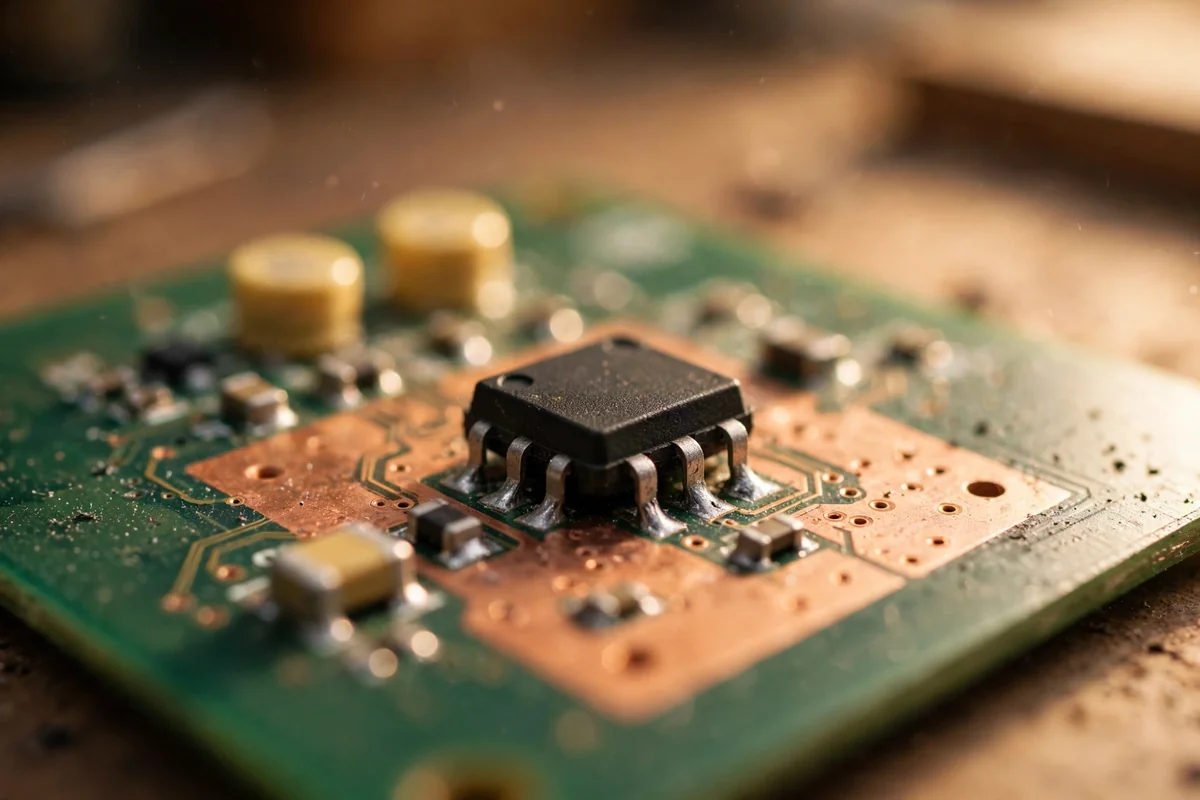
An LDO is a heater that happens to regulate voltage. Before comparing part numbers, compute the dissipation: (Vin − Vout) × Iout. That single number decides whether an LDO is even the right answer, because efficiency is roughly Vout/Vin — dropping 12 V to 3.3 V at 1 A burns close to 9 W and keeps barely a quarter of the input power. No parameter in a datasheet repeals that arithmetic. Start from the load instead: maximum continuous current, worst-case input voltage, and the temperature rise the board can tolerate. If the dissipation number looks uncomfortable, give the buck converter the first look and reserve the LDO for a quiet post-regulation stage. Choosing the LDO first and discovering the heat later is the most common way these designs go wrong. More than one board has passed every bench test and then thermal-cycled in the field — the dissipation math was done, but for typical current instead of worst-case. Always size for the worst case the board will actually see.
Read the dropout curve, not the headline number
Dropout is quoted as one number but behaves as a curve that rises with load current. A regulator advertised with impressively low dropout at 100 mA can drop far more at its rated current, and the two figures are not comparable unless the test conditions match. When comparing candidates, read the dropout-versus-load graph in each datasheet at your actual operating current, then add margin for temperature and unit-to-unit spread. A design that needs 300 mV of headroom at full load should not be built around a part whose curve shows more at that current, whatever the headline figure claims. Treat any dropout number without stated conditions as marketing, and confirm the requirement against the datasheet of the exact ordering code.
Low noise and low quiescent current rarely coexist
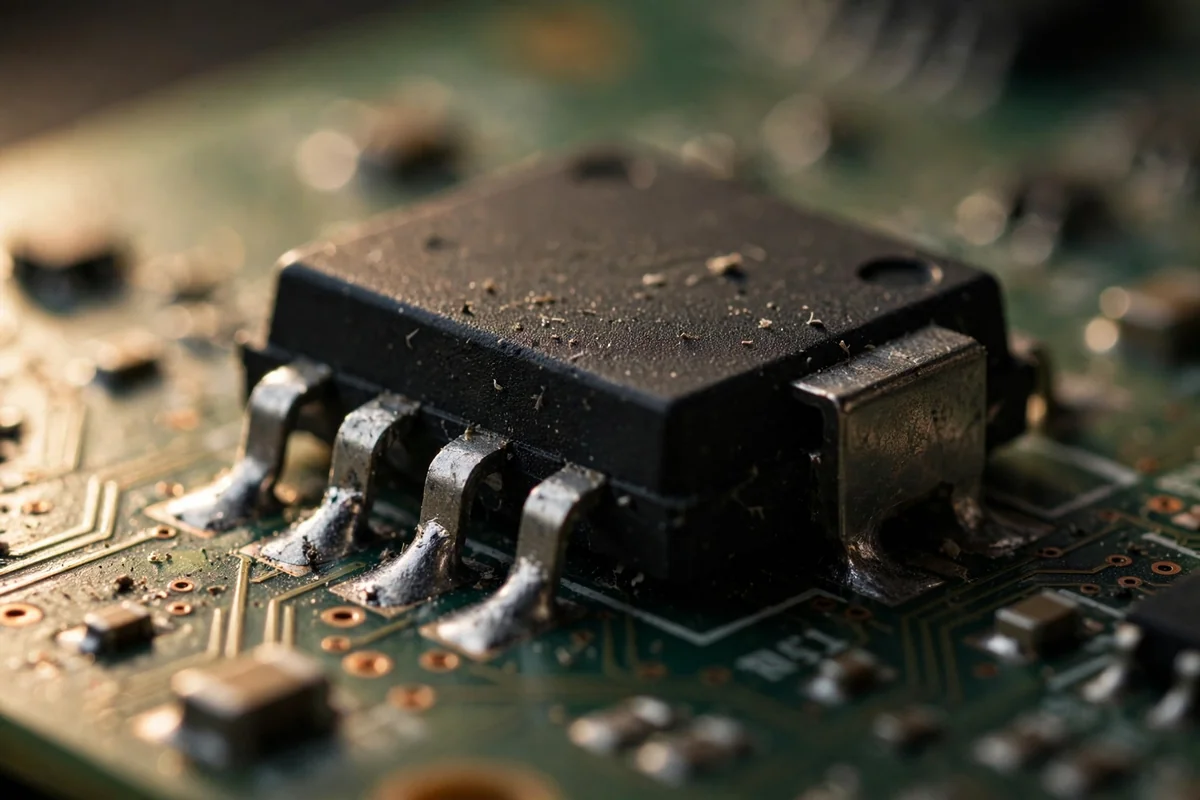
Here is the trade-off no headline mentions: the quietest LDOs draw the most standby current, and the most frugal ones are rarely the quietest. High power-supply rejection and low output noise demand bias current in the error amplifier and the reference — current that flows whether the load is awake or asleep. For a battery-powered node that sleeps 99% of the time, quiescent current dominates battery life, and the noisier regulator is the rational choice. For an RF front end or a precision ADC, noise and PSRR dominate, and the extra microamps are cheap. Decide which side of this trade your application lives on before opening any parametric table; it eliminates half the candidates in a single step. Do not chase both — parts that promise both usually compromise somewhere the table does not show.
The package is a thermal decision
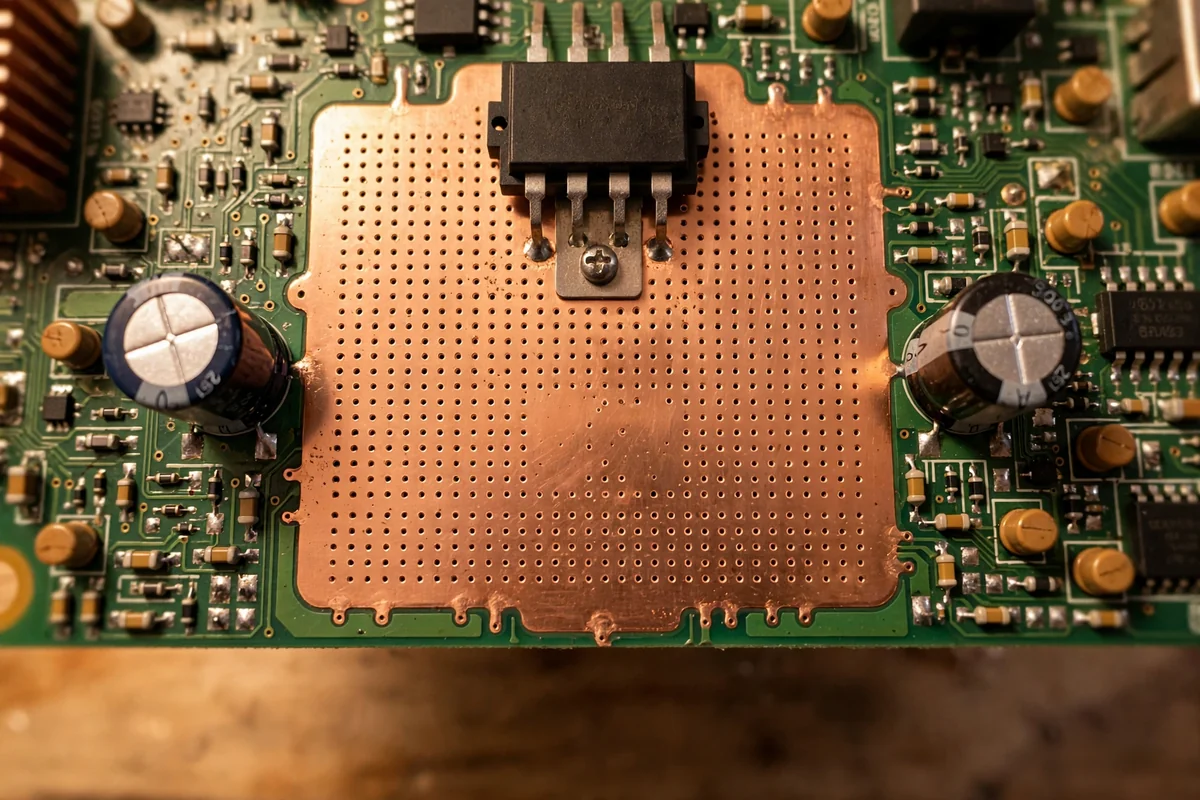
For a 1 A-class LDO, the package is not a mechanical detail; it is the heatsink. SOT-223 with generous copper pour handles moderate dissipation on an ordinary board. Small footprints such as SOT-23 suit light loads where the dissipation math from the first section already worked out. TO-220 survives serious heat but costs board space and usually wants its own heatsink. The failure mode to respect is thermal-shutdown cycling: a part that runs hot enough to trip its own protection will pass bench tests and fail intermittently in the field. This is the failure that gets misdiagnosed longest — firmware takes the blame for months before someone measures the regulator's case temperature. When the symptoms are intermittent, check the heat first. Estimate the dissipation, check the package thermal resistance in the datasheet, and confirm the copper area the layout actually provides. When in doubt, the larger package is cheaper than a redesign.
Check the output capacitor requirement before layout
Some LDOs are picky about the output capacitor. Older designs need a minimum equivalent series resistance to stay stable and can oscillate with a low-ESR ceramic capacitor alone; most newer parts are stable with ceramic capacitors and say so plainly in the datasheet. This is a layout-stage surprise, not a parametric-table line: the capacitor sits next to the regulator, and changing its type after the board is built is a rework, not a substitution. Before layout, read the datasheet section on output capacitance — type, value, and any ESR window — and buy the capacitor the regulator was characterized with. TI’s LDO application note SLVA118 walks through the stability reasoning behind this requirement.
Selection snapshot: two real parts, one decision
Two parts from the same 1117 family show how selection really ends. NCP1117ST33T3G from onsemi and AMS1117-3.3 from Advanced Monolithic Systems are both fixed 3.3 V, 1 A-class regulators in SOT-223 — on paper, nearly interchangeable. The decision between them is rarely about headline specs; it is about supply-channel preference, traceability documentation, and which manufacturer’s ordering code the BOM already approves. That is the point: once the dropout, noise, and thermal homework is done, the surviving candidates in a mature family differ less in performance than in procurement reality. Compare the exact ordering codes per their datasheets, then let availability and channel decide — which is the subject of the next section.
Market reality and buying practice
The 1117 family is a long-lived, multi-vendor regulator series — searching the complete ordering code on a component marketplace is the fastest way to test how many suppliers carry it today. That coverage is useful information in itself: it means second sourcing is easy, but it also means suffix discipline is mandatory. Always quote the full ordering code including voltage and package suffixes; a fixed 3.3 V part and an adjustable version are different orderable devices sharing a family name. A Douyin bench video by @工科男孙老师 (14k likes, observed 2026-09-30) makes the heat point from the test bench: the 1117 runs too hot for 5V-to-3.3V duty, then reviews four DC-DC alternatives — 5V转3.3V,用1117过时了吗?4款DCDC芯片评测. For real-time availability, search the complete ordering code on the marketplace rather than trusting any static figure, then put the exact code, quantity, and channel requirements into the RFQ.
- Quote the complete ordering code — voltage suffix and package included — on every RFQ line.
- Treat a marketplace listing as a lead: reconfirm availability for your quantity before committing.
- State original-manufacturer and channel requirements up front; see authorized vs independent supply.
When not to use an LDO
After all this, the most valuable selection decision is the refusal: three signals say the LDO is the wrong tool. First, the dissipation math from the opening section fails — if (Vin − Vout) × Iout wants a heatsink bigger than the load, the buck earns its place and the LDO, if needed at all, becomes a quiet post-regulator. Second, the input is a battery whose voltage sags toward the output as it discharges: once headroom collapses, no low-dropout heroics keep regulation alive through the full discharge curve — size the topology for the end of battery life, not the beginning. Third, efficiency is a system requirement rather than a wish: in solar, energy-harvesting, or thermally sealed designs, throwing away most of the input power is a specification violation, not a trade-off. Closing checklist: dissipation acceptable? Headroom guaranteed at the worst-case input? Noise and quiescent current on the right side of their trade? If all three answer yes, pick the LDO with confidence — it is earned. Send the shortlisted LDOs on one RFQ with your dropout headroom, continuous current, and worst-case ambient stated, so every quote is priced against the same thermal assumptions.
Frequently asked questions
Quick answers to the questions buyers ask most about choosing LDOs.
- Q: Can a 1117 drop 12 V to 3.3 V at 1 A? A: Do the dissipation math first — (Vin − Vout) × Iout lands near 9 W here, which is a heatsink-scale problem, not an LDO-scale one.
- Q: The datasheet claims 1 V dropout — is my headroom fine? A: Only if that figure is quoted at your load current and temperature. Dropout is a curve that rises with load, not a single number.
- Q: Low noise or low quiescent current — which do I prioritize? A: It depends on the application. Battery nodes that sleep most of the time want frugal; RF front ends and precision ADCs want quiet. You rarely get both.
- Q: Fixed or adjustable version? A: They are different orderable devices. Quote the full ordering code including the voltage suffix on every RFQ line.
Manufacturer references
Use the latest guidance for the exact part and manufacturer when deciding acceptance criteria.