The decision is about the radio, not just the core
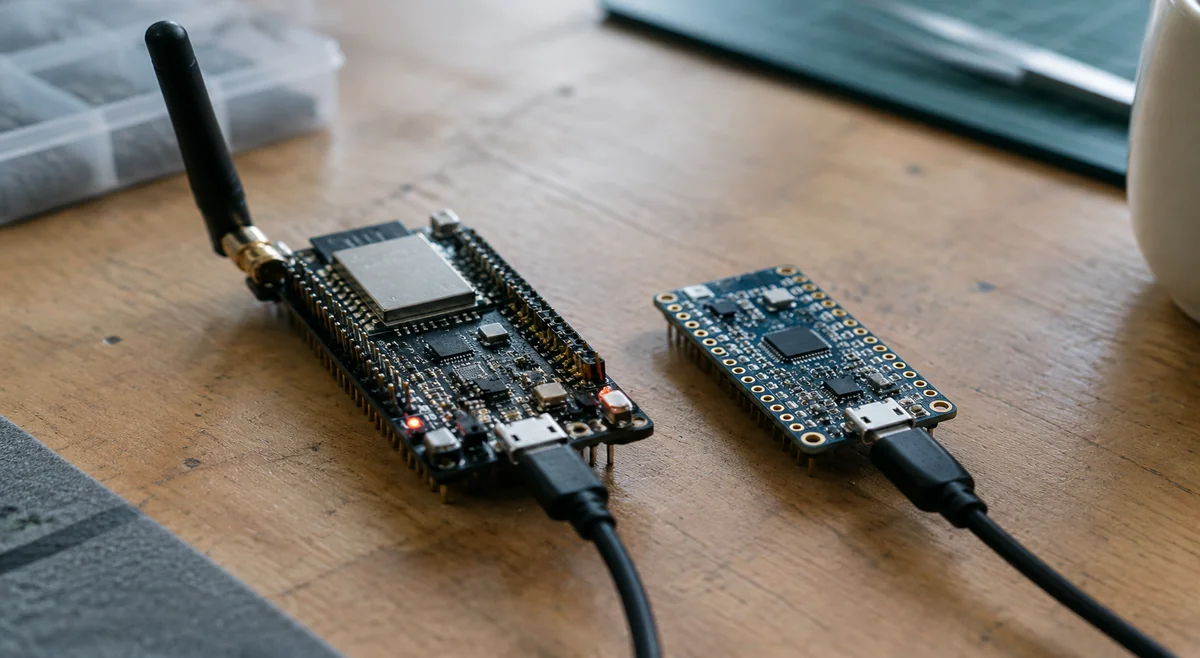
ESP32 and STM32 are not two flavors of the same thing. Espressif sells the ESP32 as a wireless MCU module: Wi-Fi and Bluetooth arrive pre-integrated with a PCB antenna, so the RF design and much of the certification burden are already done. STM32 is a microcontroller portfolio — superb cores and peripherals, but wireless means adding a radio module and owning the antenna, coexistence and certification work yourself. If the product must join a Wi-Fi or Bluetooth network, ESP32 usually wins on time to market; if the product is wired, battery-sipping, or lives in an industrial cabinet, the STM32 portfolio deserves the first look. Take a smart control panel as an illustration: an ESP32-S3 design can ship with one module handling Wi-Fi and the touch UI, while the STM32 variant needs an external Wi-Fi module, antenna tuning and a second firmware stack — the BOM and the schedule both suffer.
- Product needs Wi-Fi, Bluetooth, Zigbee or Thread: start with ESP32 modules.
- Wired industrial control, motor drive or precision analog: start with STM32.
- Count certification cost and RF engineering time, not just silicon price.
What each side is actually good at
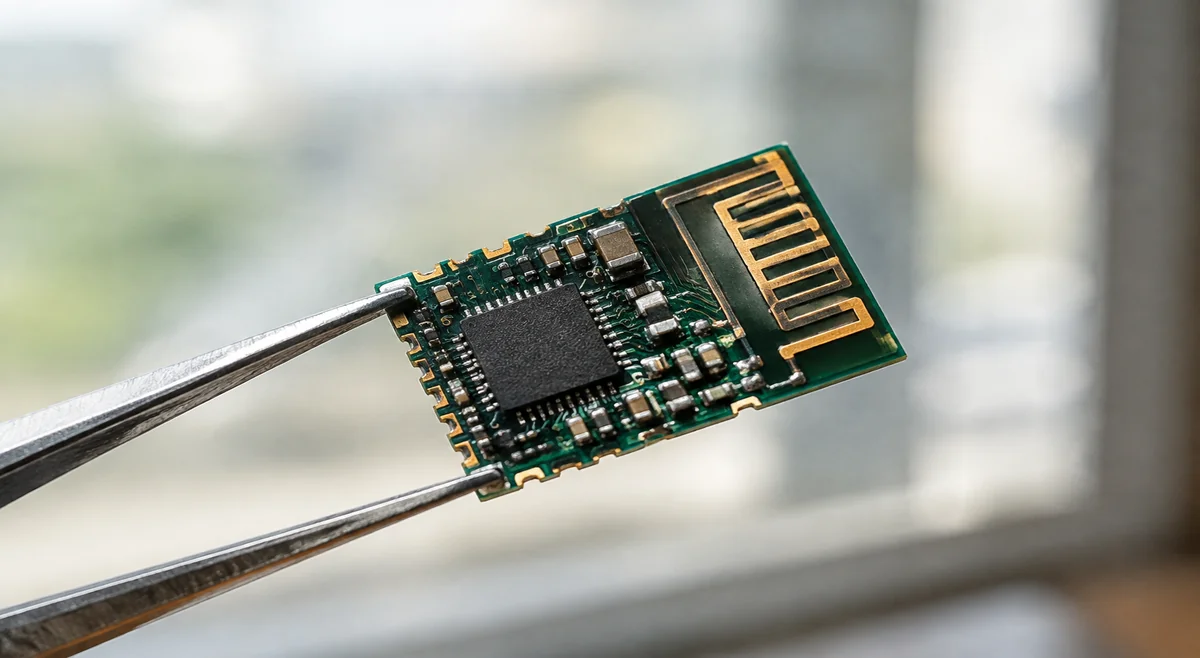
On the Espressif side, the ESP32-S3-WROOM-1 is a dual-core Wi-Fi + Bluetooth LE module with acceleration for neural-network and signal-processing workloads — built for AIoT tasks like wake-word detection and face recognition. Its datasheet specifies an Xtensa LX7 dual-core CPU up to 240 MHz, 512 KB SRAM, USB OTG and USB Serial/JTAG, and the N16R8 variant pairs 16 MB of flash with 8 MB of octal PSRAM for graphics and audio buffers. The ESP32-C6-WROOM-1 targets a different corner: Wi-Fi 6 in the 2.4 GHz band plus Bluetooth 5, Zigbee 3.0 and Thread in a low-power envelope, shares the classic ESP32-WROOM footprint (28 castellated pads versus 38 on the WROOM-32, so check the padout before treating it as drop-in). On the ST side, STM32F401RET6 is an 84 MHz Cortex-M4F with 512 KB flash, 96 KB SRAM and USB full-speed OTG for cost-efficient connected control; STM32F722RET6 steps up to a 216 MHz Cortex-M7 with USB high-speed OTG, DSP instructions and 256 KB SRAM for signal processing; and STM32F103C8T6 remains the 72 MHz Cortex-M3 workhorse with 64 KB flash, USB full-speed and CAN for legacy-compatible designs.
- ESP32-S3: wireless plus edge-AI headroom; the N16R8 variant feeds display and audio buffers.
- ESP32-C6: Wi-Fi 6 and 802.15.4 radios for low-power mesh and Matter-style products.
- STM32F401: efficient Cortex-M4F control with USB device duty at a modest price.
- STM32F722: Cortex-M7 muscle with USB high-speed for data-heavy peripherals.
- STM32F103: proven Cortex-M3 for cost-driven and drop-in legacy designs.
Supply and lifecycle: a real differentiator
Spec sheets decide the prototype; supply terms decide the production run. Both STM32 product pages list a 10-year longevity commitment from ST with Active marketing status for the exact ordering codes — STM32F401RET6 and STM32F722RET6 in LQFP-64, industrial grade (per ST’s product pages — verify the current status before writing it into a contract). That written commitment is why industrial buyers keep choosing STM32: it gets referenced directly in procurement contracts, where a redesign would cost more than the silicon ever could. Espressif plays a different supply game — modules are high-volume IoT commodities with broad distribution, and the pre-certified RF shortens the path to mass production, but buyers should confirm the exact module variant and its temperature grade rather than assuming all suffixes behave alike.
- ST publishes Active status and a 10-year longevity commitment per ordering code — verify before committing a platform.
- Espressif modules trade a shorter RF path for variant discipline: antenna type, flash size and temp grade all live in the suffix.
- For 5-plus-year industrial products, get the longevity statement into the supply agreement.
Selection snapshot: five stocked order codes
The Sourceics catalog covers both platforms. ESP32-S3-WROOM-1-N16R8 is the 16 MB flash plus 8 MB PSRAM variant of the S3 module with PCB antenna (Espressif) — note the common variant’s ambient rating tops out at 65 °C (85 °C and 105 °C versions exist), so check enclosure thermals against the exact variant you buy. ESP32-C6-WROOM-1-N8 brings Wi-Fi 6, Bluetooth 5, Zigbee and Thread to low-power designs. STM32F401RET6 and STM32F722RET6 are the Active, LQFP-64, industrial-grade Cortex-M4F and Cortex-M7 options from STMicroelectronics. STM32F103C8T6 is the 64 KB flash Cortex-M3 classic for cost-sensitive control. Browse Espressif modules and ST MCUs side by side before locking the architecture.
- ESP32-S3-WROOM-1-N16R8: confirm the 65 °C ambient limit against your enclosure.
- ESP32-C6-WROOM-1-N8: the low-power wireless pick with three radio protocols.
- STM32F401RET6 / STM32F722RET6: Active status with 10-year longevity, LQFP-64.
- STM32F103C8T6: the budget control MCU with USB and CAN.
Procurement checklist for MCU and module buyers
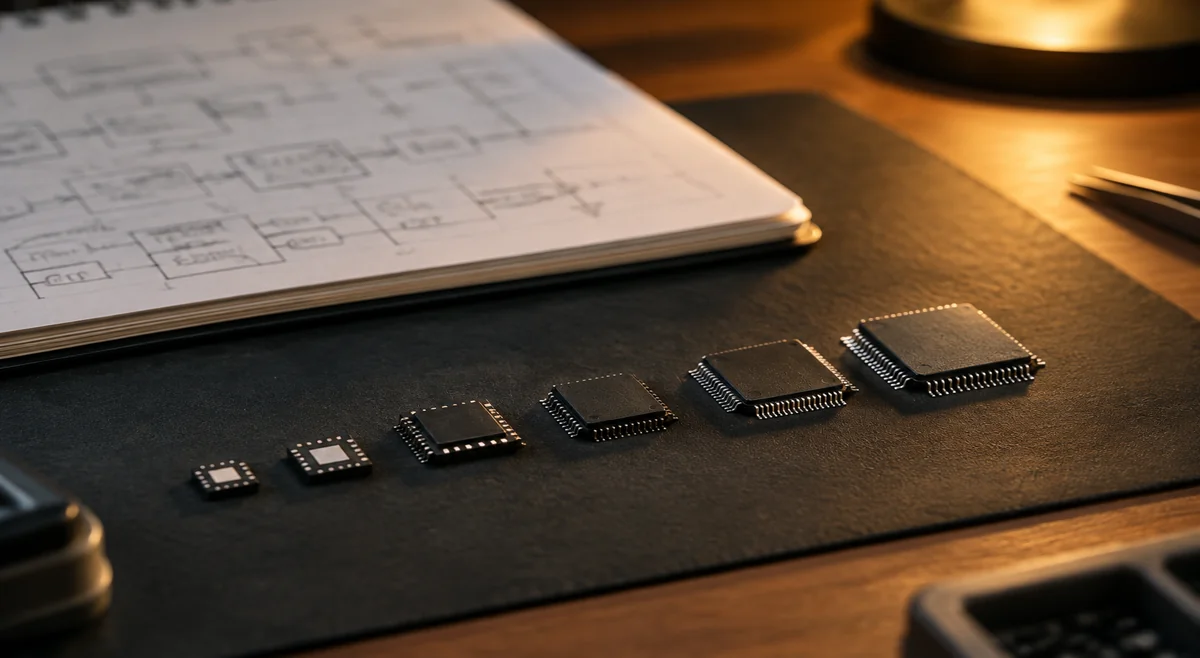
Wireless modules and MCUs fail procurement in different ways. Market signal (observed 2026-10-01): Chip Master’s comparison video ESP32, STM32 or Raspberry Pi Pico: which should a beginner choose? (11,000 likes) puts ESP32, STM32 and Raspberry Pi Pico side by side for beginners — a reminder that the platform decision comes first and the silicon choice follows it. For ESP32 modules, RFQ the complete variant string — antenna option, flash size and temperature grade are all encoded in it, and a wrong suffix can mean a different PCB. For STM32, confirm the marketing status is Active on st.com for the exact ordering code and align the longevity commitment with the product life. Either way, qualify the firmware toolchain (ESP-IDF vs STM32Cube) with your engineering team before the purchase order, because the software port is the hidden switching cost.
- RFQ the full module variant; never shorten it to the family name.
- Check Active status and the longevity commitment for the exact STM32 ordering code.
- Confirm the temperature grade against the real enclosure, not the lab bench.
- Lock the toolchain choice with engineering before committing volume.
Frequently asked questions
Quick answers to the platform questions buyers ask most.
- Q: Can an ESP32 replace an STM32 pin for pin? A: No — this is a platform choice, not a drop-in substitution. The PCB, power, antenna and firmware all change.
- Q: Which is better for battery-powered IoT? A: ESP32-C6 for wireless sensor nodes; STM32 with its stop and standby modes for wired or intermittently connected devices.
- Q: Does using a pre-certified ESP32 module skip RF certification? A: It shortens the path — the module carries its own RF certificates — but the finished product still needs assessment for its target markets.
- Q: STM32F1 or STM32F4 for a new design? A: F4 for new work: more performance per watt, FPU and DSP options; F1 mainly where legacy compatibility or the lowest cost rules.
Sources
Use the latest guidance for the exact part and manufacturer when deciding acceptance criteria.