The short version
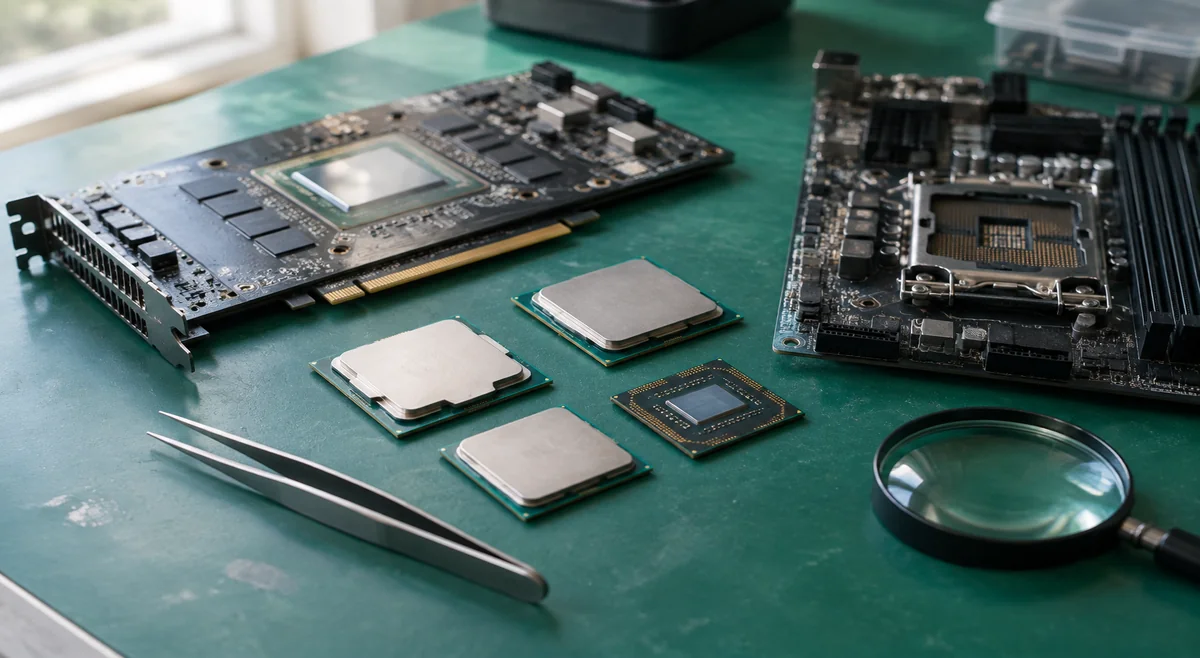
The two companies that make most of the world's PC processors are raising prices within days of each other — and buyers have about three days to react to one of them. AMD has reportedly notified partners of ~10% increases on AI accelerators, Radeon GPUs, and motherboard chipsets starting Q4 2026; Intel is reportedly raising PC CPU prices ~10% on October 5. As of October 2, 2026, neither company has officially confirmed these moves — every number below is reported, not announced — but the pattern is familiar: this would be Intel's third increase since late 2025, and TSMC's wafer-price hikes are visibly passing through the chain. There is also a second, quieter risk for industrial buyers: Intel is reportedly reviewing its low-margin Small Core product lines for possible end-of-life. This guide covers what is reportedly happening, how credible each piece is, and the four procurement moves to make this week.
What AMD is reportedly doing (partners notified September 17)
On September 17, AMD reportedly notified partners that starting Q4 2026, prices rise ~10% on AI accelerators, consumer Radeon GPUs, and motherboard chipsets. The report chain runs from X leaker @harukaze5719 through ChannelGate to WCCFtech/TechPowerUp, then TrendForce (September 18), PCWorld (September 21), and gagadget (September 19) — and every one of those outlets marks it unconfirmed: AMD has issued no formal statement. Two details matter for buyers. First, Ryzen is reportedly not on the list: the notifications name AI chips, GPUs, and chipsets, with Ryzen CPUs explicitly described as spared. One Chinese outlet speculates EPYC and Ryzen "cannot stay out of it," but that is speculation contradicting the sourced reporting — the practical read is that desktop-CPU budgets may hold while GPU and motherboard budgets move, so re-estimate the platform as a bundle, not per part. Second, the stated driver is TSMC cost pass-through — as correlation, not AMD-confirmed causation: TSMC raised sub-5nm wafer prices 3–5% in January 2026 with a further 3nm increase of up to 15% reported for H2 2026, while TSMC's official line remains "does not comment on pricing." Whether AMD's move is caused by wafer costs or merely timed with them, foundry inflation is reaching the price list. (Sources: TrendForce, 2026-09-18; PCWorld, 2026-09-21; gagadget, 2026-09-19; TrendForce, 2025-11-03.)
What Intel is reportedly doing (October 5, ~10%, third round)
DigiTimes, citing supply-chain sources, reports Intel plans ~10% increases on PC CPUs effective October 5, 2026 — three days from now. Coverage (VideoCardz, Notebookcheck, TechSpot, all ~September 8) uniformly marks it unconfirmed, and as of October 2 there is no Intel statement confirming, delaying, or denying the date. What is confirmed: Intel already raised prices twice this cycle — roughly +10% in Q1 2026, then confirmed increases in July on the Core Ultra 7 270K Plus ($299→$349) and Core Ultra 5 250K Plus ($199→$229), citing supply-chain costs and strong demand. An October move would be the third round since late 2025, which is why the supply chain treats the DigiTimes report as credible even without confirmation. Which desktop and mobile families are covered has not been disclosed. The downstream evidence is already visible in China: a September 24 deep-dive on 什么值得买 aggregating multi-platform price tracking shows Intel 12th/13th/14th-gen prices rising across the board in week 38, AMD 5000/7000/9000 series rising too, and the RX 9070XT hitting a record ¥5,899 on September 22 — with a buyer decision table that reads "lock CPU+mobo orders before October 5." (Sources: VideoCardz; Notebookcheck; TechSpot, 2026-09-08; 什么值得买, 2026-09-24.)
The Small Core wildcard — industrial buyers, read this
Separate from the October pricing, DigiTimes supply-chain sources report CEO Lip-Bu Tan is reviewing low-margin Small Core product lines — the Atom/Celeron-class parts used in industrial PCs, IoT, and embedded systems — for possible end-of-life. Three hard limits: no report names any specific SKU; the wording is consistently "reviewing / may / could," not an EOL announcement; and some products may survive on margins or customer relationships. Do not write this up internally as "Intel announced EOL" — the accurate version is that an EOL review is reportedly underway. Why it matters more than the 10%: a price hike costs money; an EOL costs architecture. EOL notices typically allow ~12 months of last-time buys, while re-qualifying a new platform (especially under IEC 61508/62443) takes 12–24 months. If your BOM carries Intel Small Core parts, the review — not the price — is the thing to act on this week: inventory your affected part numbers now, before any announcement compresses the timeline. (Sources: TechTimes, 2026-09-08; overclock3d.net; wccftech. The "50% gross-margin threshold" cited in coverage is TechTimes' analytical framing, not an Intel statement.)
Procurement playbook — four moves this week
Four moves, in priority order:
- Beat the October 5 clock on Intel. Whatever you need of Intel PC CPUs in Q4, get the RFQ out now and demand the quote state its price-validity date explicitly. "Reportedly October 5" means a quote dated October 6 could look different — a written validity window is the only protection. AMD's Q4 move gives the same urgency on GPUs and chipsets.
- Run the Small Core EOL audit today. List every Intel Atom/Celeron-class part on your BOMs, note which are single-sourced, and start alternate evaluation in parallel — x86-compatible AMD Ryzen Embedded, or ARM options like Qualcomm Dragonwing and MediaTek Genio. Do not wait for an announcement to start a 12-month qualification.
- Re-estimate the platform, not the part. AMD's split (GPUs/chipsets up, Ryzen spared) and Intel's across-the-board move create a cross-shopping window: price the full platform — CPU + motherboard + GPU + memory — under both vendors before committing. Memory is rising on its own track (see our Q4 memory forecast), so the platform math has more than one moving part.
- Demand two-track quotes. Ask suppliers for spot vs. forward/contract pricing with the baseline named ("pre-October-5" vs. "post-October-5"). In a reported-hike window, a quote without a stated baseline is incomparable — our RFQ guide covers the four lines every quote needs. (See related links.)
- The downstream proof that cost pass-through is real: cloud provider Nebius raised AMD EPYC Genoa server rentals 25% effective October 1, with Nvidia H100 up 17% and B300 up 21% — AI chip inflation is already on the invoice. (Source: startupfortune via Silicon UK/Proactive Investors.)
Frequently asked questions
Quick answers to the questions buyers ask most about the CPU price moves.
- Q: Is the Intel October 5 price hike confirmed? A: No. It is a DigiTimes supply-chain report from early September, repeated by VideoCardz, Notebookcheck, and TechSpot — all mark it unconfirmed, and Intel has issued no statement as of October 2, 2026. Treat October 5 as reported, and get written price-validity dates on every quote regardless.
- Q: Is AMD raising Ryzen prices too? A: Not according to the sourced reporting: the September 17 partner notifications name AI accelerators, Radeon GPUs, and chipsets — Ryzen is explicitly described as spared. One Chinese outlet speculates otherwise, but that is speculation. Ryzen carries the same TSMC cost pressure, so treat "spared" as "not yet," not "never."
- Q: Should industrial buyers worry about Intel Small Core EOL? A: Worry is premature; preparation is not. No SKUs have been named and no announcement made — but the reported review targets exactly the low-margin embedded lines industrial buyers depend on. Audit your Atom/Celeron-class BOM lines now; starting alternate qualification after an announcement is 12 months too late.
- Q: Can I just wait to see if the hikes actually land? A: For Intel, waiting past October 5 means buying at whatever the new price is — the lock-in cost of acting now is an RFQ. For AMD's Q4 move, the window is the rest of October. The cheapest hedge in both cases is a dated, validity-stamped quote, not a forecast.
Manufacturer references
Use the latest guidance for the exact part and manufacturer when deciding acceptance criteria.
- TrendForce (2026-09-18) — AMD reportedly plans 10% price hike for GPUs, AI chips, chipsets in 4Q26
- PCWorld (2026-09-21) — AMD GPU and motherboard prices could jump 10% soon; Ryzen may follow
- VideoCardz (2026-09-08) — Intel reportedly plans another 10% PC CPU price increase for October 5 (DigiTimes)
- 什么值得买 (2026-09-24) — multi-platform price tracking; buyer decision table: lock orders before Oct 5
- TechTimes (2026-09-08) — Intel Small Core EOL review reportedly; third straight CPU price hike
- startupfortune — Nebius cloud hikes: EPYC Genoa rentals +25% from Oct 1 (downstream evidence)